

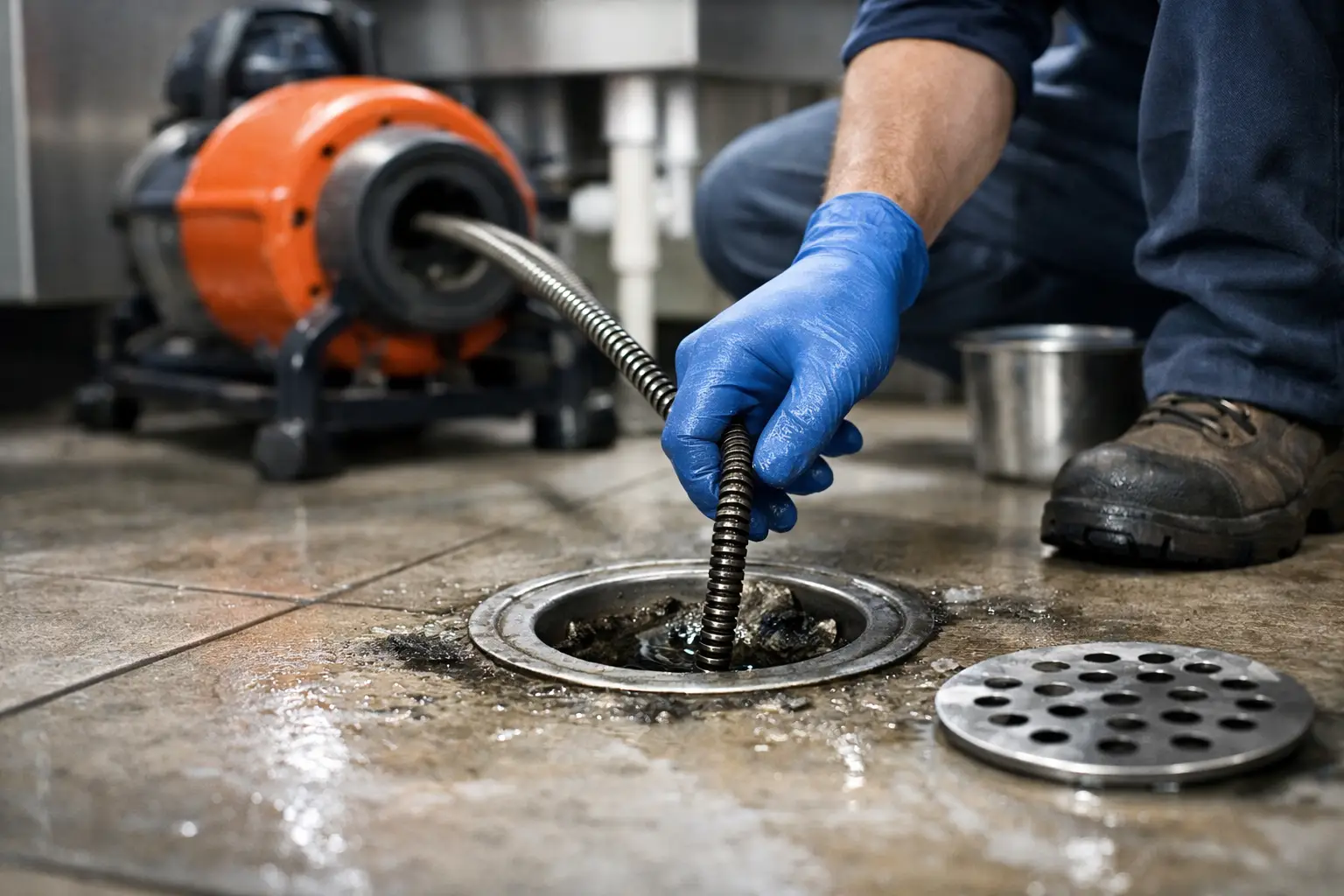
A floor drain usually gets ignored until it starts holding water, giving off sewer odor, or backing up across the room. When that happens, clogged floor drain service is not just about getting water to disappear. It is about finding out why the drain failed in the first place and fixing it in a way that holds up.
In basements, laundry rooms, utility areas, garages, and commercial spaces, floor drains take abuse. They collect dirt, lint, soap residue, grease, sediment, and whatever else gets washed across the surface. Some also tie into branch lines that handle more than people realize. That is why a drain that looks like a simple surface clog can actually point to a deeper blockage further down the line.
What a floor drain backup is really telling you
A slow floor drain is often the first warning sign. Water may circle the grate, drain sluggishly, or leave standing water long after the area should be dry. In other cases, the problem shows up as a bad smell, gurgling, or water coming up through the drain when another fixture is used.
Those symptoms matter because they help narrow down where the restriction may be. If the floor drain alone is slow, the blockage may be local to that line. If the floor drain backs up when a washing machine discharges or when another drain is used, the issue may be farther along in the branch or main line. That difference affects the right repair approach.
A lot of property owners wait because the drain still works a little. The trouble is that partial flow often means buildup is still growing inside the pipe. Once that restriction tightens, the next heavy use can turn a manageable problem into a messy backup.
Common causes of clogged floor drain service calls
Floor drains clog for different reasons depending on the property and the age of the piping. In homes, one of the biggest culprits is debris that gradually settles into the line over time. Laundry areas are especially prone to lint, soap residue, and sludge buildup. Garage and utility drains often collect dirt, sand, and sediment that slowly harden in the pipe.
In commercial settings, grease, mop water solids, and heavier usage can create tougher blockages. Older lines may also have scale buildup on the interior walls. Cast iron is a common example. As scale thickens, it grabs passing debris and turns a drain that once handled flow fine into a repeat problem.
Then there is the issue that catches many people off guard – the floor drain itself is not always the true source. Sometimes the backup is caused by a downstream blockage in the shared drain line or sewer. In that case, clearing only the top portion of the drain may bring short-term relief but not solve the actual problem.
Why basic clearing is not always enough
There is a big difference between punching a hole through a clog and fully cleaning the pipe. If a line is packed with grease, scale, sludge, or heavy residue, a quick opening may get water moving for the moment, but the pipe walls stay coated. That leftover material catches debris again and sets up the next backup.
This is where professional clogged floor drain service becomes more than a simple unclogging. The goal is not just to restore temporary flow. The goal is to remove the buildup, inspect the line condition, and verify that the drain is actually clear.
That matters even more in properties where backups create liability. For homeowners, that may mean water damage, odor, and ruined flooring. For landlords and business operators, it can mean tenant complaints, downtime, and cleanup problems that interrupt normal use of the space.
How professional clogged floor drain service is handled
The right service starts with diagnosis, not guesswork. A technician should ask what symptoms you are seeing, when the backup occurs, and whether other drains are affected. That information helps determine whether the issue is likely isolated or part of a larger drain line problem.
Drain cleaning based on the actual blockage
Not every floor drain needs the same tool. Some blockages respond well to professional drain cleaning equipment that breaks through localized buildup. Others need more thorough line cleaning because the pipe walls are loaded with residue, scale, or grease.
For heavier buildup, hydro jetting is often the better solution. Instead of just poking a path through the clog, high-pressure water scours the interior of the pipe and washes material downstream. In the right application, that gives a much more complete cleaning and longer-lasting result.
There is a trade-off, though. The pipe condition matters. Older or damaged lines may need inspection first so the cleaning method matches the actual state of the system. Good service is not about using the biggest tool every time. It is about using the right one.
Sewer camera inspection for answers you can trust
When a floor drain keeps clogging, a sewer camera inspection takes the mystery out of the problem. It can show whether the line has scale, grease, a bellied section, root intrusion, or another restriction further down. It also helps verify that cleaning was successful.
That is especially useful when the history is unclear, like in older homes, rental properties, or commercial buildings where multiple users affect the system. Instead of assuming the clog is gone, a camera gives visual confirmation of what is happening inside the line.
Descaling when the pipe walls are the problem
In some cases, the issue is not a single blockage. It is years of hardened buildup inside the pipe. Descaling is often the right answer for cast iron lines that have rough interior walls and heavy accumulation. If that scale is left in place, the drain may continue to snag debris even after a clog is opened.
That is why repeat floor drain backups often need more than a standard clearing. If the pipe has lost usable diameter because of buildup, the service should address the condition of the line, not just the symptom at the drain opening.
Signs you should call sooner rather than later
If the floor drain is backing up onto the floor, the need is obvious. But there are earlier signs that should not be brushed off. Slow drainage, recurring odor, gurgling sounds, or water movement at the drain when nearby fixtures run all point to a developing restriction.
The same goes for drains in basements or lower-level utility areas. Because those drains sit low in the system, they often show trouble before other fixtures do. A floor drain backup can be the first visible signal of a larger drainage issue building in the line.
In Northern Virginia homes with older piping, recurring slow drains are worth taking seriously. What looks minor today can turn into a much more disruptive cleanup after a heavy use cycle or storm-related strain on the system.
What good service should look like on site
A professional visit should feel organized from the start. That means showing up on time, protecting the area, diagnosing the problem clearly, and explaining the next step in plain language. Property owners do not need a sales pitch. They need to know what is causing the problem, what will fix it, and whether the result has been verified.
Clean job execution matters too. Floor drain problems are messy enough on their own. The service experience should reduce stress, not add to it. For busy homeowners, landlords, and business operators, that kind of professionalism is part of the repair, not an extra.
The best drain specialists also understand urgency. A backed-up floor drain can shut down part of a home or work area fast. Same-day response, proper equipment, and a clear plan can make the difference between a contained issue and a bigger interruption.
Why recurring floor drain problems need a specialist
Some drain problems are simple. Others are repeat offenders because the real issue was never identified. If a floor drain has been cleared before and the problem keeps returning, there is usually a reason. It may be pipe scale, a downstream obstruction, poor flow conditions, or a line issue that only shows up under heavier use.
That is where a drain and sewer specialist brings more value than a surface-level fix. With the right combination of cleaning equipment and camera diagnostics, the work can be based on evidence instead of assumptions. For customers in areas like Bristow, Gainesville, Haymarket, and Manassas, that means less repeat disruption and more confidence that the drain was handled correctly.
Titan Jetters approaches these calls the way they should be handled – diagnose the line, clear it with the right equipment, and verify the result. That is how you get past temporary relief and back to dependable drainage.
If your floor drain is slow, backing up, or giving off signs that something is wrong below the surface, do not wait for the next overflow to make the decision for you. The sooner the line is properly inspected and cleaned, the easier it is to protect the space and keep everything flowing the way it should.
