

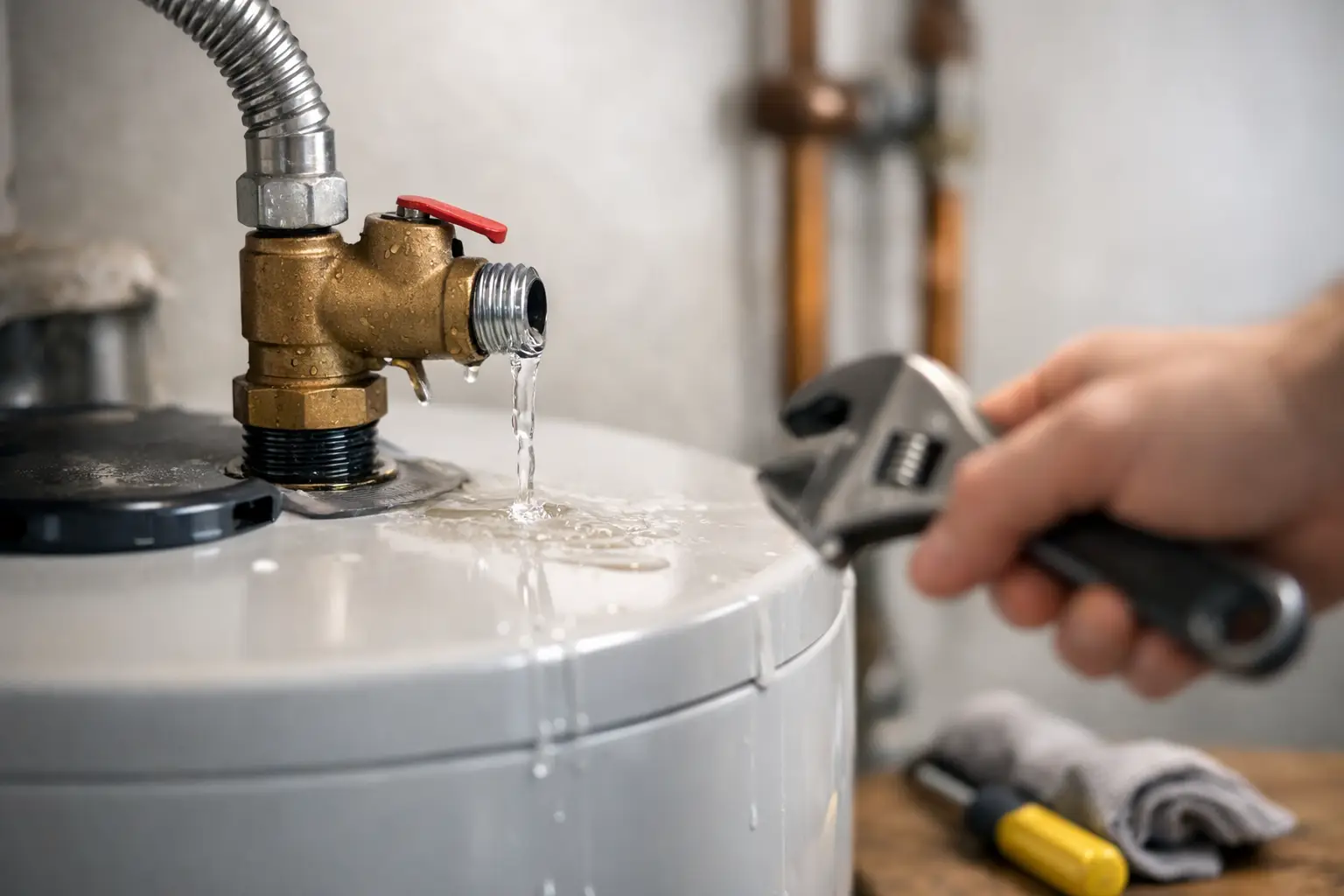
A puddle under the water heater gets your attention fast. If you are searching for a water heater leaking from relief valve fix, the first thing to know is this: that valve is not just another fitting. It is a safety device, and when it starts leaking, the problem may be the valve itself, pressure inside the tank, water temperature, or expansion somewhere in the system.
That means the right fix starts with the right diagnosis. Some relief valve leaks are minor and isolated. Others are warning signs that your water heater is running under stress and needs prompt professional service before the leak gets worse or the unit fails.
What the relief valve actually does
The relief valve, often called the temperature and pressure relief valve or T&P valve, is designed to open if pressure or temperature inside the water heater gets too high. Its job is simple: release excess pressure so the tank does not become dangerous.
When that valve drips or discharges water, it is either doing its job because conditions inside the heater are unsafe, or it is no longer sealing the way it should. Both situations matter. Ignoring it can lead to water damage, shortened heater life, or a bigger plumbing problem behind the scenes.
Water heater leaking from relief valve fix – what usually causes it
The fix depends on why the valve is leaking. There is no honest one-size-fits-all answer here.
One common cause is a worn or faulty relief valve. Over time, minerals in the water and normal wear can keep the valve from closing tightly. In that case, the valve may drip even when the water heater is operating normally.
Another common issue is excessive water pressure. If pressure in the home is too high, or if thermal expansion has nowhere to go when water heats up, the valve may open to relieve that pressure. This is especially common in closed plumbing systems where a check valve or pressure-reducing valve traps expanded water.
Water temperature can also be the issue. If the thermostat is set too high or a control problem causes overheating, the valve may release hot water as a safety response. That is not a valve problem first – it is a heater control problem.
Sediment buildup inside the tank is another factor. As sediment collects, it can affect heating efficiency and create temperature swings inside the tank. That added stress can contribute to relief valve discharge, especially on older units.
In some cases, the leak is not from the relief valve at all. Water can travel along the tank jacket or pipes and make it look like the valve is leaking when the source is actually above it. A proper inspection matters because replacing the wrong part does not solve anything.
Signs the problem is more than a minor drip
A few drops once in a while can still mean something is off, but a steady drip, frequent discharge, or hot water running through the discharge pipe points to a more serious issue. If you hear rumbling from the tank, notice inconsistent hot water, or see corrosion around the valve, those are signs the heater may be under strain.
Age matters too. If the unit is older and the relief valve is leaking, the valve may be only part of the story. On an aging heater, the leak can be a sign that internal wear, sediment, or pressure problems have been building for a while.
You should also take it seriously if the area around the heater is wet enough to damage flooring, drywall, or stored items. What starts as a slow leak can quickly turn into a cleanup and restoration problem.
Why guessing at the fix can make it worse
Because the relief valve is a safety component, this is not a part of the system you want misdiagnosed. If the valve is replaced without addressing excess pressure, overheating, or expansion issues, the new valve can start leaking too. The symptom returns because the real cause was never corrected.
The opposite mistake happens too. Some people assume the heater is failing when the actual issue is system pressure and the tank itself is still in decent shape. A good service call separates those scenarios clearly so you know whether you need a targeted repair or a broader recommendation.
That is where experienced plumbing diagnostics matter. A technician should confirm whether the leak is truly at the relief valve, check pressure conditions, inspect for thermal expansion problems, evaluate temperature control, and look at overall heater condition before recommending the repair.
The most common professional repair path
In many cases, the repair starts with testing the system and replacing the relief valve if it has failed mechanically or is no longer sealing. But that only makes sense after the rest of the conditions are checked.
If high pressure is present, the repair may involve correcting the pressure issue rather than just addressing the valve. If thermal expansion is the cause, the system needs a safe way to absorb that expansion. If overheating is happening, the thermostat or heating controls need attention. If the tank is heavily deteriorated, repair may not be the long-term answer.
This is why a real water heater leaking from relief valve fix is not just about stopping the drip today. It is about preventing the same failure from coming back next week.
When replacement is smarter than repair
Sometimes the relief valve leak is the last visible symptom on a water heater that is already near the end of its service life. If the unit is older, has heavy sediment, shows rust, or has multiple performance issues, putting money into repeated repairs may not be the best move.
That does not mean every leaking relief valve calls for a new heater. It depends on age, tank condition, frequency of issues, and whether the problem is isolated or part of a broader failure pattern. A straightforward inspection should give you that answer without the runaround.
For homeowners and property managers, the practical question is simple: is this a contained repair with a reliable outcome, or are you trying to keep an unstable unit going a little longer? Knowing the difference helps you avoid repeat service calls and water damage.
Why fast service matters
Relief valve leaks tend to get pushed down the list because the heater may still be producing hot water. That is where people get burned – not literally, but financially. A safety valve leak is easy to underestimate until it turns into soaked flooring, a damaged utility area, or an emergency shutdown.
Fast service matters even more in occupied rentals, busy households, and commercial properties where downtime creates bigger problems. Getting the issue diagnosed quickly helps protect the property and keeps a small leak from becoming a larger repair.
In Northern Virginia homes, we also see how utility rooms, finished basements, and tighter mechanical spaces can make even a modest leak more disruptive. The sooner the source is confirmed, the better your chance of limiting damage and getting the system back to safe operation.
What to expect from a proper diagnosis
A professional visit should be clear and direct. First, the technician confirms where the water is coming from. Then they evaluate the relief valve, discharge piping, water pressure, temperature settings, and the overall condition of the heater. If there is evidence of expansion, control failure, or tank wear, that should be explained in plain language.
You should not be left guessing. A good plumber will tell you whether the valve is the real problem, whether another condition triggered it, and what repair path makes the most sense for the age and condition of the unit.
That kind of service is what busy homeowners actually need – not a vague answer, not a rushed part swap, and not pressure to do more than the system requires.
When to call for help
If the relief valve is actively dripping, discharging hot water, or leaving a recurring puddle, it is time to have it checked. The same goes for heaters making noise, showing rust, or delivering water that is suddenly too hot.
At Titan Jetters, the focus is always the same: show up, diagnose the issue correctly, explain what is going on, and recommend the repair that actually solves the problem. No guesswork. No runaround. Just clean, professional plumbing service when your home cannot wait.
A leaking relief valve is easy to dismiss until it is not. If your water heater is telling you something is wrong, it is worth listening before that small warning turns into a much bigger mess.
