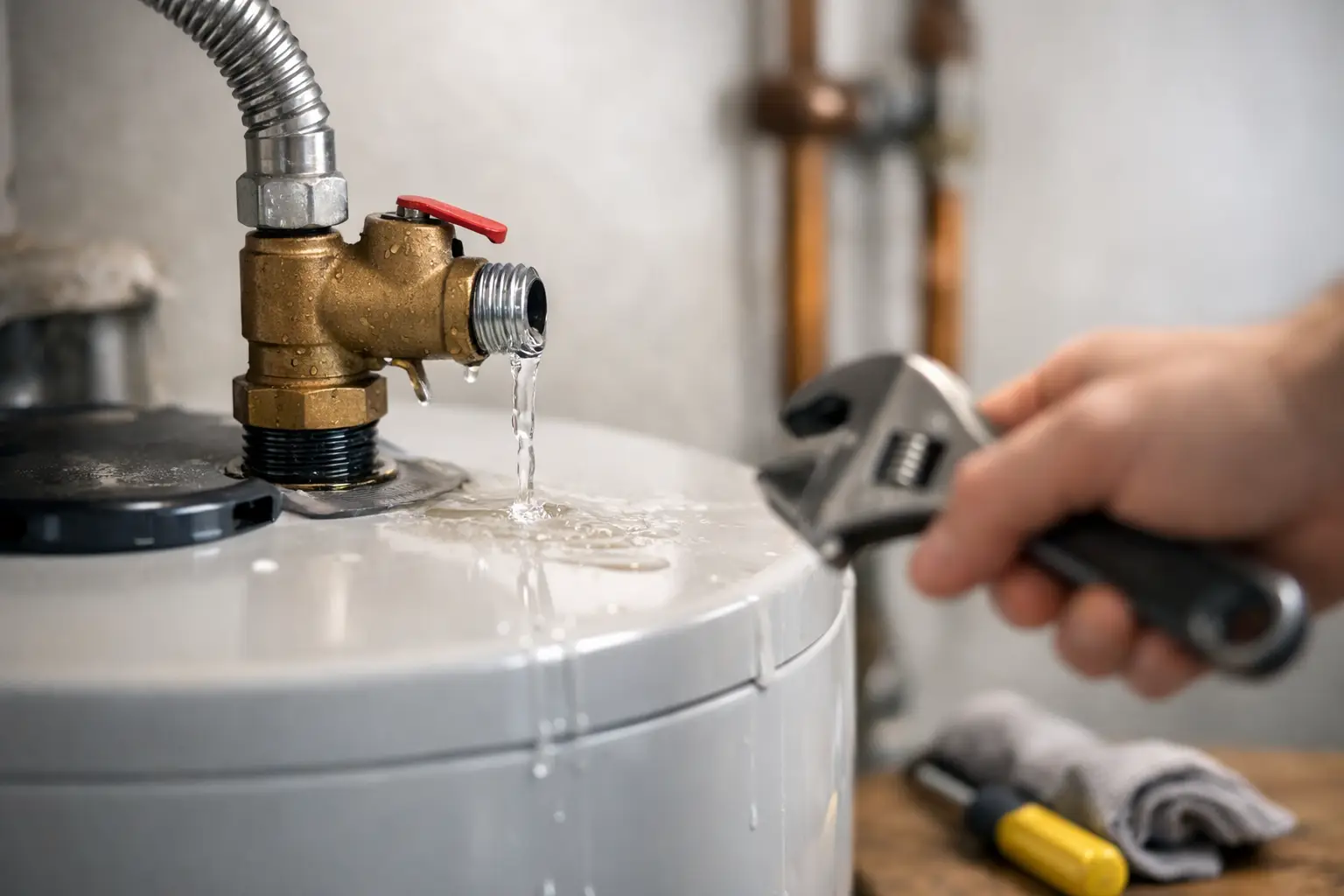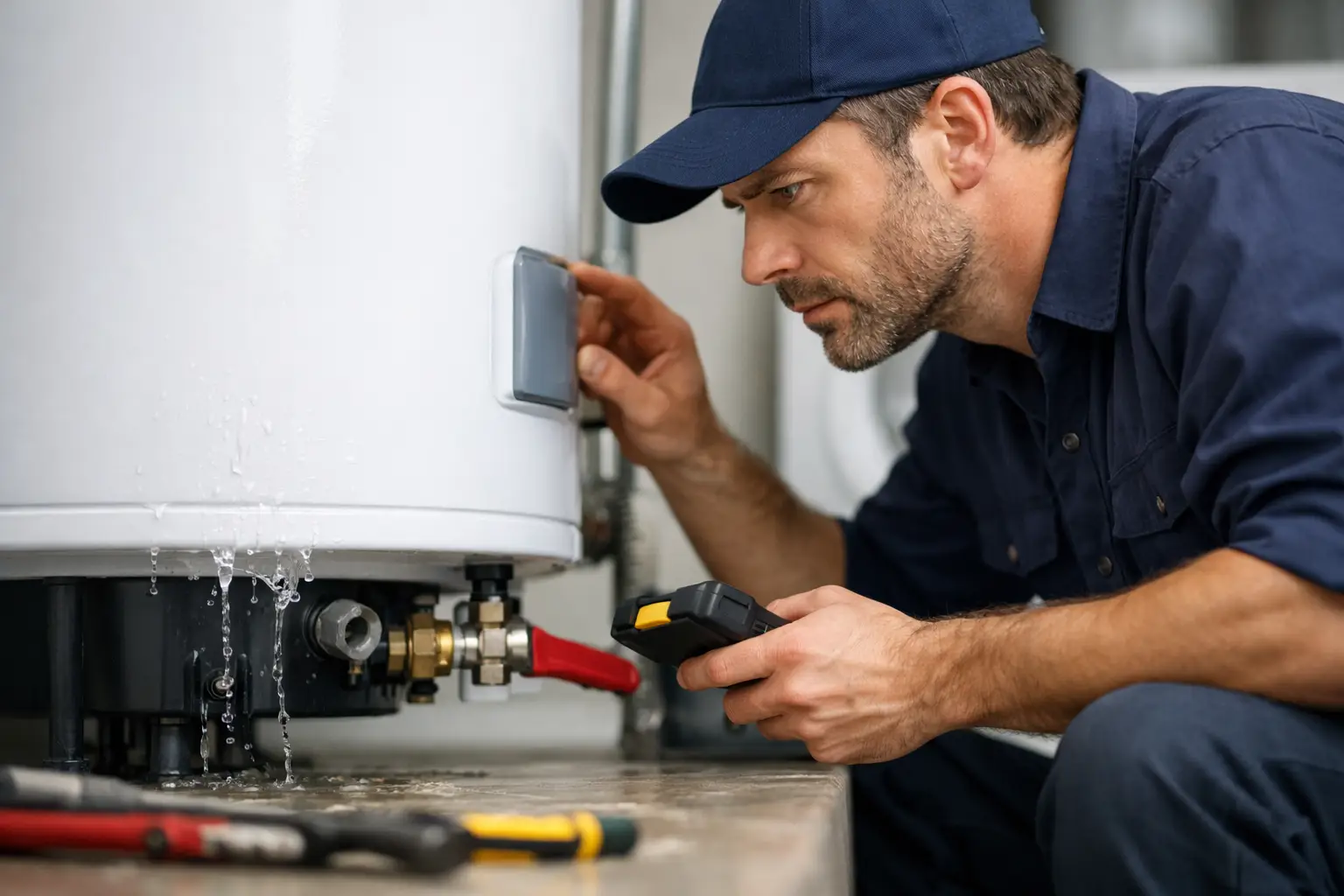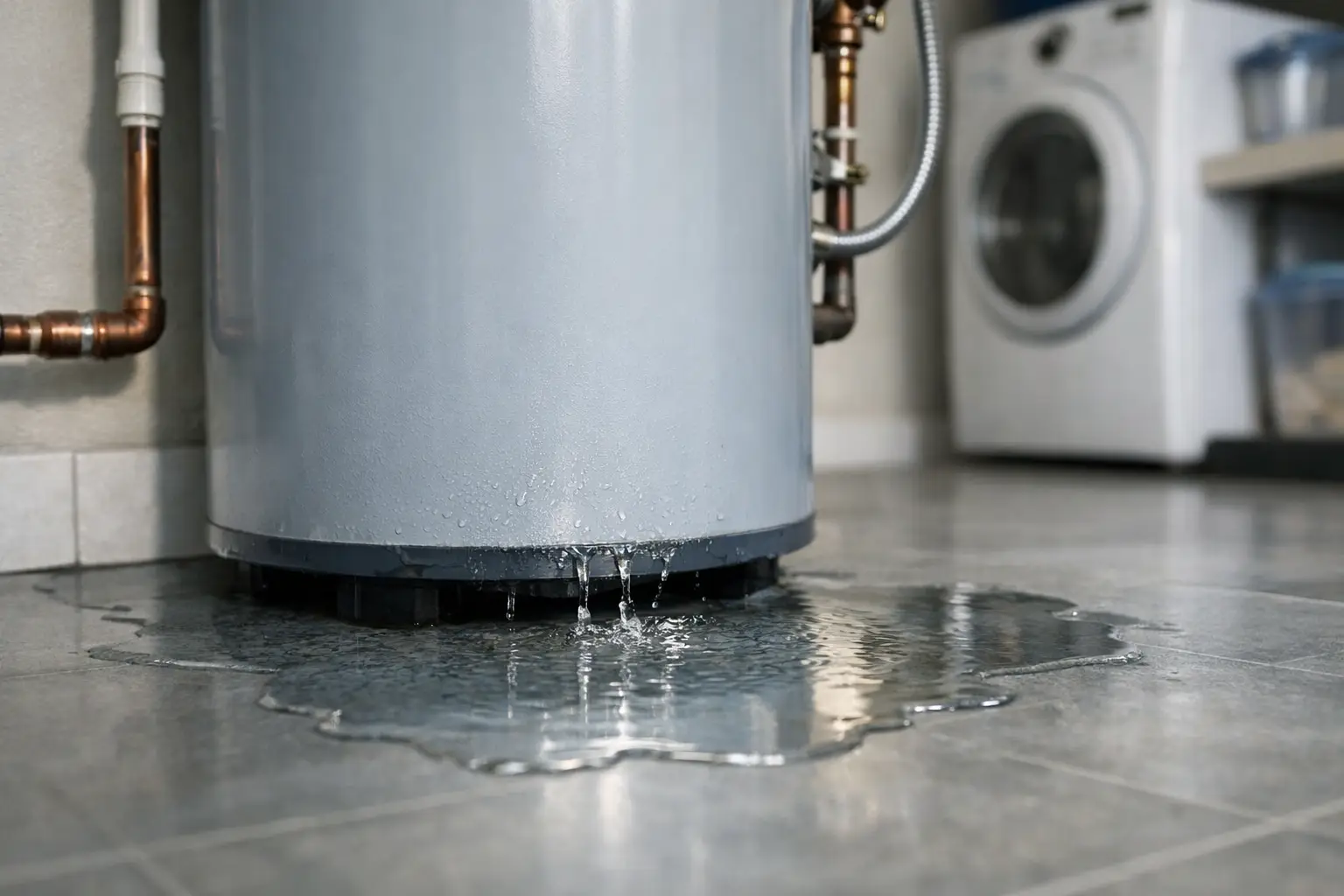
You usually do not find a water heater problem at a convenient time. It shows up as a puddle in the utility room, damp concrete in the basement, or water creeping toward storage boxes while the rest of the day is already packed. If your water heater leaking from bottom is the issue, the real question is not just where the water is coming from. It is whether you are dealing with a repairable part or a tank that is on borrowed time.
That distinction matters. Some bottom leaks come from fittings or valves near the base. Others mean the tank itself has failed from the inside. One is often manageable with the right repair. The other usually means replacement is the only realistic path.
Why a water heater leaking from bottom happens
From the homeowner’s point of view, all bottom leaks can look the same. Water ends up on the floor, so it feels like the tank is leaking at the bottom. In reality, water can travel before it drips. A fitting higher up may run down the jacket and collect underneath, making the source easy to misread.
That is why a proper diagnosis matters. The most common causes include condensation, a leaking drain valve, a pressure relief issue, a plumbing connection above the tank, or internal tank corrosion. The last one is the most serious because it means the steel tank has deteriorated enough to let water escape.
Age plays a big role here. A newer unit with a bottom leak may have a component problem. An older unit, especially one that has seen years of sediment buildup, is more likely dealing with internal wear. Hard water can speed that process up. So can deferred maintenance.
Signs the leak may not be from the tank itself
A puddle under the heater does not automatically mean total failure. Sometimes the issue is a part near the bottom that can leak and make the whole unit look worse than it is.
Drain valve problems
The drain valve sits low on the tank, so when it leaks, it often creates the classic bottom-puddle look. In some cases the valve is loose, worn, or not fully closed. This is one of the better-case scenarios because the tank itself may still be intact.
Pressure relief discharge
If the temperature and pressure relief valve is releasing water, that discharge can travel down the side of the tank and end up at the base. The valve may be reacting to excess pressure, overheating, or valve failure. The leak is still serious, but it points to a different problem than a rusted-out tank.
Plumbing connections above the unit
Cold water inlets, hot water outlets, and nearby fittings can all leak. Since water follows gravity and surfaces, what starts near the top may show up at the bottom. This is one reason quick visual assumptions can be misleading.
Normal condensation that looks worse than it is
Some gas water heaters produce condensation, especially during heavy use or startup. That moisture can drip and collect under the unit. Condensation is not the same as a structural leak, but if you are seeing repeated puddling, it needs to be checked rather than guessed at.
When a water heater leaking from bottom means tank failure
If the inner tank has corroded through, the leak is not something that gets fixed with a small part swap. Water heaters rust from the inside out over time. Once that steel is compromised, the tank can continue leaking and fail further without much warning.
A few signs point in that direction. Rust-colored water, a tank nearing the end of its service life, visible corrosion near the base, and ongoing leakage even after surrounding fittings look dry are all red flags. Sediment buildup also contributes to the problem. As minerals settle and harden in the bottom of the tank, they trap heat and stress the metal. Over time, that can damage the lining and accelerate internal deterioration.
This is where timing matters. Homeowners sometimes hope a slow leak can wait. Sometimes it can for a very short window. Sometimes it turns into a much bigger mess overnight. It depends on the size of the failure, water pressure, and how much the unit is cycling. A small puddle is not always a small problem.
What makes bottom leaks risky
The obvious concern is water damage. Flooring, drywall, trim, boxes, and anything stored nearby can get hit fast. But there are other risks people do not always think about right away.
If the leak reaches electrical components, the situation gets more urgent. If it is in a finished area, hidden moisture can lead to damage behind walls or under flooring. If the heater is in a utility closet, the leak may go unnoticed longer than it should. And if the failing water heater is serving a busy household or tenant property, downtime becomes part of the problem too.
For landlords and business owners, that trade-off is important. Waiting a little longer might seem convenient, but a leak that worsens after hours can create more disruption than handling it promptly during a normal service window.
What a professional looks for first
The first step is confirming the source, not assuming it. A trained plumber will check the drain valve, relief valve, supply connections, burner compartment or lower access area, and signs of corrosion around the shell and base. The goal is simple: determine whether the leak is coming from an external component or from inside the tank.
That difference drives everything else. If the issue is isolated to a valve or connection, the solution may be straightforward. If the tank body has failed, replacement is usually the only sound recommendation. There is no honest way around that.
A good service call should also account for surrounding conditions. Is there evidence of pressure problems? Is sediment likely part of the story? Has the heater been leaking long enough to affect nearby plumbing or finishes? The right diagnosis is not just about stopping the visible water. It is about understanding why it happened and whether there is a related issue that needs attention.
Repair or replace? It depends on the source
This is where homeowners want a clear answer, and the truth is that it depends on what is leaking.
If the problem is an external part, repair may make sense. If the unit is fairly new and otherwise in good condition, that is usually the path worth considering. But if the tank itself is leaking, replacement is generally the right move. Trying to stretch extra time out of a failing tank usually leads to more inconvenience and more damage risk.
Age matters here too. Even if the immediate leak is not the tank shell, an older water heater with multiple wear issues may not be a smart candidate for piecemeal repairs. A newer system gets more benefit from targeted work. An older one often turns into repeat calls.
That is why straightforward guidance matters. Homeowners do not need guesswork or pressure. They need an honest read on whether the unit is fixable, whether it is worth fixing, and how urgent the problem really is.
When to call right away
Some leaks can wait a few hours for a scheduled visit. Some should not.
Call for professional help quickly if the puddle is growing, the unit is actively dripping, you see rust around the base, the water is reaching nearby electrical equipment, or the heater has stopped performing normally along with the leak. The same goes for any leak affecting a tenant space, commercial property, or finished area where damage can spread fast.
In Northern Virginia homes, utility rooms, basements, and garage setups vary a lot. Some leaks stay contained for a bit. Others move into drywall, flooring, or storage almost immediately. Local homeowners dealing with an urgent plumbing issue often just want someone to show up, identify the real cause, and handle it cleanly. That is exactly where a responsive company like Titan Jetters adds value – fast scheduling, clear communication, and no runaround.
Do not ignore the small puddle
A bottom leak has a way of looking minor right before it becomes expensive. Sometimes it is a valve. Sometimes it is condensation. Sometimes it is the tank telling you it is done. You do not need to know which one it is before you make the call, but you do want someone to diagnose it correctly.
If your water heater is leaking from the bottom, treat it like a real problem even if the puddle seems manageable. Fast attention protects the area around it, helps avoid bigger disruption, and gives you a clearer path forward while the options are still better than emergency cleanup.