A restaurant can be fully booked, the kitchen can be moving, and then one drain backup changes the whole shift. That is why the top plumbing issues in restaurants are not small maintenance headaches. They are operational problems that can slow service, create sanitation risks, and put pressure on staff fast.
Restaurant plumbing takes a beating every day. Grease, food scraps, hot water, soap, constant handwashing, floor cleaning, and heavy restroom use all hit the system at once. In a busy commercial setting, pipes do not get much downtime. When something starts to go wrong, it usually shows up during the worst possible hours.
For owners, managers, and property decision-makers, the real goal is not just getting a line open after a backup. It is knowing which problems show up most often, what they usually mean, and when a quick fix is likely to fail.
The top plumbing issues in restaurants usually start in the drains
Most restaurant plumbing trouble begins where the workload is highest – kitchen drains, floor drains, and waste lines. These systems handle more than water. They deal with grease, suspended solids, detergents, and repeated surges of use throughout the day.
A slow drain in a home can wait a little while. In a restaurant, that same symptom can be an early warning that a line is building toward a full blockage. The difference matters because once wastewater starts backing up near prep, dishwashing, or service areas, the problem stops being minor.
Grease buildup in kitchen drain lines
This is one of the most common and most stubborn issues in commercial kitchens. Fats, oils, and grease do not just wash away because hot water goes down with them. As they cool inside the pipe, they stick to the walls and start narrowing the line.
Over time, that grease traps food particles and other debris. What starts as reduced flow turns into recurring clogs, foul odors, or a complete backup. In older lines, buildup can get dense enough that basic snaking only pokes a small opening through it instead of clearing the pipe wall to wall.
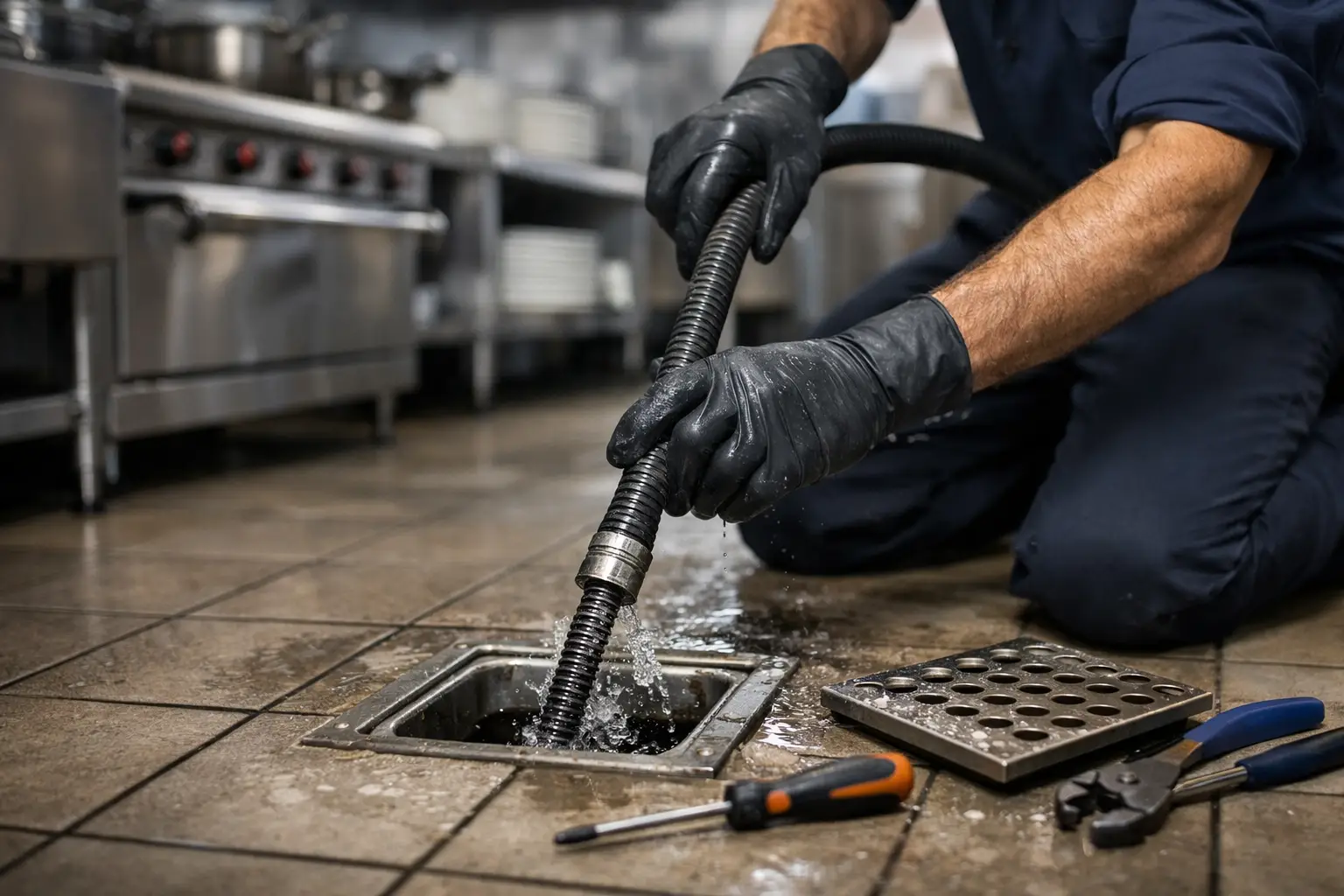
This is where proper diagnostics matter. If a line keeps clogging, the question is not just how to reopen it. The question is whether the pipe is coated with grease along the full run and needs a more thorough cleaning method.
Floor drain backups
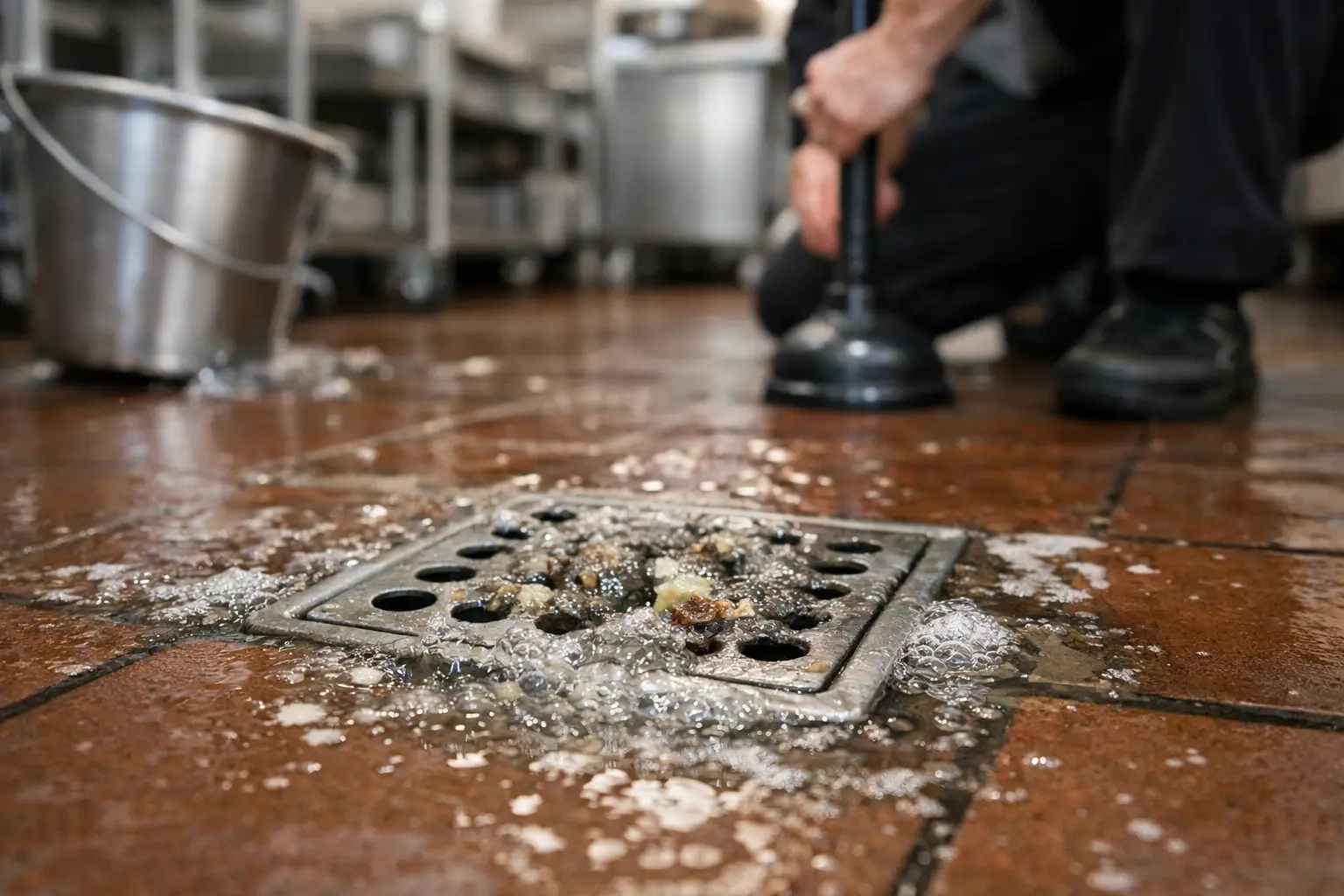
Floor drains are easy to overlook until they stop working. In restaurants, they are exposed to mop water, grease migration, food debris, and sediment. When they back up, they create an immediate mess and a safety issue.
Sometimes the floor drain itself is the problem. Other times, it is simply the lowest opening showing you there is a blockage farther down the branch line or main drain. That is why repeat floor drain backups should not be treated like isolated events. They often point to a bigger restriction deeper in the system.
Sink and prep area clogs
Three-compartment sinks, prep sinks, and hand sinks all see heavy daily use, but not all clogs are equal. A hand sink that drains slowly may have localized buildup near the trap. A prep sink that backs up repeatedly may be tied to a shared line with a more serious obstruction.
The trade-off here is speed versus certainty. Clearing the symptom can get things moving again for the day, but without understanding what is happening in the line, the same sink may be back in trouble during the next rush.
Restroom plumbing problems hit customer experience fast
Kitchen plumbing problems disrupt operations. Restroom plumbing problems affect both operations and reputation. Customers notice overflowing toilets, bad odors, and out-of-order fixtures immediately.
Toilet backups and repeated clogs
Restaurant restrooms get far more traffic than residential bathrooms, and the plumbing system has to keep up. Repeated toilet clogs can come from heavy paper use, non-flushable items, partial drain blockages, or poor flow in the building sewer.
If one fixture clogs once, that may be a one-off problem. If multiple fixtures are slow or backing up, that usually suggests a system issue, not just a fixture issue. The pattern matters.
Urinal and restroom drain odors
Bad smells are often dismissed as a cleaning issue when they are really a drainage issue. Sewer gas odors can come from dried-out traps, blocked venting, buildup inside drain lines, or hidden waste sitting in the system longer than it should.
In a restaurant, odor complaints are more than annoying. They shape how customers judge the whole operation. Even when the dining room is clean, restroom odors make people assume maintenance is being missed elsewhere too.
Water heater and hot water issues slow the whole building
Hot water is not optional in a restaurant. It supports dishwashing, cleaning, handwashing, and general sanitation. When a water heater underperforms or fails, staff feel it almost immediately.
Sometimes the issue is obvious – no hot water at all. Other times, it shows up as inconsistent temperatures, slow recovery during peak demand, or reduced capacity that only becomes obvious during busy periods. Those situations can be harder to catch because the heater has not fully stopped working. It is just no longer keeping up.
The practical problem is that inconsistent hot water creates delays across multiple stations. Kitchen staff adapt for a little while, but that usually means slower turnaround and more stress on the team.
Sewer line issues are less common, but far more disruptive
Among the top plumbing issues in restaurants, sewer line problems are the ones most likely to cause widespread disruption. A branch drain problem may affect one area. A sewer line issue can affect the entire property.
Main line blockages
When several drains start acting up at once, the main line should be considered early. Gurgling fixtures, backups at low drains, or wastewater showing up in unexpected places often suggest a restriction beyond a single sink or floor drain.
In commercial buildings, main line blockages can come from grease migration, scale, debris, or root intrusion, depending on the age and condition of the line. The right next step depends on what is actually inside the pipe. Guessing wastes time.
Pipe scale, corrosion, and interior buildup
Older drain lines, especially cast iron, can develop heavy scale and rough interior surfaces. Once that happens, waste catches more easily, grease sticks faster, and the line becomes harder to keep clear.
This is one of those cases where the visible symptom is a clog, but the underlying issue is pipe condition. If the pipe interior is badly scaled, recurring stoppages are likely until the buildup is properly removed or the damaged section is addressed. A camera inspection is useful here because it shows whether the issue is soft blockage, scale, cracks, offsets, or something else entirely.
Why restaurant plumbing problems keep coming back
Recurring plumbing problems usually have one of three causes. The first is incomplete cleaning, where the blockage is opened but not fully removed. The second is missed diagnostics, where the visible problem hides a deeper issue in the line. The third is pipe condition, where age, scale, or damage keeps creating new stoppages.
This is why one-time clearing methods do not always hold up in commercial kitchens. Restaurants produce constant demand. If the line is still coated with grease or narrowed by scale, it does not take long for trouble to return.
In high-use properties, verification matters. It helps to know whether the line was simply reopened or actually cleaned and inspected. That difference affects how long the repair lasts and how confidently a manager can move forward.
What smart restaurant operators watch for early
Most major plumbing failures give smaller warnings first. Slow drainage, intermittent odors, bubbling sounds, recurring sink clogs, water around floor drains, and toilets that seem fine one day and sluggish the next all deserve attention.
The biggest mistake is waiting for a full backup because the line is still sort of working. In restaurants, partial flow is not stability. It is often the last stage before downtime.
For busy operators in places like Prince William County and across Northern Virginia, speed matters, but accuracy matters just as much. A fast response is valuable when service is on the line. A correct diagnosis is what keeps the same problem from disrupting the next weekend rush.
The good news is that most restaurant plumbing problems leave clues. When those clues are taken seriously and the line is properly diagnosed, you can usually move from repeated emergencies to a more predictable, manageable system.
If your restaurant has drains that are slowing down, backing up, or creating repeat headaches, do not wait for a full shutdown to force the issue. The sooner the problem is identified correctly, the easier it is to protect service, sanitation, and your staff’s time.