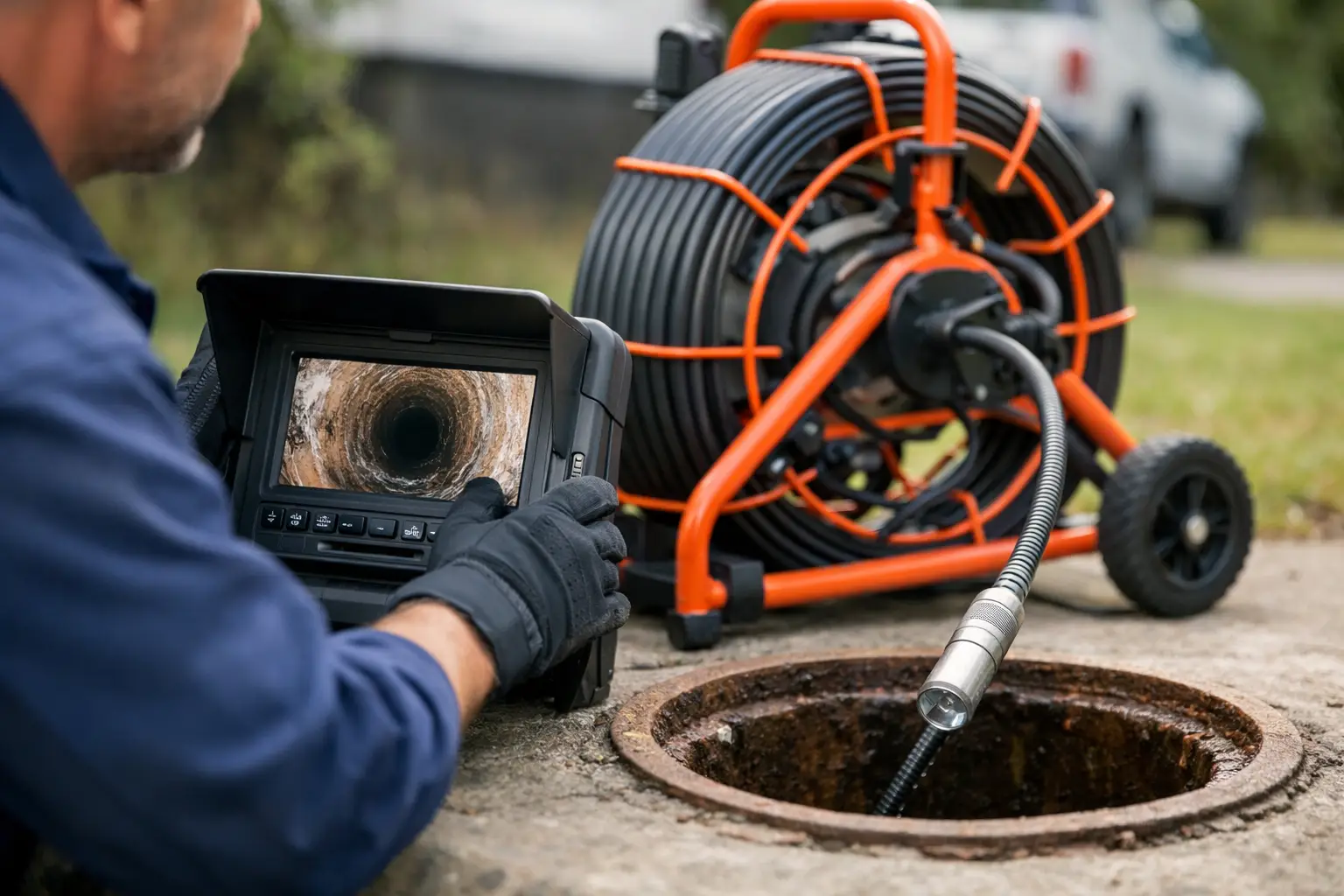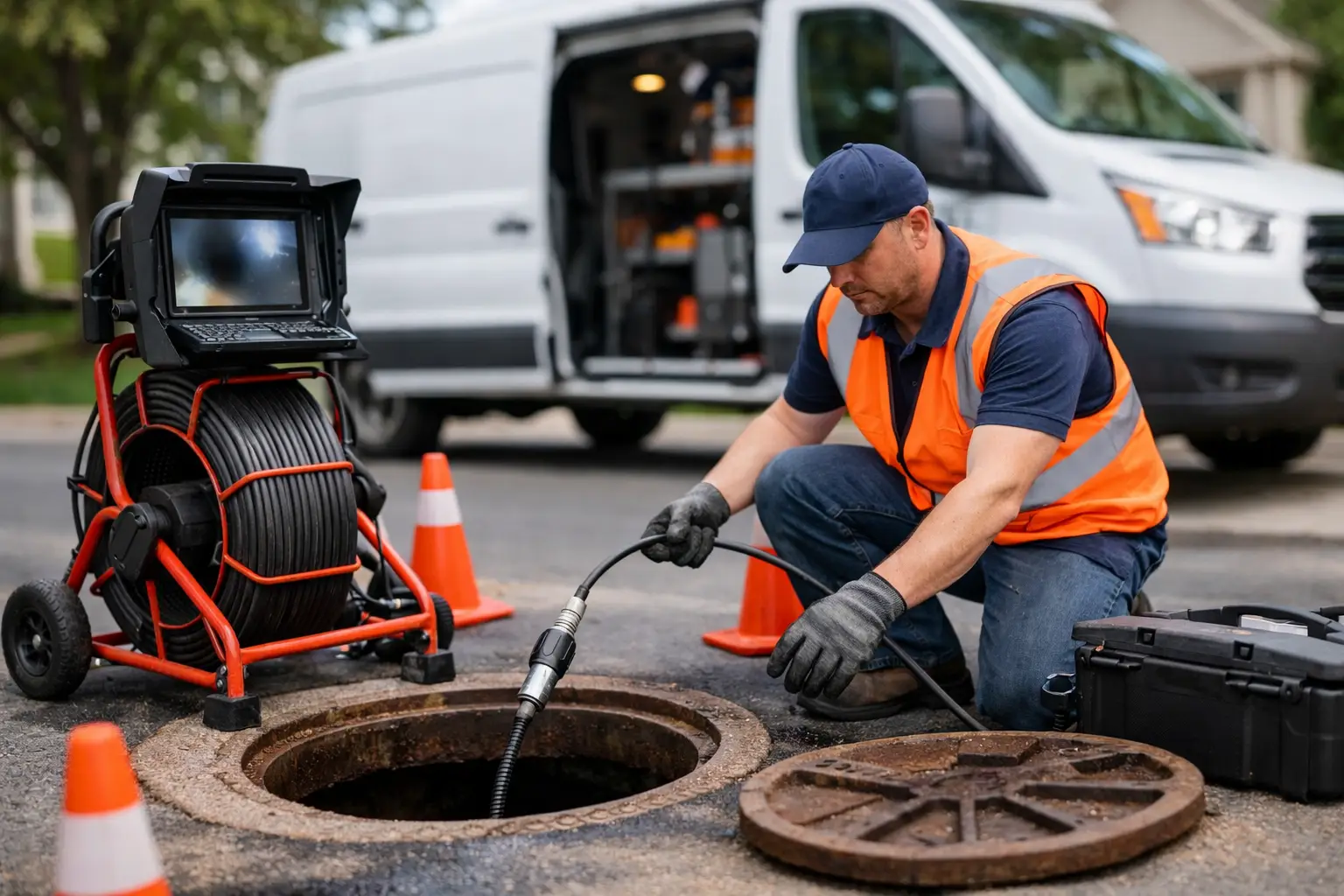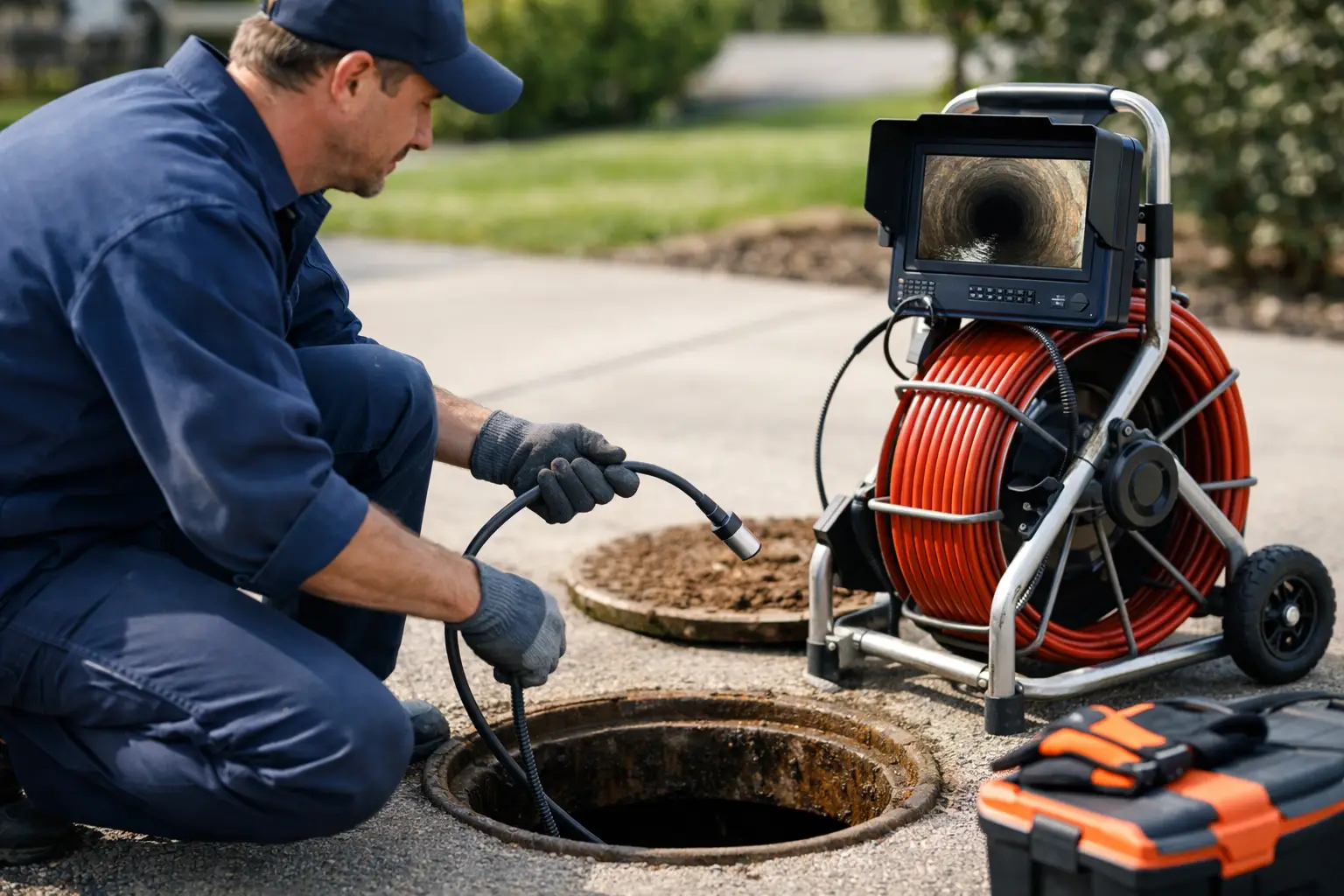
A drain that keeps backing up is frustrating. A sewer line that backs up twice is a warning. That is where a sewer camera inspection stops the guessing and shows exactly what is happening inside the pipe.
For homeowners, landlords, and business owners, that matters for one simple reason – the right fix depends on the real cause. A kitchen line may need cleaning. A cast iron line may need descaling. A sewer main may have roots, a belly, a break, or a bad connection. Without seeing the line, every recommendation is just an educated guess.
What a sewer camera inspection actually does
A sewer camera inspection uses a specialized waterproof camera attached to a flexible cable. The camera is fed through the drain or cleanout, and the technician watches a live video feed as it travels through the line. That footage helps pinpoint blockages, buildup, offsets, cracks, root intrusion, corrosion, and other defects that cannot be confirmed from the surface.
This is not just about finding where water stops. It is about understanding why it stops, how serious the condition is, and what method makes sense next. In many cases, the camera also verifies whether a line is just dirty, structurally damaged, or both.
That distinction saves time and prevents the wrong service from being recommended. If a line is packed with grease or sludge, cleaning may solve it. If the pipe wall is scaled over, the line may need more aggressive restoration. If the pipe has collapsed, cleaning alone will not fix anything.
Signs you may need a sewer camera inspection
Some properties show obvious warning signs. Others give smaller clues for months before a major backup happens. The common thread is repeat trouble.
If multiple drains are slow at the same time, if toilets gurgle when water runs elsewhere, or if sewage backs up into a tub or lower-level drain, the issue may be in the main line. That is a strong reason to inspect the sewer with a camera instead of treating each fixture like a separate problem.
A sewer camera inspection also makes sense after a clog has been cleared but questions remain. Was it just a paper blockage, or are roots entering through a joint? Was the backup caused by heavy buildup, or is the pipe sagging and holding water? Those answers matter if you want the problem fixed once instead of repeatedly.
Older homes are another case where camera diagnostics can be especially useful. Cast iron, clay, Orangeburg, and aging PVC all fail in different ways. Some lines scale up. Some crack. Some shift at the joints. Some hold debris because of poor pitch. Looking into the pipe is the fastest way to sort out which problem you are actually dealing with.
What the camera can reveal inside the line
Every sewer line tells a different story. Sometimes the issue is straightforward, like a heavy grease blockage. Sometimes it is a combination of conditions that built up over time.
One common finding is root intrusion. Tree roots are drawn to moisture and can enter tiny openings in a sewer line, especially around older joints. At first, they may just catch toilet paper and waste. Over time, they can create a serious restriction and keep coming back if the underlying entry point is not addressed.
Another frequent issue is scale and corrosion in older cast iron. The inside of the pipe gets rough, narrowed, and uneven, which reduces flow and helps debris stick to the walls. That often leads to recurring clogs that basic snaking only partially improves.
The camera may also reveal cracked pipe, separated joints, offsets where one section no longer lines up with the next, or a belly where wastewater collects instead of flowing properly. In those situations, cleaning may help temporarily, but the long-term solution depends on the structural condition of the line.
That is why a visual inspection is so valuable. It separates maintenance problems from repair problems.
Why a sewer camera inspection matters before clearing or repairing
Good drain work starts with a correct diagnosis. That sounds obvious, but in the field, many drain problems can look similar from the surface.
A slow drain does not automatically mean the same thing as a broken sewer. A backup does not always mean the line needs replacement. On the other hand, a line that clears today may still be damaged enough to fail again next month. The camera helps remove that uncertainty.
For cleaning services, a camera can confirm what tool or method fits the line condition. A soft blockage, heavy grease, roots, and cast iron scale are different problems. They do not respond the same way, and they should not be treated the same way.
For repairs, the camera helps locate the affected section more precisely. That means less guesswork, better planning, and a clearer explanation of why a repair is being recommended at all. Customers deserve to know whether they are dealing with a maintenance issue, a localized defect, or a bigger line failure.
What to expect during the inspection
A professional sewer camera inspection is usually straightforward. Access is typically made through a cleanout or another appropriate entry point, and the technician feeds the camera through the pipe while monitoring the live image. As the camera moves, they are looking at flow conditions, pipe material, buildup, transitions, and defects.
If there is a blockage, the inspection may show where it is forming and what it consists of. If the line has already been cleaned, the camera is often used to verify the result and check whether the pipe itself is still in good enough condition to perform properly.
That verification piece matters. A line can look open at one spot and still have major buildup or damage farther downstream. Seeing the full run gives a more honest picture than assuming the problem is solved because water happens to be moving again.
Sewer camera inspection and long-term drain performance
A lot of people call when they have an urgent problem. That makes sense. Nobody wants sewage backing up into a home or business. But camera diagnostics are just as useful for avoiding repeat emergencies.
If your property has a history of recurring clogs, backups after heavy use, or old piping that has never been evaluated, a camera inspection can help you move from reaction to planning. You may find that the line only needs periodic cleaning. You may learn that descaling would improve flow. Or you may discover damage early, before it turns into a larger interruption.
There is a trade-off here. Not every line needs a camera every time there is a small drain issue. A simple isolated sink stoppage may not call for a full sewer inspection. But when symptoms point to a main line issue, when problems repeat, or when the condition of the pipe is unknown, camera work becomes one of the most useful tools on the truck.
Why experience matters with sewer camera inspection
The camera itself is only part of the job. The real value comes from knowing how to interpret what is on the screen and how that finding connects to the right next step.
For example, roots can be cut, but if the pipe is badly separated, the long-term answer may be repair. Scale can be removed, but if the line is too deteriorated, the result may be limited. A belly may still allow some flow, but it can continue collecting waste and paper. Reading those conditions correctly takes field experience, not just equipment.
That is also why clear communication matters. Customers should not be left trying to decode plumbing terms while standing in a basement or parking lot. They should get a plain-English explanation of what the camera found, what it means, and what options make sense from there.
At Titan Jetters, that practical approach is the point – show up, inspect the line, explain what is happening, and recommend the fix that matches the actual condition of the pipe.
When fast answers matter most
Some sewer problems can wait a day or two. Others cannot. If wastewater is backing up, if multiple fixtures are affected, or if a business is dealing with downtime, speed matters. But speed without diagnosis is not much help.
A sewer camera inspection gives you something every property owner wants in a stressful plumbing situation: a clear answer. Not a guess. Not a sales pitch. Just a direct look inside the line and a better path forward.
If your drains keep acting up or your sewer line is sending warning signs, the smartest next step is to see what the pipe is actually saying.