A pipe leak rarely starts as a dramatic burst. More often, it shows up as a stain spreading across drywall, a musty smell under the sink, or a water bill that suddenly makes no sense. When people search for leaking pipe repair northern va, they usually are not looking for theory. They want to know two things fast – how serious it is, and whether the repair will actually hold.
That urgency makes sense. In Northern Virginia homes and commercial properties, a small leak can turn into cabinet damage, flooring issues, mold growth, and hidden structural problems faster than most people expect. The right response is not guesswork. It is finding the source, understanding why the pipe failed, and choosing a repair that matches the actual condition of the line.
Why leaking pipe repair in Northern VA needs a real diagnosis
Not every leak means the same thing, even when the symptoms look similar. A drip under a kitchen sink might come from a loose connection, but the water stain on a ceiling below a bathroom could point to a cracked drain line, a failed seal, or corrosion inside older piping. If the wrong section gets repaired, the visible leak may stop while the real problem keeps spreading behind walls or under floors.
That is why good plumbing work starts with diagnosis, not assumptions. In many cases, especially when a drain or sewer line is involved, the visible leak is only part of the story. If a line is scaled up, partially blocked, or holding standing water because of a deeper issue, pressure and wear can build in ways that keep creating repeat problems. A clean, professional inspection helps separate a one-time failure from a system problem.
This matters in older parts of Prince William County, Fairfax County, and surrounding areas where aging cast iron, galvanized piping, and long-neglected drain lines are still common. It also matters in newer homes, where installation issues, shifting joints, or heavy usage can still create leak points much sooner than homeowners expect.
Common causes behind leaking pipe repair northern va calls
Leaking pipes do not all fail for the same reason. In Northern Virginia, seasonal changes are part of the equation. Temperature swings can stress vulnerable sections of pipe, especially in crawl spaces, garages, exterior walls, or other poorly insulated areas. A pipe does not have to fully freeze to develop weakness. Repeated expansion and contraction can be enough over time.
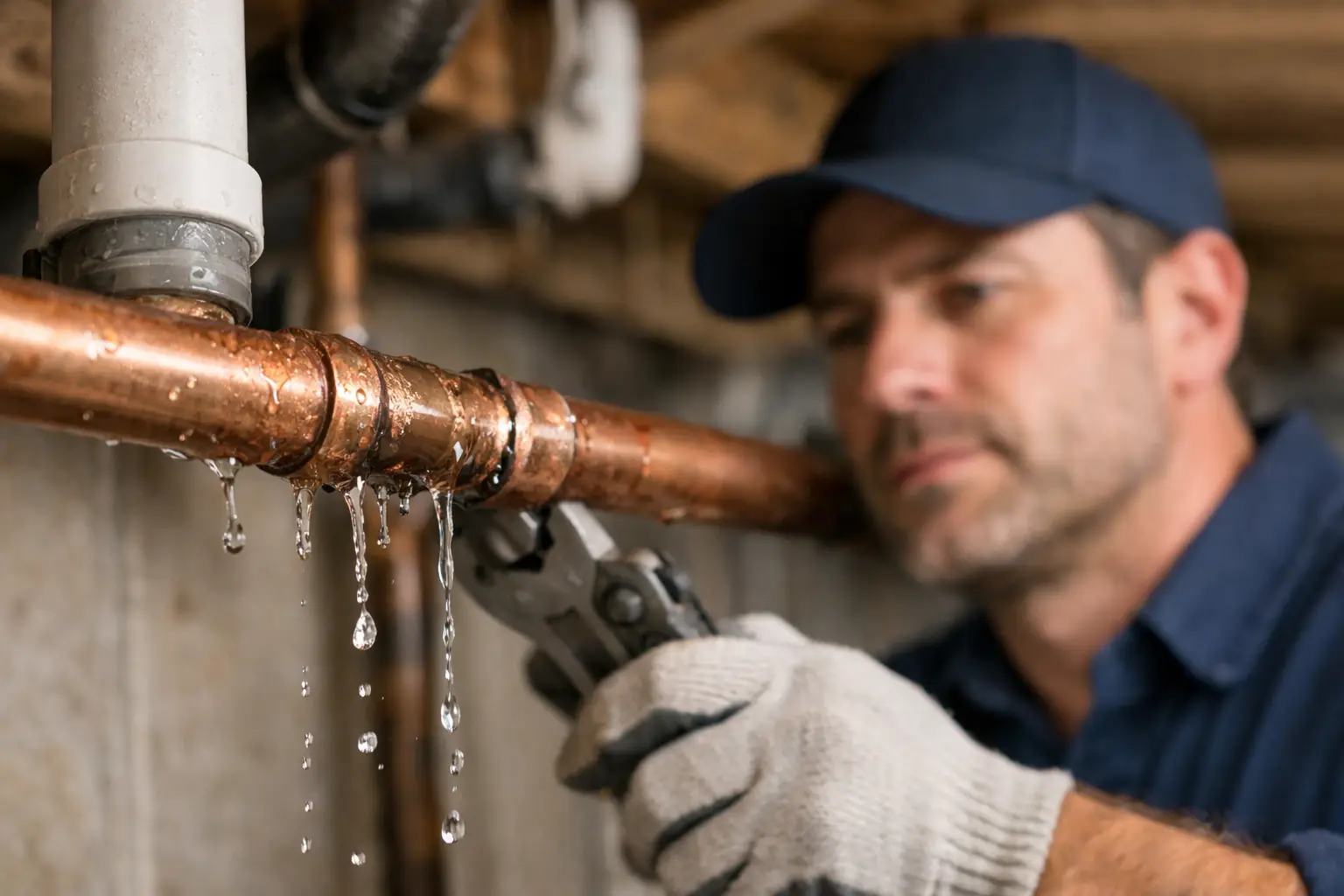
Corrosion is another major factor. Older metal pipes can thin from the inside out, which is why some leaks seem to appear without warning. By the time water becomes visible, the pipe may already be compromised along a larger section. Spot repairs can help in the right situation, but sometimes they only buy time if the surrounding pipe is already deteriorating.
Drain and sewer conditions also play a role more often than people realize. When buildup, grease, scale, or debris restricts flow, wastewater does not move the way it should. That can increase stress on joints and fittings, especially in aging systems. In those cases, clearing the line and verifying its condition with proper diagnostic tools can be just as important as fixing the leak itself.
Then there are pressure-related issues. Repeated vibration, water hammer, worn valves, and weak connections can all contribute to failure. These are the kinds of problems that do not always announce themselves clearly until a leak forms in the weakest part of the system.
When a leaking pipe is an emergency and when it can wait a few hours
Some leaks need immediate service. If water is actively soaking drywall, running onto electrical components, pooling around a water heater, or affecting multiple fixtures, time matters. The same is true if the leak appears connected to a drain backup or sewer issue. Water damage is expensive, but contamination risk adds another level of concern.
Other situations may be less dramatic but still should not be ignored. A slow drain line leak under a sink, around a cleanout, or near a pipe joint might not flood the room today, but it can quietly damage cabinetry, subflooring, and surrounding materials. Small leaks also tend to become larger leaks at inconvenient times – overnight, during weekends, or when no one is home.
The real question is not whether the leak looks small. It is whether the source is stable and fully understood. If not, waiting usually costs more than acting.
What good pipe leak service should look like
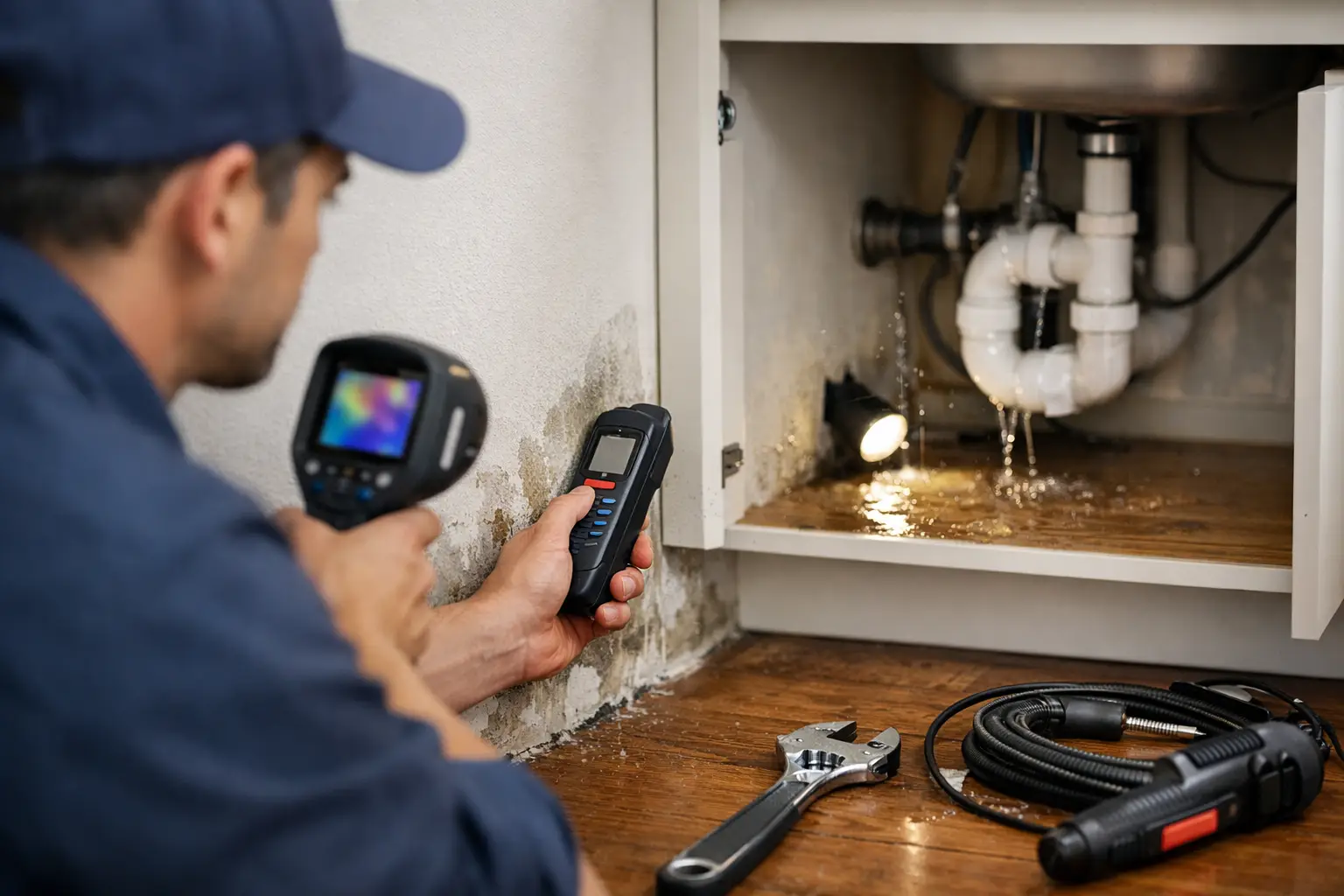
Homeowners and property managers usually know when a contractor is rushing. A quick look, a fast guess, and a patch with no explanation is not a real answer. Good leaking pipe repair service starts with showing up on time, protecting the work area, locating the true source, and explaining what failed in plain language.
From there, the repair should fit the condition of the pipe and the broader system. Sometimes a direct repair is the right move. Sometimes the smarter solution is addressing a related drain problem, descaling an affected section, or running a camera inspection to confirm there is not a larger issue further down the line. That is especially true when a leak is tied to repeated backups, slow drains, or old cast iron piping.
This is where specialized drain and sewer experience makes a difference. A company that understands flow problems, buildup, and line condition can spot issues that a surface-level repair might miss. In many cases, proving the result matters just as much as making the repair. If a line was clogged, scaled, or backing up, verification with proper equipment gives the customer confidence that the problem was actually solved.
Older homes, newer homes, and why the repair approach can differ
In older homes, leaking pipe repair often means balancing urgency with realism. If one section of aging pipe fails, it may not be the last weak point. A targeted repair can still make sense, but the conversation should be honest about what the rest of the system looks like. No homeowner wants surprises, and no property owner wants to keep chasing the same issue from room to room.
In newer homes, the challenge is different. Materials may be in better shape overall, but bad connections, shifting, poor support, or concentrated wear can still create localized failures. These jobs often look simpler at first, but a proper inspection still matters. A leak behind a wall or under a slab should never be treated casually just because the home is newer.
Commercial properties and rentals add another layer. Downtime, tenant disruption, and repeat service calls all matter. Fast response is important, but so is a repair strategy that limits disruption and addresses the cause. Business owners and landlords usually do not want temporary relief. They want the issue handled cleanly and correctly so they can move on.
Why drain specialists matter in certain pipe leak situations
Not every plumbing company approaches leaks the same way. If the issue involves a drain line, sewer line, buildup, or suspected internal damage, drain-focused diagnostics can change the quality of the outcome. A leak tied to scale inside cast iron, recurring kitchen line backups, or a compromised section of sewer piping is not just a patch-and-go situation.
That is where tools like sewer camera inspections, hydro jetting, and descaling become part of the conversation. Not as extras, and not as upsells, but as ways to see what is really happening and restore proper flow where needed. In the right situation, that can prevent repeated leaks, recurring backups, and unnecessary wall or floor damage from future failures.
For property owners in places like Gainesville, Bristow, Haymarket, and Manassas, that practical approach matters. You want the leak fixed, but you also want to know whether the line itself is in good shape or headed toward the next problem.
Titan Jetters approaches these situations the way customers expect a serious service company to handle them – fast response, clear explanations, clean work, and verified results wherever diagnostics are needed.
What to do while waiting for service
If you have an active leak, shut off the water to the affected fixture if possible, or use the main shutoff if the source is not isolated. Move valuables away from the area, and dry standing water as best you can to limit secondary damage. After that, the focus should be on getting qualified help in place quickly.
What should not happen is waiting to see if it stops on its own. Pipe leaks almost never improve with time. They usually get more expensive, more disruptive, and harder to contain.
A good repair is not just about stopping water today. It is about making sure the line is sound, the cause is understood, and the fix makes sense for the property. If you are dealing with a leak, the best next step is simple – get it diagnosed properly, get it repaired cleanly, and get back to normal without wondering if the same spot will fail again next month.