Low water pressure usually shows up at the worst time – when the shower turns weak, the kitchen faucet takes forever, or a washing machine cycle drags on longer than it should. If you’re searching for how to fix low water pressure in house systems, the first step is not grabbing a wrench. It is figuring out whether the problem is isolated, temporary, or coming from a deeper issue in the plumbing.
That distinction matters. Some pressure problems are minor and limited to one fixture. Others point to buildup inside old piping, a failing pressure regulator, a partially closed shutoff valve, or a hidden leak. When you know where the drop is happening, you can move faster toward the right fix and avoid wasting time on guesswork.
How to fix low water pressure in house systems starts with the pattern
Before anyone talks about repairs, pay attention to what the pressure is actually doing. Is it low at one sink but normal everywhere else? Is the whole house affected? Did it start suddenly, or has it been getting worse over time?
A single slow faucet often points to a local fixture issue, such as a clogged aerator or sediment buildup. Whole-house low pressure usually means the cause is farther upstream. That could be the main shutoff valve, the pressure reducing valve, mineral scale inside water lines, or even a problem on the municipal supply side.
Timing also tells you a lot. A sudden drop can mean a valve was moved, a leak developed, or utility work changed incoming pressure. A gradual decline is more commonly tied to aging galvanized lines, scale buildup, or a regulator wearing out.
Start by ruling out the simple causes
Low pressure does not always mean a major plumbing failure. In many homes, the problem starts with something basic that has been overlooked.
If pressure is weak at just one fixture, sediment is a common culprit. Faucet aerators and showerheads collect mineral deposits over time, especially in areas with harder water. When those openings narrow, flow drops. The same thing can happen in appliance screens and supply connections.
Another common issue is a valve that is not fully open. Homeowners sometimes discover this after recent plumbing work, a water heater replacement, or a shutoff during maintenance. If the main water valve or meter-side valve is only partially open, the whole house can feel it.
Then there is the neighborhood factor. If the pressure changed suddenly, it may have nothing to do with your house at all. Municipal work, hydrant use, or water main issues can temporarily affect supply. When several fixtures weaken at the same time, checking whether neighbors are seeing the same thing can save a lot of second-guessing.
When low pressure affects the whole house
Whole-house pressure loss is where the real diagnosis starts. If every faucet, shower, and appliance seems weaker than usual, the issue is likely somewhere in the main supply path.
One possibility is the pressure reducing valve, also called a pressure regulator. Many homes have one installed where the main water line enters the house. Its job is to keep incoming pressure at a safe, consistent level. When it starts to fail, pressure can drop throughout the home. Sometimes the symptom is steady low pressure. Other times it swings between too low and too high, which can be even more frustrating.
A second possibility is pipe restriction. In older homes, especially those with galvanized steel piping, the inside diameter of the pipe can slowly shrink from corrosion and mineral buildup. From the outside, the line may look fine. Inside, it can be heavily choked down. That is one reason older homes often experience gradual pressure loss that keeps getting worse.
Leaks are another major cause. A hidden leak in a wall, crawl space, slab, or underground line can steal pressure before water ever reaches the fixtures. Not every leak is dramatic. Some are quiet enough to go unnoticed until the water bill rises or weak flow becomes impossible to ignore.
How to tell if it is pressure or volume
Homeowners often use the word pressure for any weak water issue, but sometimes the real problem is volume. The difference matters.
Pressure is the force pushing water through the system. Volume is how much water the system can deliver at once. A fixture can seem weak because pressure is low, but it can also feel weak because a restriction is limiting flow volume. That is why one faucet may run acceptably until another fixture turns on. Once demand increases, the restriction becomes obvious.
This is common in scaled pipes, undersized lines, and partially blocked supply components. It is also why a home can have a decent stream at one fixture and still struggle during normal daily use. If pressure collapses when multiple fixtures run at once, restriction somewhere in the system is a strong possibility.
Signs the issue is deeper than a fixture problem
If you are trying to figure out how to fix low water pressure in house plumbing, there are a few signs that point toward a professional diagnosis rather than a minor fixture issue.
One is discoloration. Rusty or brown water along with low pressure often suggests corrosion inside aging pipes. Another is noise. Whistling, banging, or vibration can indicate valve trouble, regulator issues, or unstable flow conditions. Wet spots, musty smells, or unexplained bill increases raise the possibility of a leak.
Pay attention to the water heater too. If low pressure is mostly affecting hot water, the problem may be on the heater side rather than the full supply system. Sediment, failing shutoff valves, or localized restrictions can create that split between hot and cold performance.
Why drain and sewer specialists still matter here
Low water pressure is a supply-side problem, but diagnosis still depends on understanding how the whole plumbing system behaves under real conditions. A plumber who works with line diagnostics every day tends to spot patterns faster, especially when a pressure complaint overlaps with older piping, recurring clogs, poor drainage, or signs of scale inside the system.
That matters in Northern Virginia homes, where age, water quality, and pipe condition can vary a lot from one property to the next. In some houses, low pressure is isolated and straightforward. In others, it is one symptom of a broader system issue that needs a clear, verified diagnosis before any repair decisions are made.
At Titan Jetters, that same no-guesswork approach applies to plumbing problems across the board. The goal is to identify what is actually happening, explain it clearly, and point you toward the fix that solves the problem rather than masking it.
How plumbers diagnose low pressure the right way
A proper diagnosis is usually less about one dramatic test and more about narrowing things down in a logical order. The plumber checks whether the issue affects hot, cold, or both. They compare fixture performance, inspect valves, evaluate regulator behavior, and look for signs of leakage or internal restriction.
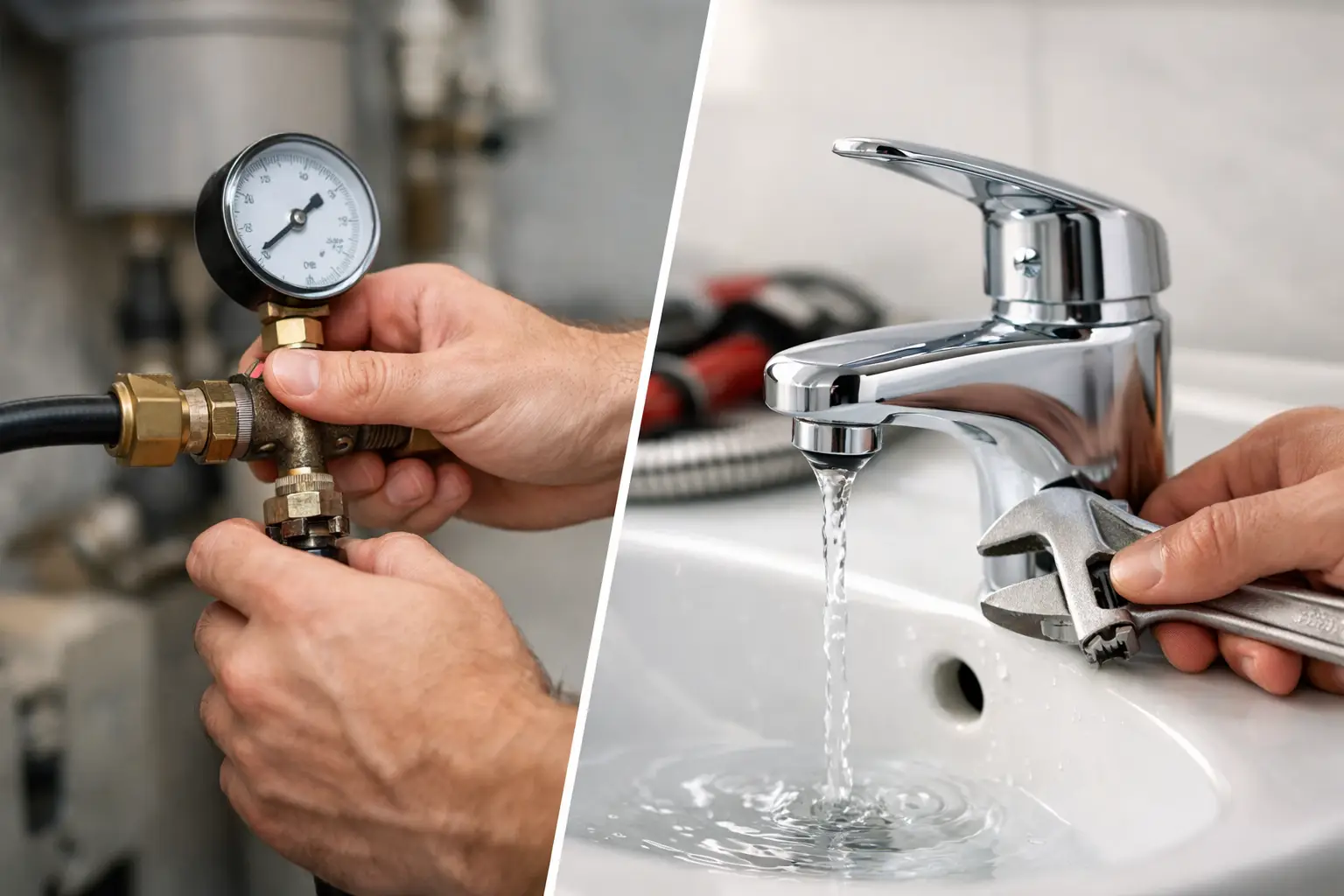
In some cases, a pressure gauge confirms whether the incoming supply is too low or whether pressure drops only after water enters the home. If a leak is suspected, that changes the path entirely. If the house has older supply piping, the conversation may shift toward internal corrosion and long-term flow loss.
What you want is a clear answer, not a vague theory. Pressure problems can be misleading, and the wrong assumption leads to wasted time and repeat service calls.
When to stop troubleshooting and call for service
If low pressure is limited to one showerhead or faucet, the cause may be minor. But if the whole house is affected, the change was sudden, the water bill climbed, or the pipes are older, it is time to bring in a licensed plumber.
The same goes for pressure loss paired with leaks, discolored water, banging pipes, or poor hot water performance. Those combinations usually point to something more than a simple fixture issue. Waiting rarely improves it. In some cases, the longer the problem sits, the more damage or inconvenience follows.
Fast diagnosis matters because low pressure is not just annoying. It affects daily routines, appliances, and confidence in the plumbing system itself. When the cause is identified early, the fix is usually cleaner and more controlled than it is after a small problem turns into a larger one.
If your water pressure has dropped and the cause is not obvious, the smartest move is to treat it like any other plumbing warning sign – get it checked before the inconvenience turns into damage. A good plumber will tell you what is actually wrong, what can wait, and what should be addressed now.