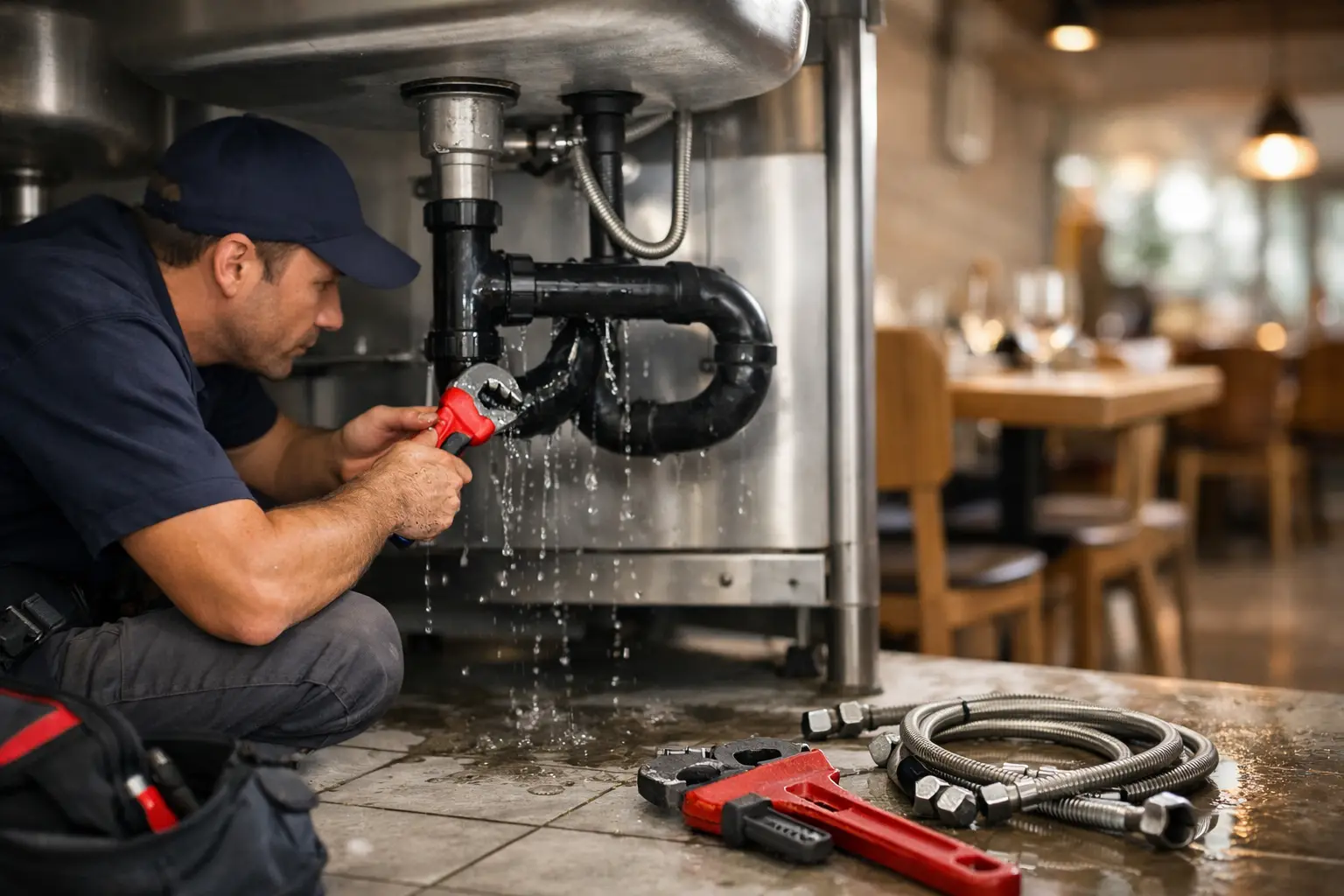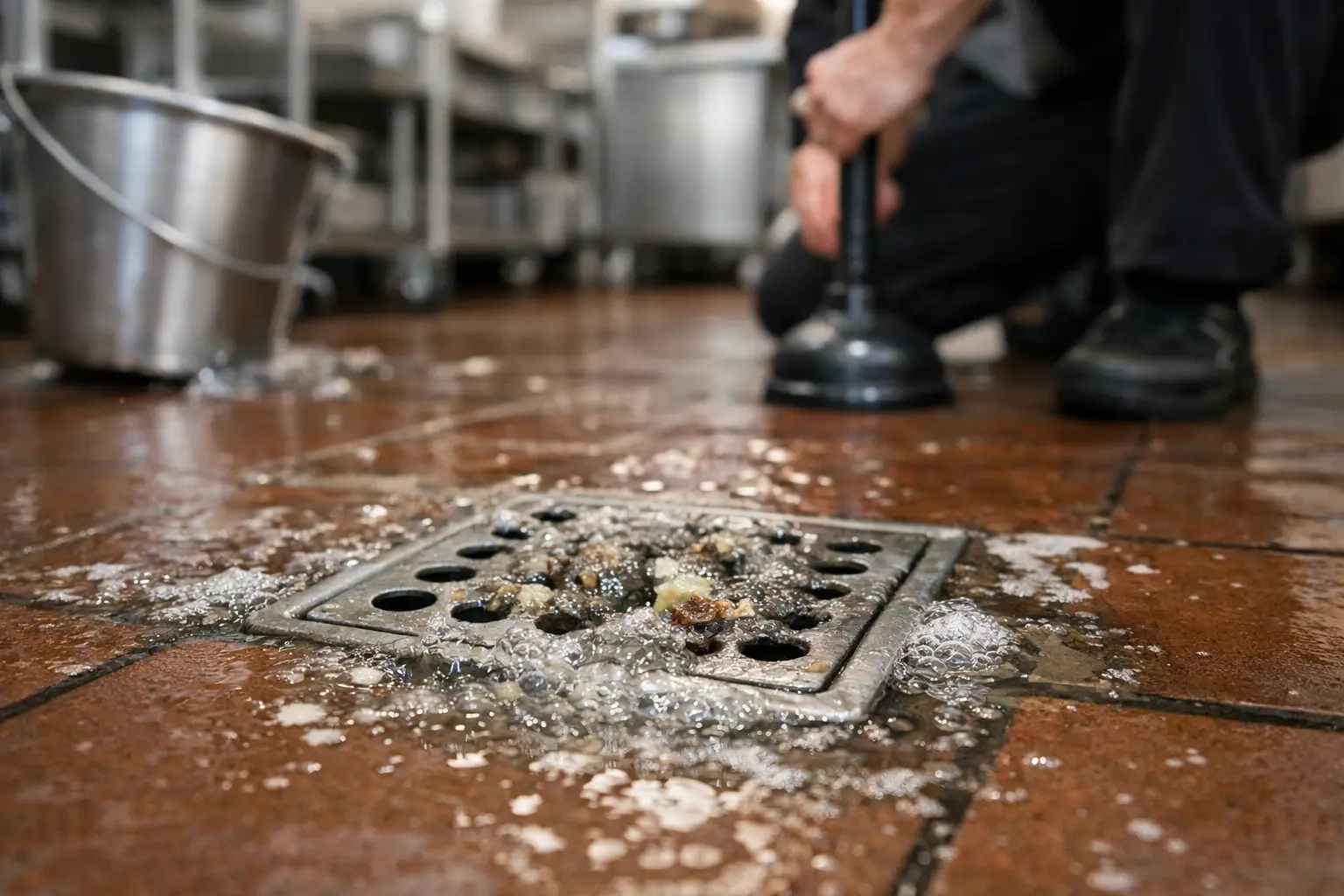
The lunch rush is over, the mop bucket is out, and the same floor drain is backing up again. If your restaurant floor drain keeps clogging, that is not just a housekeeping issue. It is usually a warning sign that grease, food solids, sludge, or scale is building deeper in the line and restricting flow every time the kitchen gets busy.
In a restaurant, drains do not fail quietly. They show up as standing water near prep areas, foul odors, slow drainage during cleanup, and repeat backups that keep pulling staff away from service. The problem is not always the drain opening you can see. More often, the real issue is farther down the line, where years of grease and debris have narrowed the pipe enough that normal use pushes it over the edge.
Why a restaurant floor drain keeps clogging
Most repeat floor drain problems come down to one thing – buildup. In commercial kitchens, wastewater carries grease, starch, soap residue, food particles, sediment, and sometimes mop string, labels, or other trash that should never have entered the drain in the first place. Even when staff are careful, a restaurant drain line handles a much heavier load than a typical residential line.
Grease is usually the main offender. It goes in warm, then cools and sticks to the pipe wall. Over time, it grabs everything else moving through the line. That includes rice, shredded vegetables, crumbs, and detergent residue. What starts as a thin film turns into a thick restriction. Once that happens, a floor drain may seem fine during slow periods and then back up the moment dishwashing, sink use, and floor cleaning all happen at once.
In older buildings, pipe condition matters too. Cast iron lines can develop heavy scale on the inside surface. That rough texture catches debris faster than a smooth pipe. A line with scale may keep clogging even after a basic snaking because the tool punches a path through the blockage without fully cleaning the pipe wall.
There is also the possibility of a system issue beyond the kitchen branch line. If the main drain is partially blocked, the floor drain may simply be the first place the problem shows itself because it sits low and receives overflow pressure from upstream fixtures.
The warning signs that point to a bigger drain problem
A clogged floor drain is one thing. A floor drain that keeps coming back is different.
If backups happen weekly, if multiple drains in the kitchen are slow at the same time, or if wastewater rises through the floor drain when nearby sinks empty, the issue likely extends beyond a simple trap obstruction. Bad odors that return soon after cleaning also point to waste sitting in the line instead of moving out the way it should.
Another red flag is time of day. If the drain performs decently in the morning but struggles during peak production and cleanup, that usually means the pipe has lost carrying capacity. Water is still getting through, just not fast enough for restaurant demand.
This is where guessing gets expensive. A recurring clog can come from grease, scale, a sag in the line, root intrusion outside the building, or a partially blocked main. The symptoms can look similar from the floor, but the fix is not the same.
Why surface cleaning does not solve it
It is common for staff to clear debris from the drain cover, flush the area, and get temporary relief. That may restore some flow, but it does not address what is happening several feet or several yards into the pipe.
A basic cable machine can also be a short-term answer, especially if the line is heavily obstructed. The problem is that cabling often leaves material behind on the pipe walls. In a restaurant setting, that remaining grease layer becomes the base for the next blockage. The drain opens, business resumes, and then the same issue returns.
That is why repeat restaurant clogs need a diagnosis, not just a quick punch through the stoppage. If the drain line is still coated inside, you have not really fixed the problem. You have delayed it.
What professional drain cleaning should include
For a restaurant floor drain keeps clogging situation, the goal is not simply to get water moving today. The goal is to restore full flow and verify the line is actually clean.
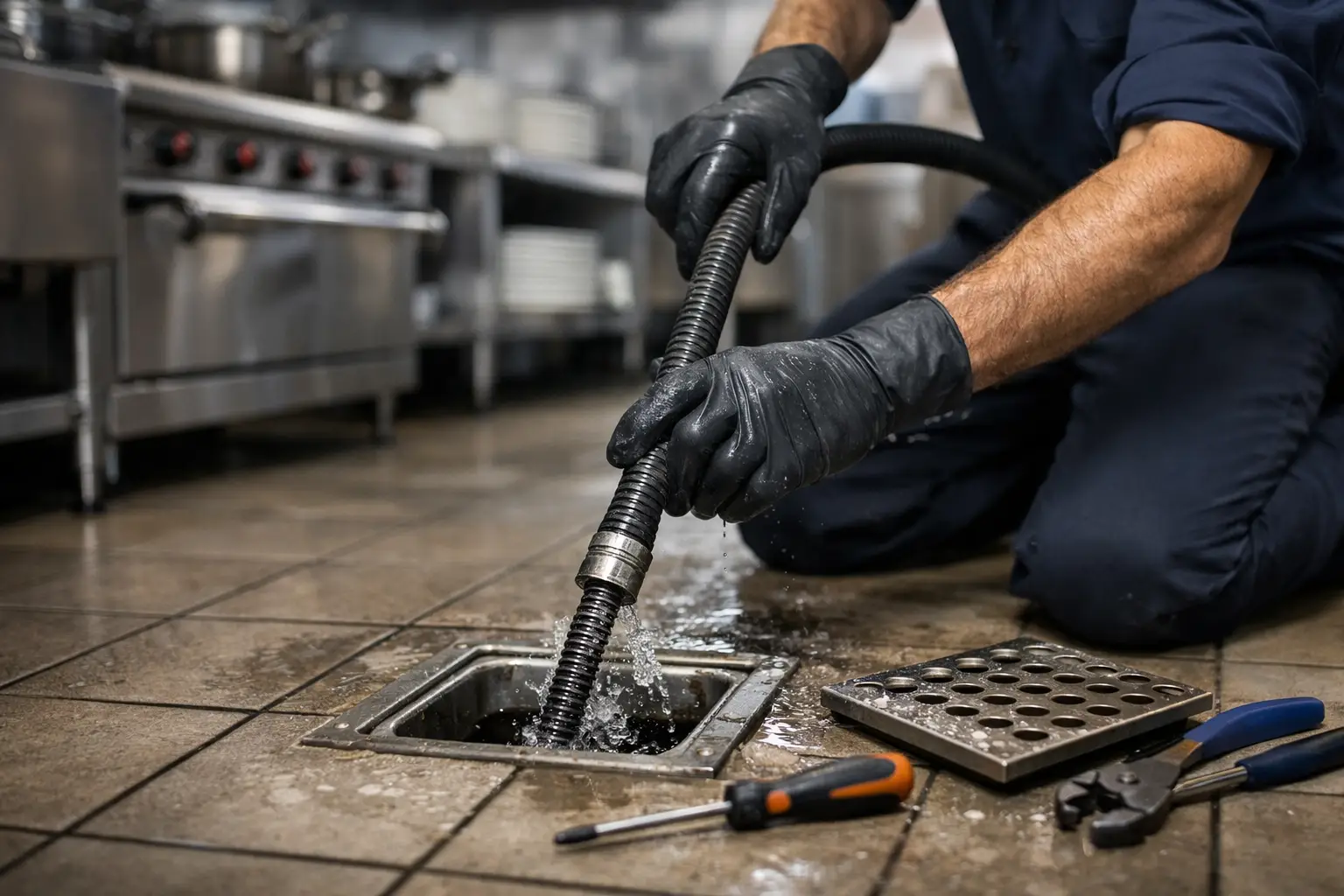
That usually starts with identifying where the restriction is and what it is made of. In many commercial drain lines, professional hydro jetting is the right solution because it clears grease, sludge, and soft buildup across the full inside diameter of the pipe rather than poking a narrow hole through the center. When done correctly, it scrubs the line clean and pushes debris out of the system.
If the pipe has heavy scale, especially in older cast iron, descaling may be needed to remove the hardened deposits that keep catching waste. And if there is any concern about pipe damage, offsets, root intrusion, or a recurring issue that does not match the visible symptoms, a sewer camera inspection helps confirm exactly what is going on inside the line.
That verification matters. A clean line should not be a mystery. You should know whether the blockage was grease, scale, foreign material, or a structural problem, and you should know whether the flow was restored completely.
When the clog is really a maintenance problem
Some restaurants call only when the drain backs up. That is understandable, but it often turns a manageable maintenance issue into an emergency service call during operating hours.
Commercial kitchen drains build residue gradually. If your floor drain has a history of slowing down every few months, that pattern usually means the line needs scheduled cleaning before it reaches failure point. The right interval depends on kitchen volume, menu type, grease output, and pipe condition. A small cafe and a high-volume full-service kitchen do not load a drain system the same way.
There is a trade-off here. Cleaning too often can be unnecessary. Waiting too long invites backups, odors, sanitation concerns, and disruption to staff. The smart approach is to base maintenance on actual line condition and usage, not guesswork.
For many restaurant operators, especially in older commercial buildings around Northern Virginia, recurring drain problems are a sign that the line needs more than occasional emergency clearing. It needs a plan.
What to expect when a restaurant floor drain keeps clogging repeatedly
A drain specialist should look at the whole system, not just the drain opening. That means asking when the problem occurs, which fixtures are connected, whether other drains are affected, and how often the issue returns. From there, the right equipment can be used to clear the line thoroughly and inspect it if needed.
This matters for more than convenience. Repeat drain backups create slip hazards, interrupt closing procedures, and put pressure on kitchen operations. If wastewater appears in a food service area, the problem moves beyond annoyance fast.
A professional crew should also leave you with a clear explanation. Was the blockage grease-heavy? Was the line scaled? Did the inspection show a damaged section or just buildup? Straight answers help you make better decisions about future maintenance and avoid repeated shutdowns.
At Titan Jetters, that is the standard approach – diagnose the line correctly, clean it with the right equipment, and verify results so you are not dealing with the same backup again next week.
When to stop treating it like a minor clog
If the floor drain backs up more than once, smells persist, or sink discharge affects the drain, it is time to treat it as a system problem. The longer a restricted commercial line stays in service, the more debris it collects and the harder it becomes to keep the kitchen moving without interruption.
Some drain issues are straightforward. Others reveal bigger concerns once the line is inspected. Either way, recurring clogs are telling you something useful: the pipe is not carrying waste the way it should.
A restaurant can work around a lot of problems for a little while. A bad drain is rarely one of them. The sooner the line is cleaned and verified properly, the sooner your staff can get back to running the kitchen instead of working around standing water.