
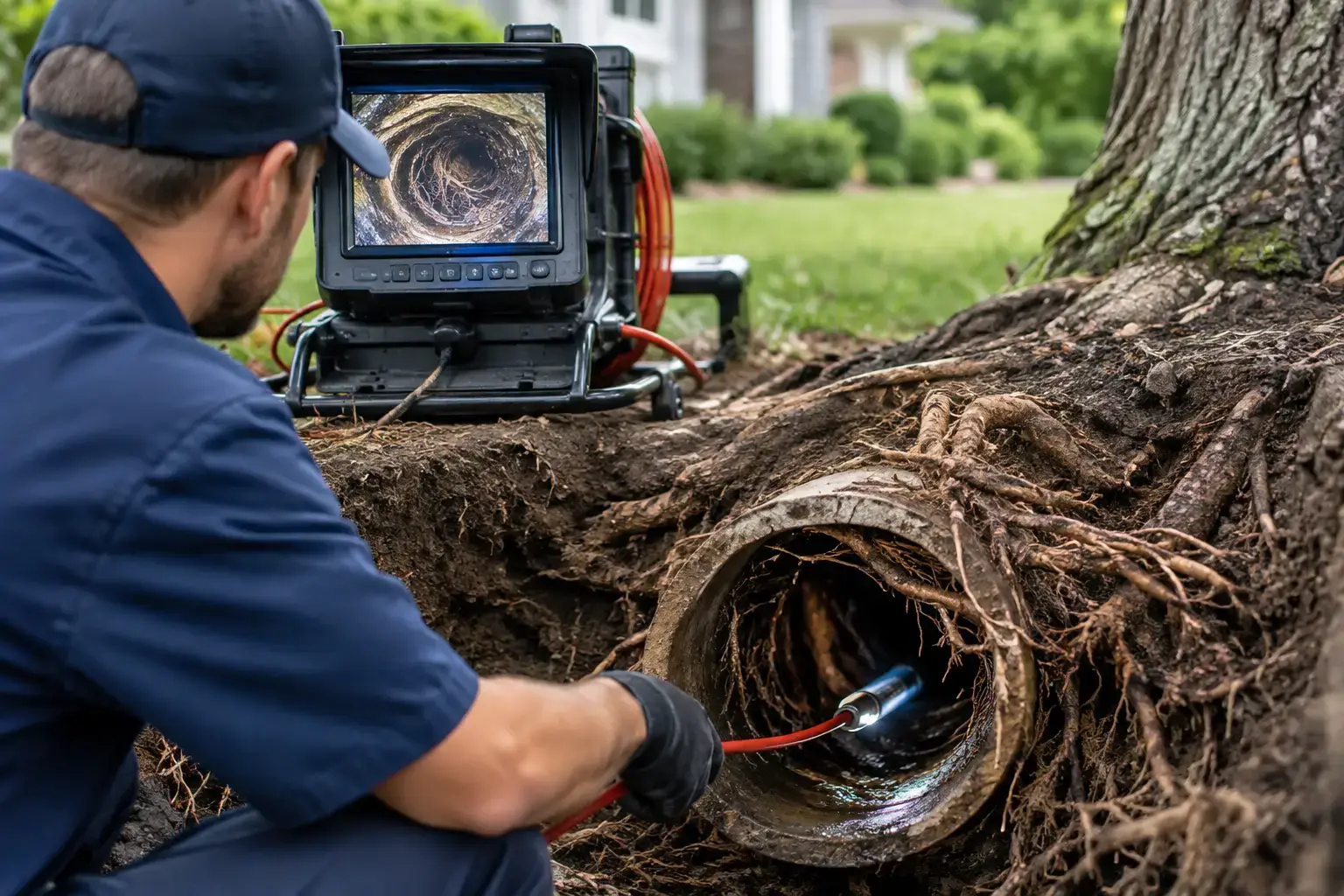
A sewer line can run for years without trouble, then start backing up after a wet spring or a period of heavy tree growth. Can tree roots damage sewers? Yes. Roots are one of the most common causes of recurring main sewer line clogs, especially in older homes with aging pipe joints, cracks, or connections.
The problem is not that roots can crush a sound sewer pipe overnight. More often, they find a small opening where moisture and nutrients are escaping, work their way inside, and keep growing. What starts as a thin root strand can become a dense mass that catches toilet paper, grease, wipes, and other debris until wastewater has nowhere to go.
How Tree Roots Get Into Sewer Lines
Tree roots naturally grow toward water. A sewer line with a loose joint, worn seal, offset connection, crack, or corrosion can release enough moisture into the surrounding soil to attract them. Roots do not need a large opening to get started. Once inside a pipe, the steady supply of water and nutrients creates an ideal environment for growth.
Older clay, cast iron, and concrete sewer lines are more likely to have vulnerable joints or deterioration. That does not mean newer PVC lines are immune. A damaged fitting, poor connection, or shifted section of pipe can still provide an entry point.
In Northern Virginia, many properties have mature trees and established landscaping close to the home or sewer route. That can make root intrusion more likely, but the tree itself is not always the whole story. A healthy, properly connected sewer line should not be leaking enough water to invite roots in. The real concern is often the condition of the pipe.
Can Tree Roots Damage Sewers Beyond Causing a Clog?
Yes. Roots can do more than create a blockage. As they expand inside the line, they can force apart weakened joints, worsen existing cracks, and trap solids that cause repeated backups. If the pipe is already brittle, corroded, or shifting in the ground, root growth can speed up the failure.
The result depends on the pipe material and its existing condition. In some cases, professional root cutting and thorough cleaning restore flow and buy the property owner time. In other cases, a sewer camera inspection reveals a broken, collapsed, or badly separated line that needs repair. Clearing the blockage without checking the pipe can leave the actual cause unanswered.
That is why a recurring sewer backup should never be treated as just another clog. The line needs to be inspected from the inside so the next recommendation is based on what is actually there.
Warning Signs of Root Intrusion in a Sewer Line
Root problems usually build gradually. A complete backup may feel sudden, but there are often smaller warning signs beforehand. Pay attention if you notice any of the following:
- Multiple drains slow down at the same time, especially toilets, tubs, and showers.
- A toilet gurgles when a sink, washing machine, or shower drains.
- Sewage backs up into a tub, shower, floor drain, or lowest-level fixture.
- Main line clogs return after being snaked or temporarily cleared.
- A sewer odor develops outside near the line route or inside the home after drains run.
- Patches of grass appear unusually green or wet near where the sewer line runs.
One slow bathroom sink may be a local drain issue. Several fixtures acting up together usually points farther downstream, often at the main sewer line. If wastewater is coming back into the home, stop using water where possible and arrange professional service promptly. Continued use can turn a manageable blockage into a messy cleanup.
Why a Basic Drain Cable May Not Solve It
A standard drain cable can open a small path through roots and get water moving again. That can be useful in the moment, but it does not necessarily remove the root mass from the pipe walls. It also does not show whether roots entered through a cracked joint, a missing section of pipe, or another defect.
This is why some homeowners experience the same main line backup every few months. The cable created a temporary opening, but the roots remained and quickly caught debris again. Repeated emergency calls become frustrating and expensive when nobody verifies the condition of the line.
For heavier buildup, professional root removal and hydro jetting can clean a line more thoroughly than a cable alone, depending on the pipe material and the condition identified during inspection. Hydro jetting uses controlled high-pressure water to clear debris and buildup from the pipe walls. It is not a one-size-fits-all answer, however. A severely damaged or collapsed pipe must be evaluated before using any cleaning method that could aggravate the issue.
A Sewer Camera Inspection Provides the Answers
A sewer camera inspection takes the guesswork out of recurring drain and sewer problems. A technician sends a specialized camera through the line to locate root intrusion and look for the defects that allowed it to enter. The inspection can reveal root balls, cracked pipe, separated joints, pipe bellies, scale buildup, offsets, and other issues that affect flow.
The value is not just seeing roots on a screen. It is knowing where the problem is, how extensive it is, and whether cleaning is likely to be a practical solution. A clear view of the line helps prevent unnecessary repairs while making sure serious damage is not ignored.
At Titan Jetters, the focus is on diagnosing the cause before recommending the next step. If roots are limited and the pipe remains structurally sound, professional cleaning may restore dependable flow. If the camera shows a failing section of sewer, you can make a repair decision with clear information instead of repeated temporary fixes.
Cleaning Roots vs. Repairing the Sewer Line
There is a real trade-off between cleaning and repair. Cleaning is often the right first move when roots are causing a blockage but the pipe has no major structural damage. It can restore service quickly, minimize disruption, and help property owners plan ahead if the line needs monitoring.
Repair becomes the stronger option when roots have entered through major breaks, badly separated joints, severe corrosion, or collapsed pipe. In that situation, cleaning may get wastewater moving, but it cannot correct the opening that keeps inviting roots back. The right path depends on the camera findings, the age and material of the pipe, the frequency of backups, and the extent of damage.
Property managers and business owners should take recurring issues especially seriously. A main sewer backup can disrupt tenants, customers, staff, and daily operations. Getting a proper diagnosis early is usually easier than responding to a preventable emergency later.
Can You Prevent Tree Roots From Returning?
You cannot stop trees from seeking water, and cutting down a tree does not always solve an existing sewer line problem. Roots already inside the pipe can continue causing trouble, while the opening in the sewer line remains. Prevention is less about landscaping guesses and more about maintaining the line and addressing defects when they are found.
If a camera inspection confirms a sound pipe after cleaning, periodic professional maintenance may help keep buildup and early root growth under control. The appropriate schedule varies. A home with a history of heavy root intrusion may need more attention than a newer property with a recently repaired sewer connection.
Avoid treating repeated slow drains with chemical drain cleaners. These products are not a reliable answer for roots in a main sewer and may be hard on certain pipe materials. When the same issue returns, camera diagnostics and professional cleaning provide a safer, more useful next step.
When to Call for Sewer Service
Call for professional help when multiple fixtures are slow, sewage is backing up, a main line clog returns, or you suspect roots based on a previous inspection. Waiting for a complete blockage rarely improves the situation. Fast service can protect your floors, fixtures, and schedule while giving you a clear picture of what is happening underground.
For homeowners and property managers in Gainesville, Bristow, Haymarket, Manassas, and nearby Northern Virginia communities, the practical next move is simple: have the main line inspected, clear the blockage properly, and address the defect if one is found. A sewer line should not be a mystery beneath the yard. The right diagnosis gives you a workable plan and helps keep wastewater flowing where it belongs.
