
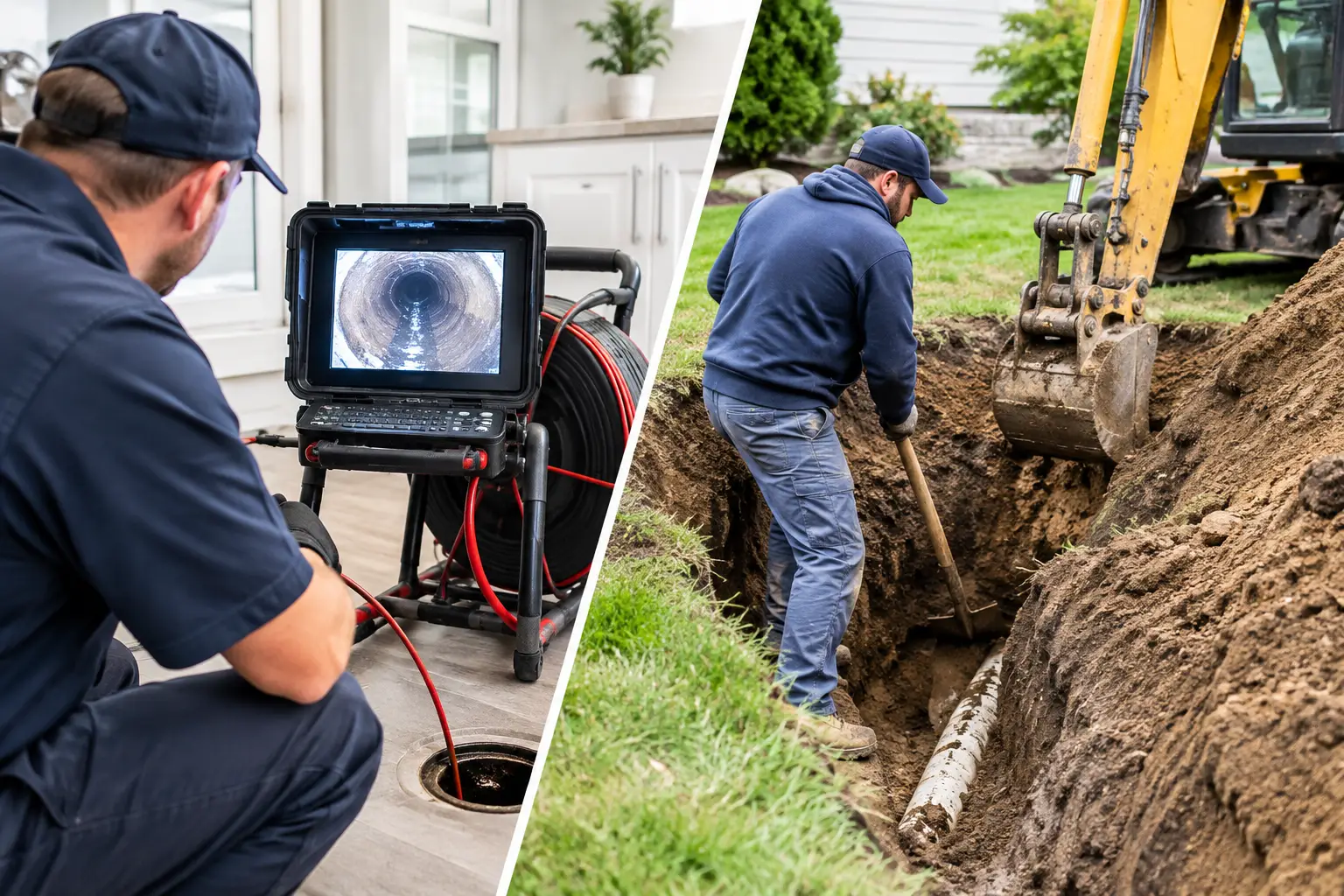
A sewer backup can make any homeowner think the worst: a torn-up yard, a broken driveway, and a major repair bill. But camera inspection versus excavation is not an either-or decision at the start of every sewer problem. A professional camera inspection is usually the first step because it shows what is happening inside the line before anyone recommends digging.
For homeowners and property managers in Gainesville, Bristow, Haymarket, and Manassas, that difference matters. The right diagnosis can mean the difference between cleaning a blockage, planning a targeted repair, or excavating only where excavation is truly needed.
Why a Camera Inspection Usually Comes First
A sewer camera inspection sends a specialized waterproof camera through the drain or main sewer line. The camera provides a live view of the pipe interior, allowing a technician to see the location and likely cause of the restriction or damage.
This is more than a way to confirm that a drain is clogged. It helps answer the questions that determine the next move: Is the line packed with grease, scale, wipes, or roots? Is there a break, separation, sag, or collapse? Is the pipe still structurally sound enough for professional cleaning? Where is the issue located in relation to the home and the property?
Without that information, digging is based on symptoms and assumptions. A slow kitchen drain may be grease buildup. Repeated toilet backups may point to a main sewer blockage. Water appearing in a basement drain may be a downstream restriction. The symptoms matter, but the camera shows what is actually inside the line.
For many drain and sewer issues, the camera identifies a problem that can be addressed without excavation. Heavy buildup may call for hydro jetting. Thick scale in older cast iron may require pipe descaling. Roots or a concentrated obstruction may be cleared and then visually checked to confirm restored flow. The goal is not to sell the biggest repair. It is to match the solution to the condition of the pipe.
Camera Inspection Versus Excavation: What Each Does
A camera inspection is a diagnostic tool. It locates trouble, documents pipe conditions, and helps confirm whether cleaning or repair is appropriate. It is fast, minimally disruptive, and especially valuable when a problem keeps coming back after temporary drain clearing.
Excavation is a repair method. It involves digging to reach an underground sewer line so a damaged section can be repaired or replaced. It may require disturbing landscaping, hardscape, or other areas above the pipe, depending on the line location and depth.
That does not make excavation a bad option. When a pipe has failed, digging may be the practical and necessary path to a dependable repair. The problem is excavating too early, before the condition and location of the failure have been confirmed.
A camera inspection cannot fix a crushed pipe or reconnect a separated sewer line. It also cannot always travel through a fully collapsed section or past a severe blockage until the line has been cleared enough for the camera to pass. In those cases, the visible evidence, the behavior of the line, and the camera findings help determine whether excavation is warranted.
When Cleaning May Be Enough
Not every recurring sewer issue means the pipe is broken. Drain and sewer lines commonly collect material over time, especially in high-use homes, rental properties, restaurants, and commercial buildings. Grease can harden inside kitchen lines. Mineral deposits and rust can narrow older pipes. Root intrusion can enter through small openings and catch debris until flow slows or stops.
If the camera shows buildup in an otherwise intact pipe, cleaning can often restore capacity without disturbing the yard. The right method depends on the material and pipe condition. Hydro jetting can clear grease, sludge, debris, and many stubborn blockages with high-pressure water. Flex-shaft cleaning and descaling may be better suited to certain deposits and pipe conditions.
The key is verification. After cleaning, a camera can show whether the obstruction is gone and whether there are underlying defects that could cause another backup. A line that looks clear but has a large crack, offset joint, or sag still needs a plan. A clear camera view prevents a false sense that the problem is permanently solved.
When Excavation Is the Right Call
Excavation becomes the sensible option when the line has damage that cleaning cannot correct. Common examples include a collapsed pipe, a severely bellied section that holds waste and water, a broken connection, major offsets, or pipe material that has deteriorated beyond reliable service.
A sewer line can also have root intrusion that returns because roots are entering through a failed joint or damaged section. Cleaning may restore flow in the short term, but if the opening remains, the roots have a path back in. That is where a targeted repair can make more sense than repeated emergency calls.
Location matters, too. A camera inspection helps identify where the problem sits. If the damaged section is in an open yard, excavation may be relatively straightforward. If it is under a driveway, patio, mature landscaping, or another difficult area, knowing the exact location becomes even more valuable before repair work begins.
The best recommendation is not always the least expensive option that day. If a line is structurally failing, repeated cleaning may cost more over time and leave a property exposed to another backup. On the other hand, a minor blockage does not justify treating the yard like a construction site. Good sewer diagnostics protect customers from both extremes.
Signs You Need More Than a Basic Drain Clearing
A single slow drain near one fixture may be a local drain issue. Multiple fixtures backing up, toilets gurgling when water runs elsewhere, sewage appearing at a floor drain, or recurring main line clogs point to a larger sewer concern.
Pay attention to timing. If the same line clogs again soon after it has been cleared, the blockage may not have been fully removed, or the pipe may have a condition that keeps collecting debris. If backups occur after heavy water use, the line may be partially restricted. If the problem appears without warning and affects several drains at once, the main sewer line needs prompt attention.
Property managers and business owners should take recurring symptoms seriously. A sewer problem can interrupt tenants, employees, customers, and daily operations. For restaurants and commercial kitchens, grease buildup can move from a slow drain to a shutdown-level backup if it is not properly diagnosed and cleaned.
What a Straightforward Diagnosis Should Look Like
A professional sewer visit should start with the symptoms: what is backing up, how often it happens, and whether the issue affects one drain or the entire property. From there, the technician can determine whether the line needs cleaning first, camera inspection, or both.
Once the camera is in the line, the findings should be explained in plain language. You should understand whether the issue is buildup, roots, a structural defect, or a combination of problems. If excavation is recommended, you should know why cleaning is not enough and where the repair is expected to take place.
This process also gives homeowners a clear record of the pipe condition. That can be useful when planning repairs, discussing maintenance needs with a landlord or property manager, or deciding how urgently to address a developing issue.
Titan Jetters approaches drain and sewer work with that same practical standard: diagnose the line, explain what the camera shows, clear what can be cleared, and recommend repair only when the pipe condition calls for it. No guesswork, and no unnecessary digging.
The Real Cost Is Choosing the Wrong Next Step
Comparing camera inspection and excavation only by the immediate price misses the bigger picture. A camera inspection is generally the lower-disruption way to get facts before making a repair decision. Excavation is a larger job, but it can be the right long-term investment when the sewer line has a confirmed failure.
The costly choice is often skipping diagnosis. Digging in the wrong place wastes time and damages the property without solving the problem. Repeatedly clearing a line that is broken or collapsing can also create unnecessary frustration and expense.
If your drains keep slowing down, toilets are backing up, or the main sewer line has clogged more than once, get a clear view inside the pipe before deciding what comes next. A timely camera inspection can protect your property, reduce downtime, and give you a repair plan based on evidence instead of assumptions.
