
A sink that takes an extra minute to empty is not just annoying. It is often the first warning that buildup is narrowing the pipe, a blockage is forming farther down the line, or the sewer system is not moving waste as it should. To restore slow draining pipes the right way, the cause has to be identified before the line is simply cleared and called fixed.
A temporary opening may get water moving today. A proper drain and sewer diagnosis helps prevent the same problem from returning next month – or turning into a backup inside your home or business.
Why Pipes Start Draining Slowly
Slow drainage usually develops over time. In a kitchen, grease, soap residue, food particles, and detergent can cling to the inside of the line. Bathroom drains collect hair, soap scum, toothpaste, and other debris. These materials do not always create a complete clog right away. Instead, they reduce the usable diameter of the pipe until water has trouble getting through.
Older pipes can create a different problem. Cast iron lines often develop internal scale and corrosion. The rough, narrowed surface catches waste and allows buildup to return quickly after a basic clearing. In some Northern Virginia homes, aging sewer lines may also have cracks, offsets, root intrusion, or sagging sections that hold debris and restrict flow.
The location of the slow drain matters. One slow sink may point to a local branch-line issue. A slow shower, toilet, and sink in the same area can mean the problem is farther down the line. When multiple fixtures drain slowly, gurgle, or back up together, the main sewer line should be checked promptly.
Signs a Slow Drain Needs Professional Attention
A plunger or store-bought product may appear to improve flow for a short time, but recurring symptoms are a sign to stop treating the surface problem. Chemical drain cleaners can also be hard on certain pipes and may not reach the heavy buildup or obstruction causing the restriction.
Professional drain service is the better call when slow drainage comes with any of the following:
- The same sink, tub, shower, or toilet slows down again after being cleared.
- Water backs up into another fixture, such as a shower drain when a toilet is flushed.
- Drains gurgle, bubble, or produce sewer odors.
- Several drains throughout the building are slow at once.
- A kitchen line repeatedly clogs from grease and food residue.
- The property has older cast iron piping or a known history of sewer trouble.
These symptoms can point to more than a simple clog. Waiting too long can lead to a full backup, water damage, downtime for a business, and a mess that is much more difficult to manage.
The Best Way to Restore Slow Draining Pipes Depends on the Cause
There is no one-size-fits-all drain cleaning method. The right solution depends on the pipe material, the condition of the line, what is causing the restriction, and whether the problem is isolated or affecting the main sewer.
Drain Cleaning for Localized Buildup
For a single slow bathroom or kitchen drain, professional drain cleaning can remove the blockage and restore flow. The goal is not simply to poke a small hole through the clog. A thorough service targets the material restricting the line so water can move normally again.
This approach is often effective for hair, soap buildup, food debris, and localized grease. If the drain has clogged repeatedly, though, the technician should consider whether buildup remains on the pipe walls or whether a deeper issue is contributing to the problem.
Hydro Jetting for Grease and Heavy Pipe Buildup
Hydro jetting uses high-pressure water to clean the inside of a drain or sewer line. It is especially useful for heavy grease, sludge, debris, and recurring buildup that basic cable cleaning may not fully remove.
For restaurants, commercial kitchens, rental properties, and homes with chronic kitchen drain problems, hydro jetting can provide a more complete clean. It clears the line walls instead of only opening a path through the center of the blockage.
That does not mean hydro jetting is automatically the answer for every slow pipe. A damaged, severely deteriorated, or compromised line should be evaluated first. This is where a camera inspection helps determine whether cleaning is appropriate and what condition the pipe is in.
Flex-Shaft Cleaning and Pipe Descaling for Cast Iron
Cast iron drain lines can become heavily scaled on the inside. As corrosion builds, the opening inside the pipe becomes smaller and rougher. Waste catches on that rough surface, and slow drains become a recurring problem.
Flex-shaft cleaning and pipe descaling are designed to address this type of internal buildup. These methods can remove scale and restore more of the pipe’s usable diameter. For property owners dealing with repeated clogs in an older home or building, descaling may be the difference between constant service calls and dependable drainage.
The long-term outcome depends on the remaining condition of the pipe. If the line is structurally sound, cleaning can significantly improve flow. If a camera reveals cracks, breaks, offsets, or severe deterioration, repair may be the more responsible recommendation.
Why a Sewer Camera Inspection Changes the Conversation
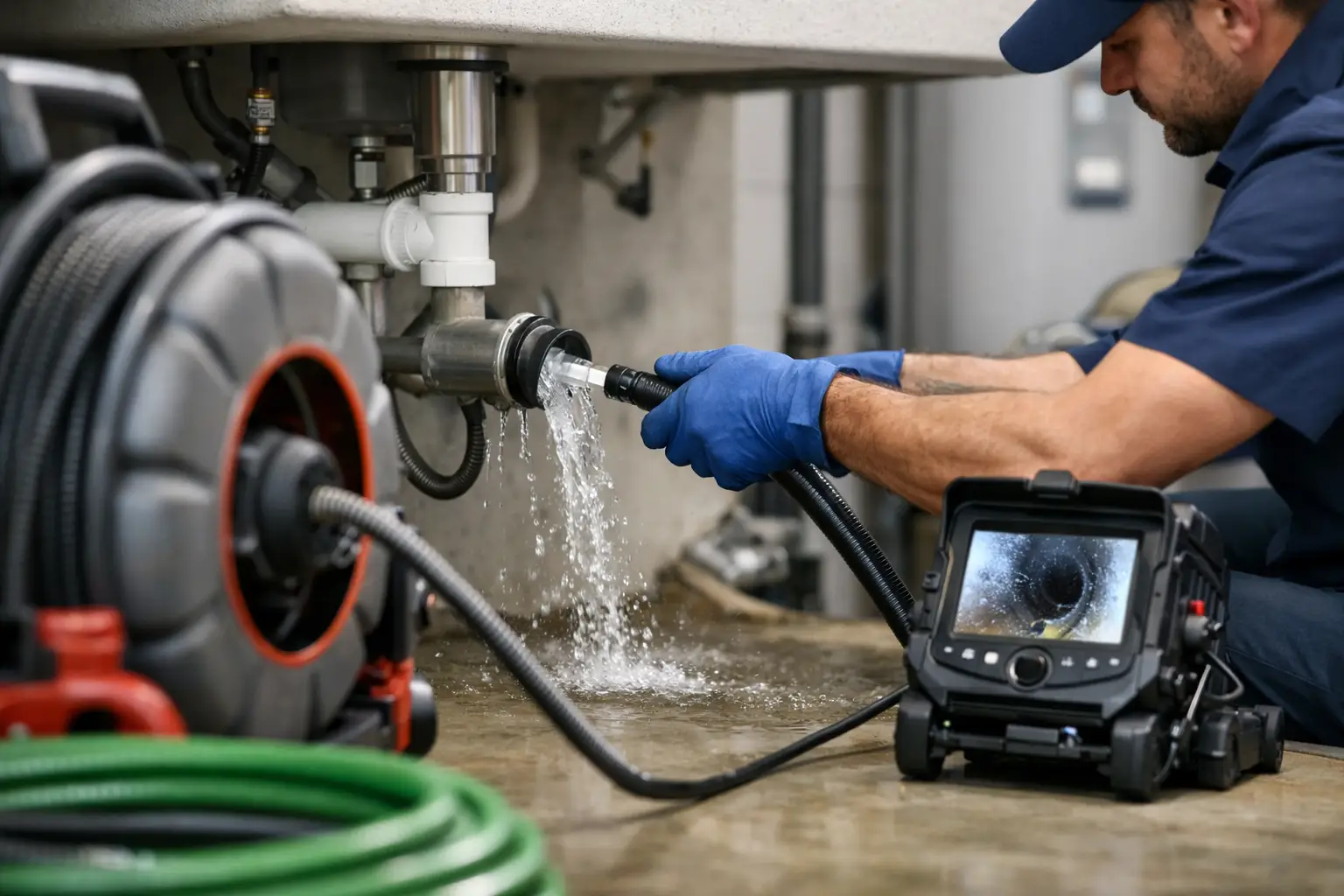
A sewer camera inspection replaces guessing with a clear view inside the line. The camera can show whether the issue is grease, scale, roots, a foreign object, a broken pipe, a belly in the line, or another restriction farther underground.
This matters when slow drains keep returning. Repeatedly clearing the same line without seeing what is inside can waste time and money. A camera inspection helps confirm the location of the issue and verifies whether cleaning restored proper flow.
For homeowners in Gainesville, Bristow, Haymarket, and Manassas, this is particularly valuable when a property has older plumbing or a history of main sewer line trouble. For landlords and property managers, it also creates a clearer basis for deciding whether a line needs cleaning, monitoring, or repair.
Do Not Ignore a Slow Main Sewer Line
The main sewer line carries wastewater from the entire property to the municipal sewer connection or septic system. When it begins to restrict, the warning signs can show up in more than one room. Toilets may flush poorly, tubs may drain slowly, and lower-level fixtures are often the first places where wastewater backs up.
Main line problems can come from roots entering through joints or cracks, heavy scale in old pipe, grease accumulation, wipes and foreign materials, or a damaged section of sewer pipe. The right response is fast diagnosis, not trial and error.
Professional main sewer line cleaning can remove many obstructions. If the camera shows a structural failure, a repair discussion should be based on what the line actually needs, not pressure to replace pipe that can be cleaned. Clear findings and clear options are what property owners should expect.
What to Expect From Professional Drain Service
A good drain and sewer service visit should start with the symptoms you are seeing: which fixtures are affected, how long the issue has been happening, whether it returns, and whether there are odors, gurgling, or backups. Those details help narrow down whether the problem is local or part of a larger sewer issue.
From there, the line can be evaluated and cleaned with the method that fits the blockage. When recurring problems or main line symptoms are involved, camera inspection is often the most useful next step. After cleaning, verifying flow and explaining what was found gives you a practical answer, not just a drain that happens to be moving at the moment.
Titan Jetters provides professional drain cleaning, hydro jetting, sewer camera inspections, flex-shaft cleaning, and pipe descaling for homes and businesses across Northern Virginia. The focus is simple: identify the cause, clean the line properly, and give customers straightforward options when more work is needed.
A slow drain rarely fixes itself. If water is lingering, fixtures are gurgling, or the same clog keeps coming back, address it before it becomes a backup. A proper inspection and professional cleaning can restore flow now and help protect the pipe system from a more disruptive problem later.
