
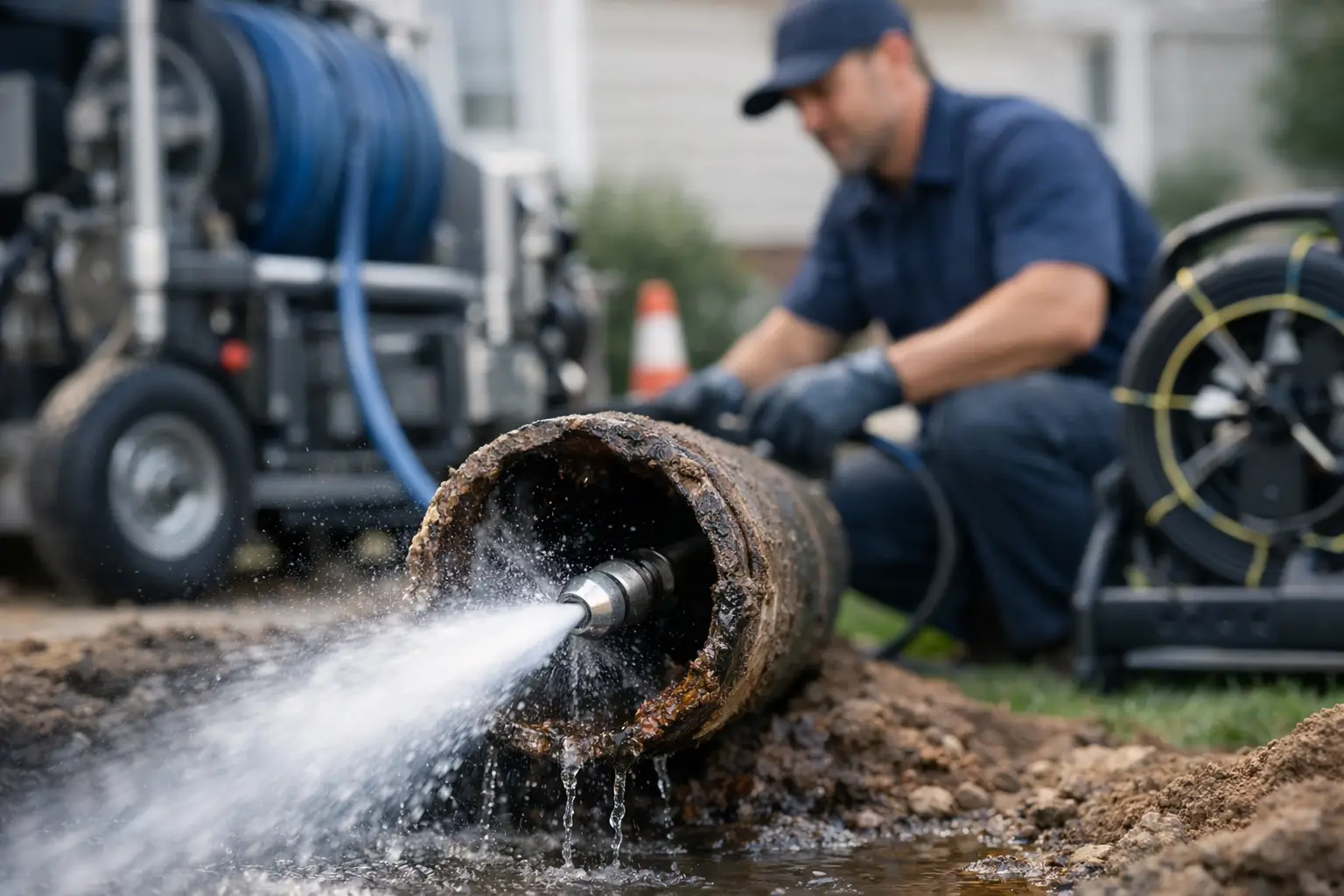
A main sewer backup is not the time to gamble on the wrong drain-cleaning method. Homeowners and property managers often ask, does hydro jetting damage pipes? The straightforward answer is no, not when it is performed by a qualified professional after the line has been properly evaluated. But high-pressure water is powerful equipment, and it is not the right first move for every pipe.
Hydro jetting can clear heavy grease, roots, sludge, scale, and recurring buildup that ordinary snaking may only punch through. The key is knowing the condition of the pipe before sending a jetter through it. At Titan Jetters, that means diagnosing the cause of the problem, not just treating the symptom.
How Hydro Jetting Cleans a Sewer Line
Hydro jetting uses a specialized hose and nozzle to send pressurized water through a drain or sewer line. The nozzle directs water backward to move the hose forward while scouring buildup from the pipe walls. Depending on the nozzle and the issue inside the line, the equipment can break apart blockages, cut through grease, flush debris, and clean residue that can quickly cause another clog.
This is different from a basic drain snake. A cable machine is often effective for opening a path through a blockage. Hydro jetting is designed to clean the line more thoroughly. That distinction matters when a kitchen drain repeatedly clogs with grease or a main sewer line has years of buildup along its walls.
The water pressure is controlled by the technician. It is not a one-setting tool, and a professional does not simply turn it up and hope for the best. Proper nozzle selection, pressure, flow rate, and technique all depend on the pipe material, pipe size, blockage type, and condition of the sewer line.
Does Hydro Jetting Damage Pipes That Are Old or Weak?
Hydro jetting does not normally damage sound pipes. Modern PVC, ABS, copper drain piping, and properly installed sewer lines can generally handle professional hydro jetting when the work is matched to the system.
The concern comes with pipes that are already compromised. A hydro jetter does not usually create a crack in a healthy line, but it can expose an existing problem in a deteriorated one. If a pipe has severe corrosion, an open joint, a partial collapse, a major offset, or a fragile section damaged by roots, pressurized water may aggravate that weakness.
That is why an honest answer is not simply that hydro jetting is always safe. It depends on what is inside the pipe. An old cast-iron sewer line with heavy scale may benefit greatly from cleaning, but it should be assessed first. A clay sewer line with root intrusion may be a good candidate for hydro jetting in some cases, while a line that has already collapsed needs repair, not more cleaning.
A professional should never treat hydro jetting as a shortcut around diagnosis. The goal is to restore flow without putting a vulnerable line at unnecessary risk.
Problems That Call for a Camera Inspection First
A sewer camera inspection gives a clear view of the pipe before cleaning begins. It can identify whether the blockage is caused by routine buildup or a structural problem that cleaning will not solve.
Camera inspection is especially valuable when a property has recurring backups, an older sewer line, mature trees near the sewer route, or a history of root intrusion. It is also a smart step when drains are slow throughout the building, toilets gurgle, or sewage has backed up into a tub, shower, floor drain, or lower level.
A camera can reveal conditions such as cracked or broken pipe, separated joints, bellies where waste collects, root masses, corrosion, scale, and collapsed sections. If the line is intact, hydro jetting may be an effective way to clear it. If the camera shows serious damage, the right next step may be sewer repair or a different cleaning method.
When Hydro Jetting Is the Right Solution
Hydro jetting is often the best option when a clog keeps coming back after standard drain cleaning. It is particularly effective for grease-heavy kitchen lines, commercial drains, main sewer lines with sludge or debris, and pipes that need a more complete cleaning than a cable can provide.
Restaurants and food-service properties often benefit from hydro jetting because grease does not disappear when a drain starts flowing again. It can remain on the pipe walls and collect more debris over time. A thorough cleaning can help reduce repeat stoppages and the downtime that comes with them.
For homeowners, hydro jetting can make sense when multiple fixtures are draining slowly or when the main line has repeated backups. It may also be useful before a property changes hands or after a camera inspection confirms substantial buildup in an otherwise serviceable line.
Hydro jetting is not always necessary for a simple, isolated clog. A bathroom sink blocked by hair or a toilet with a localized obstruction may need a more targeted solution. Good plumbing service means recommending the method that fits the problem, not selling the biggest tool for every call.
Situations Where a Jetter May Not Be Appropriate
Some sewer lines need repair before they can be safely cleaned with high-pressure water. If a camera inspection shows a collapsed pipe, a large break, a major separation, or a severely deteriorated section, cleaning alone will not restore reliable service. Forcing water through a failed line can send water and debris into the surrounding soil or create a mess where the pipe has already opened up.
There are also cases where a technician may begin with a cable machine or flex-shaft cleaning. A line that is completely blocked by dense roots may need a controlled opening before it can be flushed. Heavy cast-iron scale may require descaling techniques selected for the condition of the pipe. The right process is based on what the camera shows and how the line responds during service.
This is where experience matters. The safest equipment is the equipment used for the right reason.
What Professional Hydro Jetting Should Look Like
A quality hydro jetting service starts with questions. How often has the drain backed up? Is the issue affecting one fixture or the whole building? Has the sewer line been repaired before? Are there trees nearby? Those details help narrow down the likely cause before work begins.
When the condition of the line is uncertain, camera inspection should guide the decision. Once cleaning is approved, the technician selects the proper access point, nozzle, and operating settings for the line. The work should be controlled, not rushed.
Afterward, verifying results matters just as much as clearing the clog. A post-cleaning camera inspection can show whether the buildup has been removed, whether roots remain, and whether a hidden pipe defect needs attention. It gives the customer proof of what was found and a clearer path forward if repairs are needed.
For property managers and business owners, that documentation can be especially useful. It helps explain why a recurring issue happened and supports practical maintenance decisions instead of repeated emergency calls for the same line.
Warning Signs You Should Not Ignore
If sewage is backing up, stop using water fixtures until the issue is evaluated. Running showers, toilets, dishwashers, or washing machines can add more water to a blocked main sewer line and increase damage inside the property.
Call for professional drain and sewer service when you notice repeated clogs, slow drains in several rooms, sewage odors, gurgling toilets, or water appearing around a floor drain. These signs can point to a main-line issue, and the sooner the cause is identified, the better the chance of avoiding a larger backup.
For homeowners in Gainesville, Bristow, Haymarket, and Manassas, a camera-based diagnosis takes the guesswork out of deciding whether hydro jetting is appropriate. The right answer is not based on the age of the home alone. It is based on the actual condition of the pipe.
A clean sewer line should do more than drain today. It should give you confidence that the blockage was addressed correctly, the pipe was treated with care, and you know what to watch for next time.
