
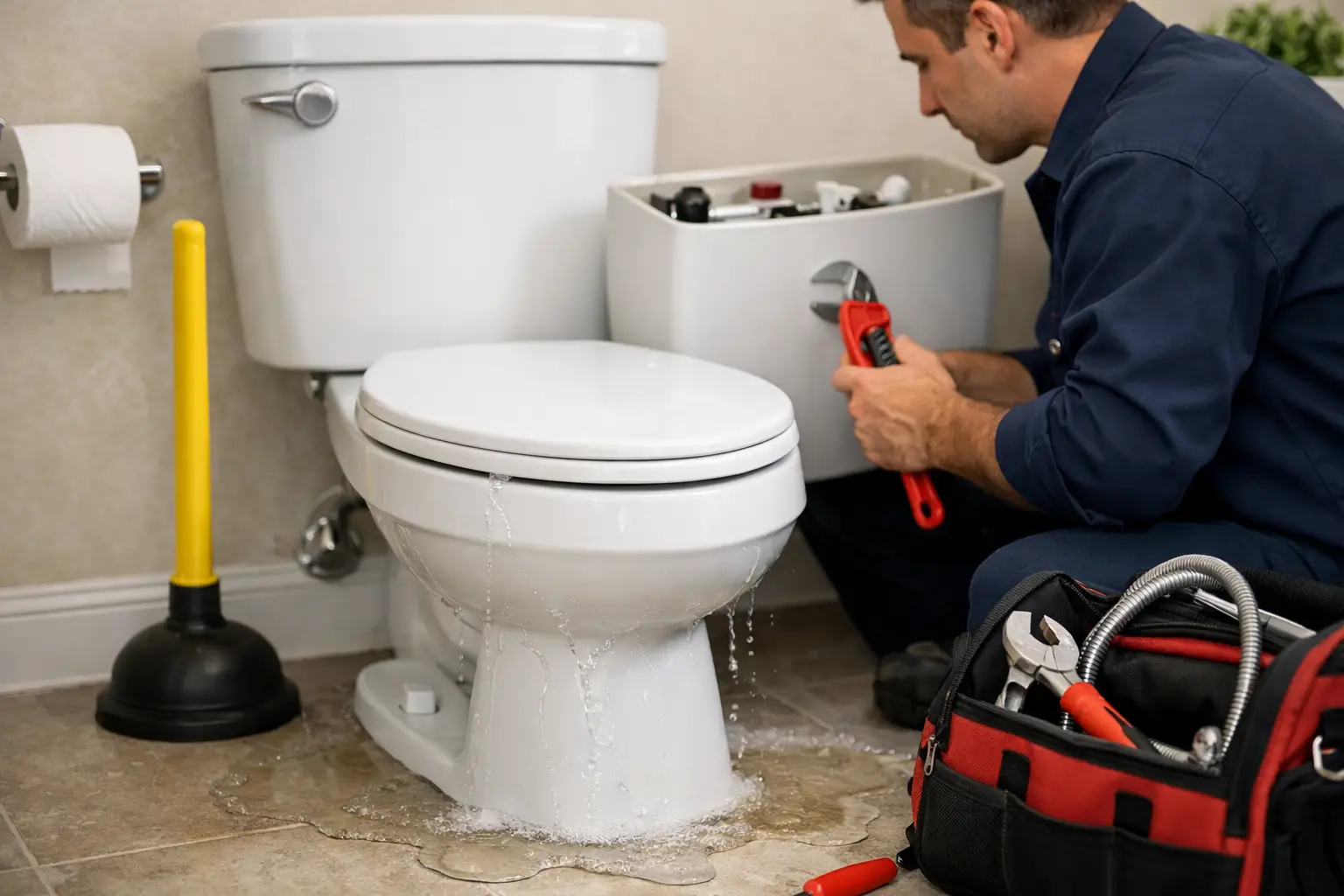
A toilet that will not stop running can waste water around the clock. A toilet that flushes slowly, bubbles, or backs up is more urgent because the problem may be farther down the drain line. For dependable toilet repair Gainesville VA homeowners and property managers can count on, the first job is identifying whether the issue is inside the fixture, at the toilet connection, or in the drainage system below it.
That distinction matters. Replacing a worn toilet component may restore normal operation quickly. But if recurring clogs, gurgling fixtures, or wastewater backups are involved, treating the toilet alone can leave the real restriction in place. A professional diagnosis protects your home, limits disruption, and helps prevent the same problem from returning next week.
When a Toilet Problem Needs Prompt Attention
Some toilet problems can wait for a scheduled service call. Others should be handled quickly to avoid floor damage, sanitation issues, or a full bathroom backup. Water at the base of the toilet, a tank that constantly refills, and a weak flush are all signs that deserve attention. A toilet that overflows, will not flush, or causes water to rise in a tub or shower calls for faster action.
Pay attention to patterns, not just the one fixture. If one toilet is slow but every other drain in the home is working normally, the issue may be localized to that toilet or its branch line. If multiple fixtures drain slowly, gurgle, or back up together, the problem can be in the main sewer line. This is especially common when a blockage has built up over time or a sewer line has a deeper condition that needs to be verified.
For landlords and local business operators, a malfunctioning toilet is also a downtime issue. It affects tenants, customers, and employees immediately. Clear communication and a timely diagnosis help get the restroom back in service without guessing at a temporary fix.
Common Reasons Toilets Leak, Run, or Clog
A running toilet is often caused by a component inside the tank that is no longer sealing or regulating water correctly. It may seem minor, but a toilet that cycles on and off can waste a surprising amount of water and put unnecessary strain on the fixture. Water leaking around the toilet base can have several causes, including a failed seal at the floor connection or movement that has compromised the connection over time.
Clogs are different. Paper buildup, hygiene products, small objects, and heavy waste can obstruct the toilet trap or the line directly beyond it. Yet a clog that keeps coming back is not automatically a toilet problem. Repeated backups may point to a partial restriction in the drain line, buildup inside aging piping, root intrusion, or a damaged sewer line.
Older homes in Northern Virginia can present their own challenges. Scale, corrosion, and buildup inside older drain lines reduce the open space wastewater needs to flow freely. A fixture may appear to be the problem because it is where the backup shows first, while the real issue sits farther down the system.
Toilet Repair in Gainesville VA Starts With the Right Diagnosis
The fastest repair is not always the right repair. Before work begins, a qualified technician should listen to what has been happening, check the toilet’s operation, inspect for visible leaks, and determine whether drainage symptoms extend beyond that bathroom.
When the evidence points to a drain or sewer issue, professional equipment makes a real difference. A cable may clear a simple obstruction, but clearing a path does not always mean the pipe is clean or sound. For heavier buildup, specialized drain cleaning methods can remove material from the line more thoroughly. A sewer camera inspection can then show what is inside the pipe and verify the condition causing repeated trouble.
This is where a drain and sewer specialist brings added value. Titan Jetters uses camera diagnostics and professional drain-cleaning equipment to confirm whether a toilet backup is a fixture issue or part of a larger line problem. You get a clear explanation of what is happening, what the repair involves, and what can help prevent repeat backups.
Signs the Problem May Be in Your Sewer Line
A main line issue usually gives more than one warning. If you notice any of the following conditions, it is worth having the drainage system evaluated instead of focusing only on the toilet:
- More than one toilet, sink, tub, or shower drains slowly
- The toilet gurgles when another fixture drains
- Water rises in a shower or tub after flushing
- Backups return after the toilet appears to be cleared
- Sewer odors appear near drains or outside the home
These symptoms do not always mean a broken sewer pipe. Sometimes the line is restricted by grease, scale, wipes, roots, or accumulated debris. The cause determines the correct solution. Hydro jetting can be effective for certain heavy buildup conditions, while descaling may be appropriate where mineral scale has narrowed the interior of older pipes. If a camera reveals damage or separation, sewer line repair may be the more dependable path.
The benefit of confirming the cause is simple: no unnecessary work and no false sense that the problem has been solved. A camera inspection provides visual proof of the line’s condition and can verify restored flow after service.
What to Expect From a Professional Service Visit
A good toilet repair visit should feel organized from the start. The technician should arrive prepared, protect the work area, inspect the symptoms, and explain the findings in plain language. If the toilet itself needs repair, the work should focus on restoring dependable operation and checking for signs of leakage. If the issue is in the line, the technician should explain why the drain system needs attention and what equipment is appropriate.
There is no one-size-fits-all answer for a clogged or leaking toilet. A simple component failure and a sewer line restriction require very different work. What matters is that the repair matches the actual condition, not a quick assumption made before the system is checked.
For homes with recurring drainage trouble, preventive service can be worthwhile. Regular drain maintenance is not necessary for every property, but it can make sense for homes with older lines, frequent buildup, large households, or a history of backups. It is often easier to address restricted flow before it turns into wastewater on the bathroom floor.
Protecting Your Home When a Toilet Backs Up
If a toilet is overflowing or wastewater is coming back through another fixture, avoid using sinks, showers, dishwashers, and other plumbing fixtures until the issue is assessed. Additional water can increase the backup and spread the problem to other areas of the home. Keep children and pets away from contaminated water, and arrange prompt professional service.
For a toilet that is leaking at the base, running continuously, flushing poorly, or backing up, do not wait until a small inconvenience becomes water damage or a full drain emergency. Prompt, accurate service protects the bathroom, the drain system, and your peace of mind. The right repair starts with finding the real cause and leaving you with proof that everything is flowing the way it should.
