
Water pouring from a supply line is not the moment to figure out which valve does what. A good guide to emergency plumbing shutoff valves helps you stay calm, stop the water fast, and avoid turning a manageable plumbing problem into damaged floors, cabinets, and drywall.
Most properties have more than one shutoff valve, and that is where people get tripped up. There is usually a main water shutoff for the whole building, plus fixture shutoffs for sinks, toilets, dishwashers, ice makers, washing machines, and water heaters. Knowing the difference matters because the right move depends on where the problem is and how fast water is spreading.
Why emergency shutoff valves matter
A shutoff valve does one job – it stops water flow to part of the plumbing system or to the whole property. That sounds simple, but in an actual emergency, speed is everything. A failed toilet supply line can dump a surprising amount of water in minutes. A split washing machine hose can keep feeding water until someone intervenes. If a pipe has already let go behind a wall, every extra minute raises the cleanup bill.
The valve itself is not the repair. It is the control point that buys time. Once the water is stopped, a plumber can diagnose the cause, check for hidden damage, and make the right repair instead of rushing through a wet crisis.
There is also a trade-off to consider. Shutting off a local fixture valve can keep the rest of the home running, which is ideal if the issue is isolated. But if the local valve is stuck, leaking, or you are not fully sure where the water is coming from, going straight to the main shutoff is often the safer call.
The shutoff valves you should know
Main water shutoff valve
This is the big one. The main shutoff stops incoming water to the property. In many homes, it is located where the water line enters the house, often in a basement, utility room, crawl space, or garage. In some properties, it may be near the water heater or along an exterior wall. Depending on the setup, there may also be a meter shutoff at the water meter.
If water is actively damaging multiple areas, if a pipe has burst, or if you cannot immediately identify the source, the main shutoff is usually the right move. It cuts off the supply at once and gives you room to think.
Fixture shutoff valves
These smaller valves are usually located close to the fixture they serve. Under sinks, behind toilets, behind washing machines, and near some appliances, you will often find one shutoff for hot and one for cold, or a single dedicated supply valve.
Fixture shutoffs are useful when the problem is clearly limited to one appliance or fixture. For example, if a toilet keeps running over because of a failed fill valve and the shutoff works properly, you may only need to isolate that toilet while keeping water available elsewhere.
Water heater shutoff valve
Water heaters typically have a cold-water shutoff on the supply side. This valve does not shut off water to the whole house, but it can stop water from feeding the tank. That matters if the heater is leaking or if there is a problem on the connected piping.
It depends on the situation, though. If the leak is from the tank itself, shutting off the cold-water supply helps stop continued filling. If the issue involves broader supply piping or active flooding nearby, the main shutoff may still be the better first step.
A practical guide to emergency plumbing shutoff valves by situation
Plumbing emergencies are rarely neat, so it helps to think by scenario instead of by part name alone.
If water is coming from under a sink, the sink shutoff valves are the first place to look. If one valve turns off the flow cleanly, you may contain the issue without shutting down the rest of the house. If the valve will not move, keeps dripping around the stem, or the leak is not clearly tied to that fixture, move to the main shutoff.
If a toilet supply line bursts or the toilet will not stop overflowing, use the toilet shutoff valve if it is accessible and working. If water keeps flowing or the valve is seized, shut off the main. Overflowing toilets can also involve a drain blockage rather than just a supply issue, and that is where proper diagnosis becomes important once the immediate water source is controlled.
If a washing machine hose fails, act fast. Laundry room leaks spread quickly, especially on finished floors. Shut off the washer valves if you can get to them safely. If not, use the main shutoff. The same thinking applies to dishwashers and refrigerator supply lines.
If you suspect a hidden pipe leak because you hear water running, see water staining, or notice sudden wet spots without an obvious source, the main shutoff is usually the safer choice. Hidden leaks are where hesitation costs the most because water may already be moving inside walls, under flooring, or into lower levels.
What these valves usually look like
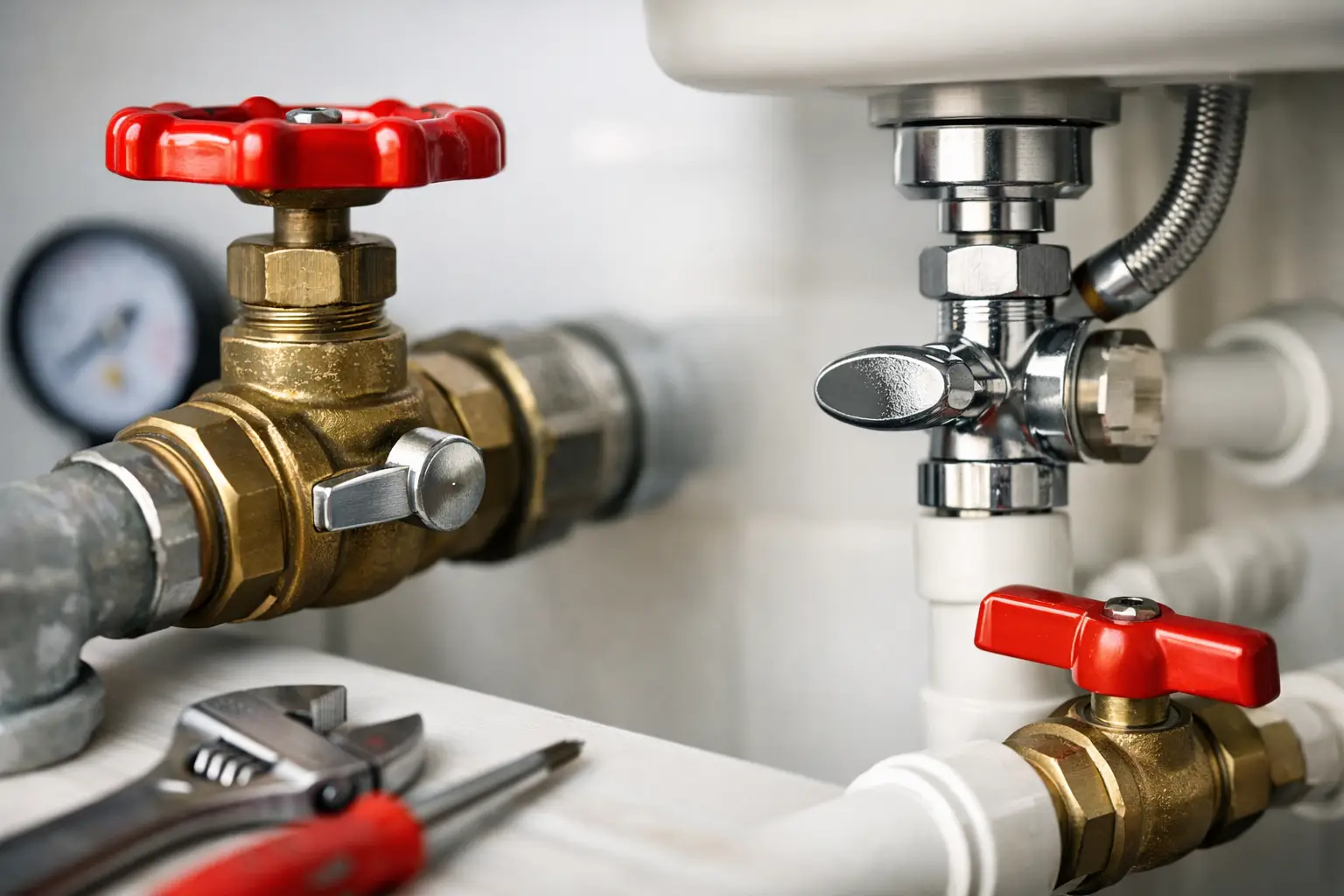
Most shutoff valves are either gate-style or quarter-turn ball valves. A round handle usually means multiple turns are needed to open or close the valve. A lever handle usually means quarter-turn – one quick turn places the handle perpendicular to the pipe to shut it off.
The exact style matters less than understanding one basic point: do not force a stubborn valve aggressively during an emergency. Older valves can seize, and excessive force can snap components or create a new leak at the valve itself. If the fixture shutoff will not move with reasonable pressure, go to the main shutoff and call for service.
Why valves fail when you need them most
One of the more frustrating parts of emergency plumbing is that shutoff valves are often ignored for years until the day they are needed. By then, mineral buildup, corrosion, age, or lack of use can leave them stiff or unreliable. In older Northern Virginia homes, that issue is common enough that it should not surprise anyone.
A valve may appear to shut off the water but still allow a small but steady flow. It may leak from the handle area when turned. It may close halfway and then refuse to move further. Those are not small concerns. They are signs the valve itself needs professional attention.
This is also why verified diagnosis matters. Water on the floor does not always mean the nearest visible valve or fixture is the real cause. A drain issue, a failed seal, a pressure problem, or a supply leak from a different line can all show up in the same area.
What to do after the water is off
Once the valve has stopped the water, the next step is not guesswork. It is containment and clear assessment. Move towels or buckets into place if needed, avoid using nearby fixtures until the problem is understood, and pay attention to where water may have traveled beyond the obvious wet spot.
At that point, the goal is to get the problem diagnosed correctly. Some emergencies are isolated and straightforward. Others only look that way on the surface. A backed-up line can mimic a fixture problem. A recurring leak may point to pressure issues, aging supply hardware, or a damaged section of pipe. In drain and sewer-related emergencies, camera inspection and proper line evaluation can prevent repeat problems and unnecessary mess.
That practical, no-nonsense approach matters because the emergency itself is only half the problem. The other half is making sure the repair addresses the actual cause and not just the visible symptom.
How to make this guide to emergency plumbing shutoff valves useful before an emergency
The best time to find your shutoff valves is when nothing is leaking. Walk the property and identify the main shutoff and the local shutoffs for the fixtures that cause the most damage when they fail – toilets, sinks, washing machines, water heaters, and appliance connections. If a valve is blocked by storage or hard to reach, fix that now rather than during a flood.
It is also worth paying attention to any valve that looks corroded, feels unusually stiff, or shows signs of past leaking. That does not always mean immediate failure, but it does mean the valve should not be trusted blindly.
For homeowners, landlords, and local business operators, this is one of those simple pieces of plumbing knowledge that pays off fast. You do not need to know how to repair the system yourself. You just need to know how to stop the water, protect the property, and bring in the right help.
When a plumbing emergency hits, quick action beats panic every time. Know your valves, use the safest shutoff point for the situation, and if anything feels uncertain, treat it like the urgent problem it is and get it checked properly.
