That slow tub drain or occasional toilet bubble might not be a small nuisance. If you are wondering how to tell if sewer line clogged problems are starting in your home, the biggest clue is this: multiple fixtures begin acting up at the same time, especially the ones on the lowest level.
A sewer line clog is different from a basic sink or tub blockage. A local drain problem usually affects one fixture. A sewer line problem affects the whole system because all wastewater has to leave through the same main line. When that line is restricted, the warning signs tend to show up in clusters, not one at a time.
How to tell if sewer line clogged issues are in the main line
The most reliable sign is when more than one drain or plumbing fixture starts misbehaving together. You might flush a toilet and hear gurgling in the shower. You might run the washing machine and see water rise in a floor drain. You might notice that the basement bathroom backs up first while fixtures upstairs seem slow but still usable.
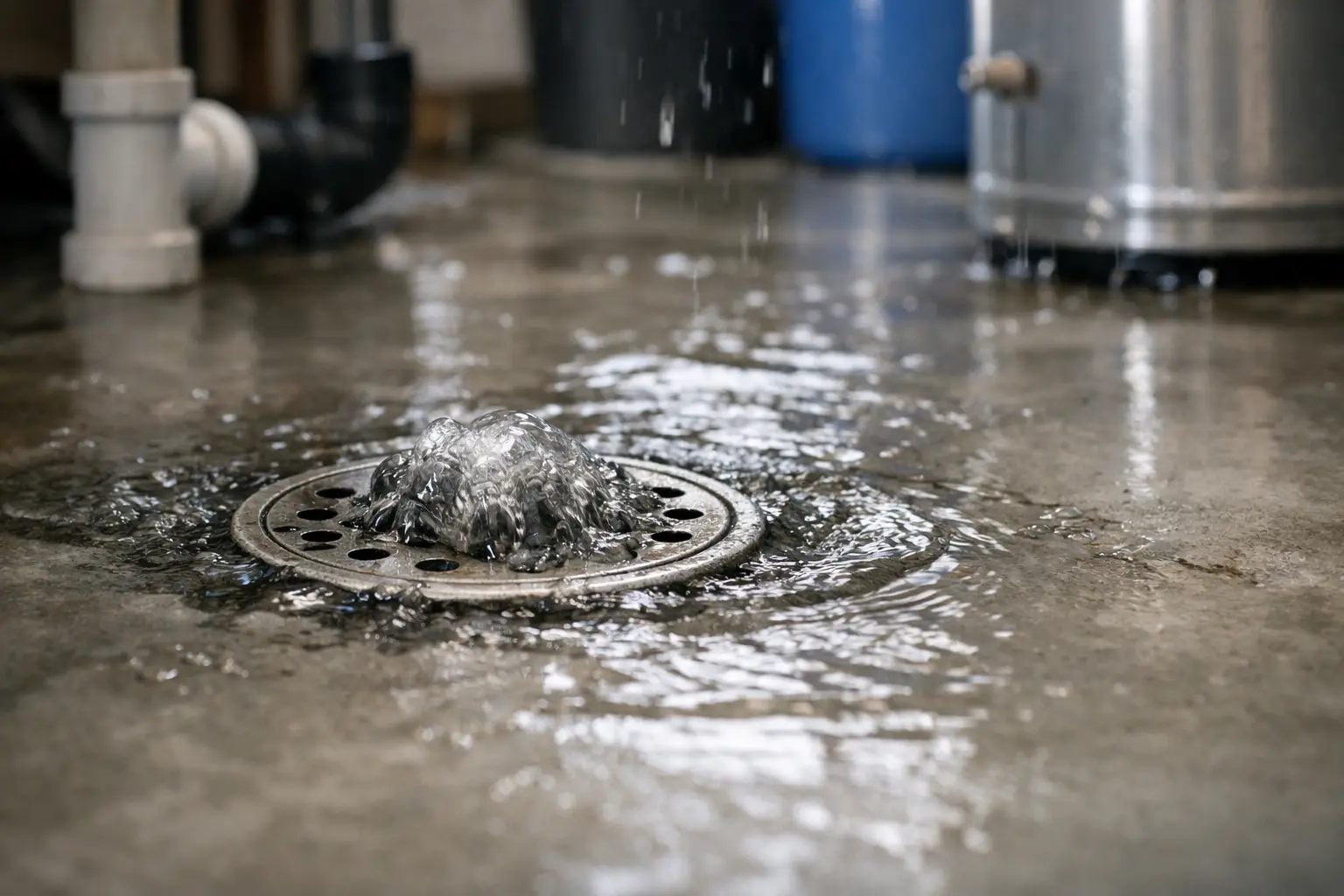
That pattern matters. The lower the fixture, the earlier it usually shows the problem. Basement showers, floor drains, and first-floor toilets often reveal a main line clog before anything else. Wastewater follows the path of least resistance, and when the sewer line cannot carry it out, it tends to come back at the lowest opening in the house.
A single sluggish bathroom sink does not automatically mean you have a sewer line issue. But if the toilet, tub, and sink in different parts of the house all start draining slowly around the same time, that is when it stops looking random.
The difference between a branch drain clog and a sewer line clog
A branch drain clog is limited. One sink, one toilet, or one shower has a problem, while the rest of the home works normally. A sewer line clog is broader. It creates symptoms across multiple fixtures because the blockage is farther downstream, where everything connects.
This is where homeowners can get misled. A toilet may seem like the problem because it backs up first, but the toilet may only be the fixture showing the pressure in the system. The real issue may be deeper in the main sewer line.
Common warning signs homeowners should not ignore
Slow drains across the home are one of the clearest signs. If every drain feels a little off, and none of them seem to clear up, there is a good chance the restriction is farther down the line. The system may still move water, but not fast enough.
Gurgling sounds are another red flag. Toilets, tubs, and sinks should not make strange bubbling or sucking noises when other fixtures are being used. That sound often means air is being displaced unevenly because wastewater is struggling to move through the line.
Recurring backups are a bigger concern than one isolated incident. If a toilet overflows, then seems fine, then acts up again a week later, that usually points to a partial obstruction. Partial clogs are tricky because they can give you just enough drainage to delay action right up until a full backup happens.
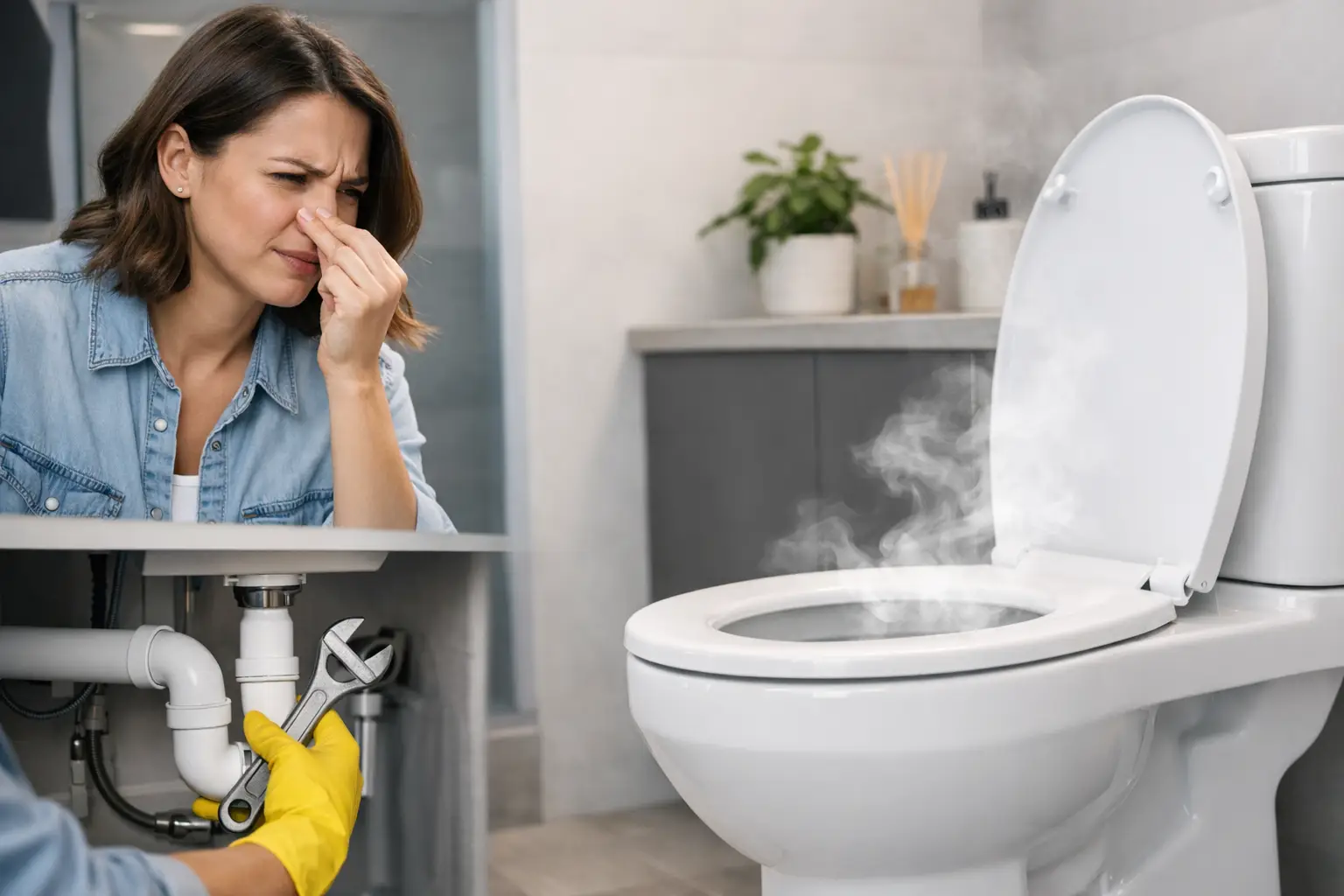
Bad odors can also signal trouble. Sewer smells near drains, especially in a basement, utility room, or crawl space area, may mean wastewater is sitting where it should not. Not every odor means a clogged sewer line, but when it shows up with slow drains or gurgling, it deserves attention.
When the washing machine exposes the problem
One of the most common moments homeowners notice a main line issue is during a laundry cycle. Washing machines discharge a large amount of water quickly. If the sewer line is restricted, that surge can cause nearby drains or toilets to back up.
If you run the washer and water appears in a floor drain, shower, or basement toilet, that is not a coincidence. It is a strong sign the main line is struggling to handle normal flow.
What a sewer line clog can look like in older homes
In older homes, the cause is not always a soft blockage like paper buildup or grease. Sometimes the issue is scale, corrosion, or a rough interior pipe wall that keeps catching debris. Cast iron lines, in particular, can develop heavy buildup over time that narrows the inside of the pipe and slows flow long before the line completely stops.
That is one reason the symptoms may come and go. The line may pass water on a light day and fail during a busy morning when showers, toilets, and laundry all hit at once. Homeowners often mistake that inconsistency for a minor issue, when it is really a warning that the pipe capacity is shrinking.
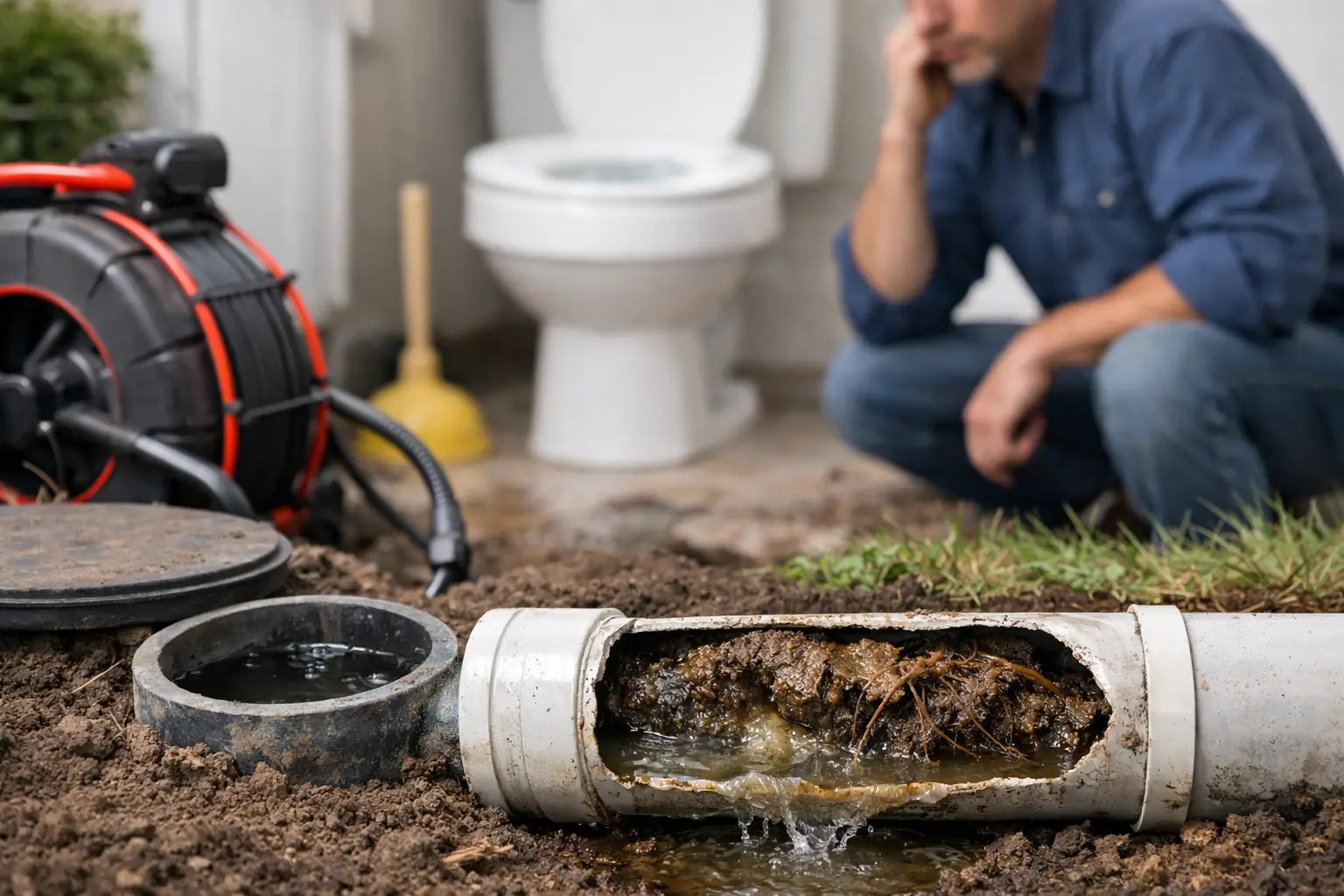
Tree root intrusion is another possibility, especially in mature neighborhoods. Roots do not have to fully crush a pipe to create trouble. Even a small entry point can catch debris and build into a major restriction.
How to tell if sewer line clogged problems are becoming urgent
Urgency comes down to two things: how many fixtures are involved and whether wastewater is coming back into the home. If backup is showing at a basement drain, shower, or toilet, that is no longer a wait-and-see situation.
The risk is not just inconvenience. Sewer backups can damage flooring, drywall, and personal property. They can also create sanitation concerns that get worse the longer wastewater sits indoors.
Even without a visible backup, fast action is smart if the problem is spreading. A toilet that gurgles today can become a floor drain overflow tomorrow. Sewer line issues usually do not fix themselves. They get worse under normal daily use.
Signs it is time to call a drain and sewer specialist
If multiple drains are slow, if toilets bubble when nearby fixtures run, if water backs up at the lowest drain in the home, or if the problem keeps returning, professional diagnosis is the next step. The key is getting the right diagnosis, not just temporary relief.
A professional sewer camera inspection can show what is actually happening inside the line. That matters because the right solution depends on the cause. A soft blockage, grease buildup, root intrusion, and heavy cast iron scale are not the same problem, and they should not be treated like they are.
In many Northern Virginia homes, especially those with older piping or recurring main line trouble, camera verification makes the difference between guessing and knowing. It shows whether the line is clogged, damaged, scaled, or partially collapsed, and it helps confirm the line is flowing properly once the work is done.
Why symptoms can seem random at first
A main sewer line clog often starts as a partial blockage. That means the line can still drain some water, just not efficiently. You may only notice trouble during high-use times, like mornings, weekends, or laundry days. Then the symptoms disappear enough to make you think the issue passed.
That stop-and-start pattern is common. It does not mean the line is healthy. It usually means the clog has not fully closed off the pipe yet.
This is also why store-bought quick fixes can create false confidence. When the underlying restriction is deep in the main line, surface-level relief does not address the real issue. The warning signs return because the cause never left.
What to expect from proper diagnosis
A good diagnosis should explain where the problem is, what is causing it, and whether the line is fully restorable. For some sewer lines, professional drain cleaning or hydro jetting can remove the blockage and restore proper flow. For others, especially lines with heavy deterioration or structural damage, the findings may point to repair rather than cleaning alone.
That is the value of using equipment that does more than poke a hole through the clog. High-pressure jetting can clear the line wall to wall when conditions are right, and a sewer camera can verify the result. Clear answers matter when you are trying to protect your home from repeat backups.
If your home is showing the classic signs of a main line problem, waiting usually narrows your options instead of improving them. The best time to act is when the warning signs are clear and the backup is still preventable. A clean, confirmed fix beats dealing with sewer water on the floor later.