A shower that turns weak the second someone starts the dishwasher is not just annoying. It is often the first sign that your home has a pressure problem that needs a real diagnosis, not guesswork. If you are searching for a water pressure issues house fix, the key is figuring out whether the problem is happening at one fixture, across the whole home, or somewhere in the main plumbing system.
Some pressure problems are simple. Others point to hidden pipe buildup, a failing pressure reducing valve, a partially closed shutoff, or a leak you have not seen yet. The difference matters because low pressure and high pressure can both damage a plumbing system over time.
What causes water pressure issues in a house?
When homeowners talk about water pressure, they usually mean one of two things. Either water is coming out too weak, or it is hitting fixtures too hard and causing banging, splashing, or wear. Both situations create problems, but they have different causes.
Low pressure often starts with restriction. Mineral scale can narrow older pipes from the inside. Fixture aerators and showerheads can collect debris. A valve near the meter or at the home may not be fully open. In some homes, aging galvanized lines slowly choke down flow until everyday tasks start taking longer than they should.
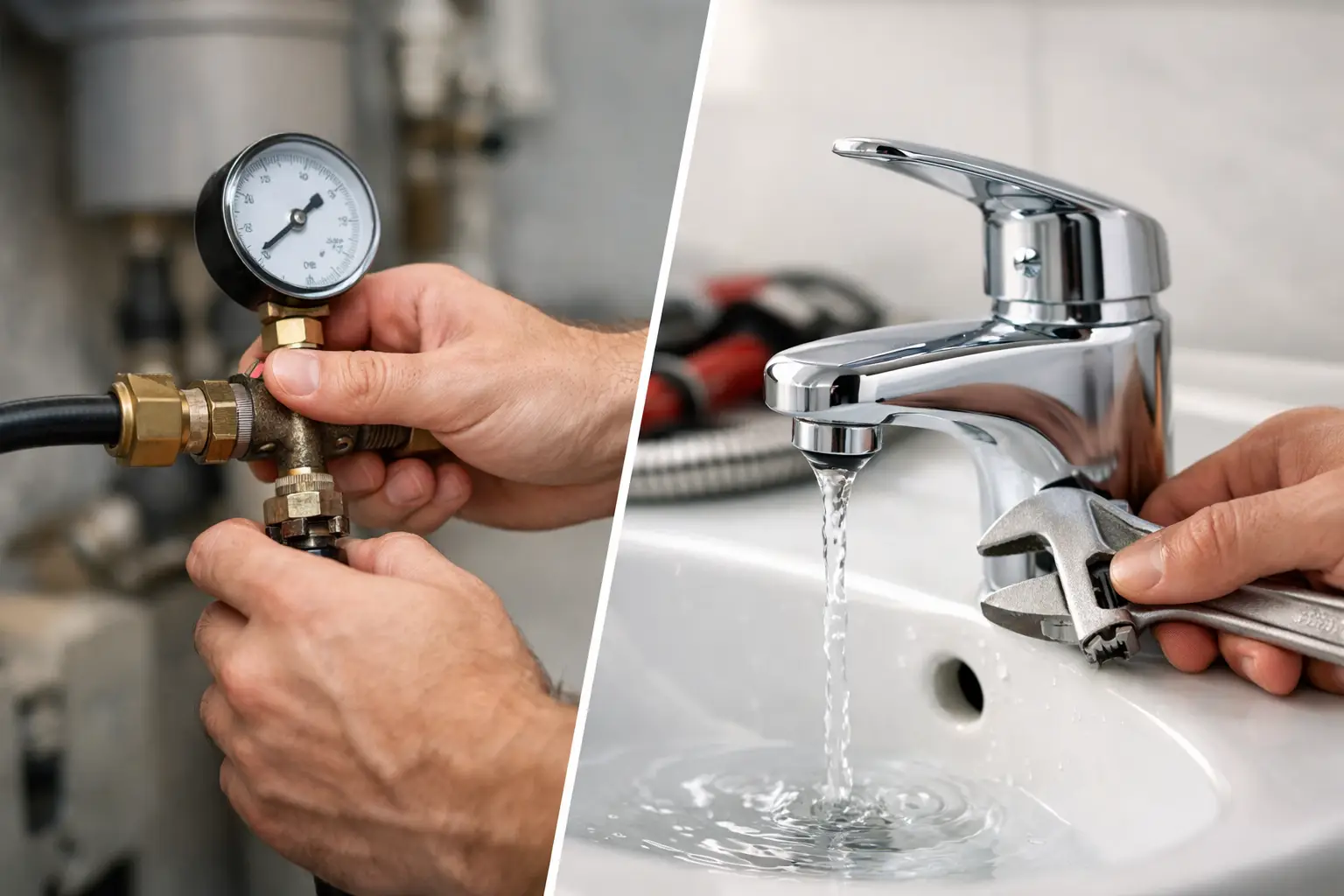
High pressure is a different issue. It can be caused by a failing pressure reducing valve or pressure changes from the municipal supply. Homes with excessively high pressure may seem fine at first because faucets feel strong, but the extra force puts stress on supply lines, connectors, water heaters, and appliance valves.
Then there are pressure drops tied to usage. If pressure is acceptable when one fixture runs but falls sharply when two or three are used at once, that can point to undersized piping, hidden restrictions, or a larger system issue that needs inspection.
Start with the pattern, not the symptom
The fastest way to make sense of a pressure complaint is to look at the pattern. If one sink is weak but the rest of the house is normal, the issue is usually local to that fixture. If every faucet and shower has poor pressure, the problem is likely tied to the main supply, valve settings, pipe condition, or pressure control.
Timing matters too. Pressure that is always low tells a different story than pressure that drops only in the morning, only on the top floor, or only when water demand increases. Intermittent changes can point to municipal supply fluctuations, a failing regulator, or developing restrictions that are not fully blocking flow yet.
Noise is another clue homeowners should not ignore. Whistling pipes, banging when valves close, or vibration behind walls can all show that pressure is not being controlled properly. Those are not just nuisance sounds. They are signs the system may be under stress.
Common signs your water pressure problem is more than minor
A true water pressure issues house fix starts with understanding when the issue is no longer cosmetic. Slow tub filling, weak shower spray, and faucets that sputter can all signal a broader problem. So can washing machines that take too long to fill or ice makers that stop performing the way they should.
On the high-pressure side, warning signs can include dripping faucets, repeated supply line failures, running toilets that keep coming back after repair, and water hammer when fixtures shut off. High pressure shortens the life of plumbing components, even when no visible leak has shown up yet.
If pressure changed suddenly, that raises the urgency. A sudden drop may point to a hidden leak, a valve issue, or a problem at the service line. Sudden high pressure can be just as serious because it may expose weak points fast.
Water pressure issues house fix: what actually solves it
There is no one-size-fits-all fix because pressure problems come from different sources. The right solution depends on where the restriction or control problem is happening.
If the issue is isolated to one fixture, the repair may be limited to that fixture or branch line. If the whole home is affected, attention usually shifts to the main shutoff, pressure reducing valve, water service connection, or the condition of the supply piping throughout the house.
In older homes, internal pipe buildup is a common factor. Mineral scale and corrosion can shrink the inside diameter of the line enough to reduce usable flow, especially at showers and second-floor fixtures. In those cases, surface-level fixes do not change the underlying restriction.
Pressure regulating equipment also deserves attention. A bad pressure reducing valve can leave a home with pressure that is too low, too high, or unstable. That instability is what frustrates many homeowners because the problem seems inconsistent. One day the shower feels fine. The next day fixtures spit, surge, or slam.
Leaks are another major factor. Even a hidden leak behind a wall or under a slab can steal pressure and volume from the rest of the home. If low pressure is paired with unexplained water use, damp areas, staining, or the sound of running water when fixtures are off, the problem needs professional attention quickly.
Why drain specialists still matter in pressure-related problems
Not every pressure complaint starts on the supply side. In some cases, homeowners describe a “pressure problem” when the real issue is poor drainage, partial blockage, or backup behavior that makes fixtures seem slow or ineffective. A shower with standing water, a toilet that struggles to clear, or a kitchen sink that gurgles can feel like a water delivery issue when the restriction is actually in the drain system.
That is where proper diagnosis matters. A company that understands line condition, flow behavior, and camera verification can separate a supply issue from a drainage issue instead of treating symptoms. In Northern Virginia, especially in older homes with scale, cast iron wear, or long service histories, the real problem is not always where the homeowner first notices it.
When drain lines are involved, advanced inspection and cleaning methods can reveal whether buildup, root intrusion, or line damage is affecting overall plumbing performance. That kind of verification saves time and prevents the wrong repair.
When to call a licensed plumber fast
Some pressure issues can wait a day or two for a scheduled visit. Others should be addressed right away. If water pressure drops suddenly throughout the home, if fixtures begin sputtering air, if pipes start banging hard, or if you suspect a leak, do not let it ride.
The same goes for pressure that seems too high. People often postpone that call because everything is still “working.” But excessive pressure quietly wears out supply lines, appliance connections, shutoffs, and water heater components. By the time there is visible damage, the cost and disruption are usually worse.
A professional inspection should also move up the list if you own an older home, have had recurring plumbing issues, or have already replaced fixture parts more than once without solving the problem. Repeat failures usually mean the root cause is somewhere deeper in the system.
What homeowners should expect from a real diagnosis
A good service visit should not start with a guess. It should start with pressure evaluation, a look at shutoff positions, fixture behavior, and system-wide symptoms. If needed, the plumber should determine whether the issue is tied to supply control, hidden restriction, leak conditions, or a drain-related problem creating misleading symptoms.
Clear communication matters here. Homeowners should understand what is happening, what is causing it, and what the next step actually solves. That is especially important when a pressure complaint turns out to involve aging lines or line condition issues that need verification before any major decision is made.
For homes in areas like Bristow, Gainesville, Haymarket, and Manassas, that practical approach matters. Older and newer properties can both have pressure problems, but the causes are not always the same. The fix that makes sense in one home may be the wrong move in another.
If your water pressure has changed, the best next step is not trial and error. It is getting the system checked by a licensed professional who can pinpoint the cause, explain it plainly, and get your home back to normal without wasted time.