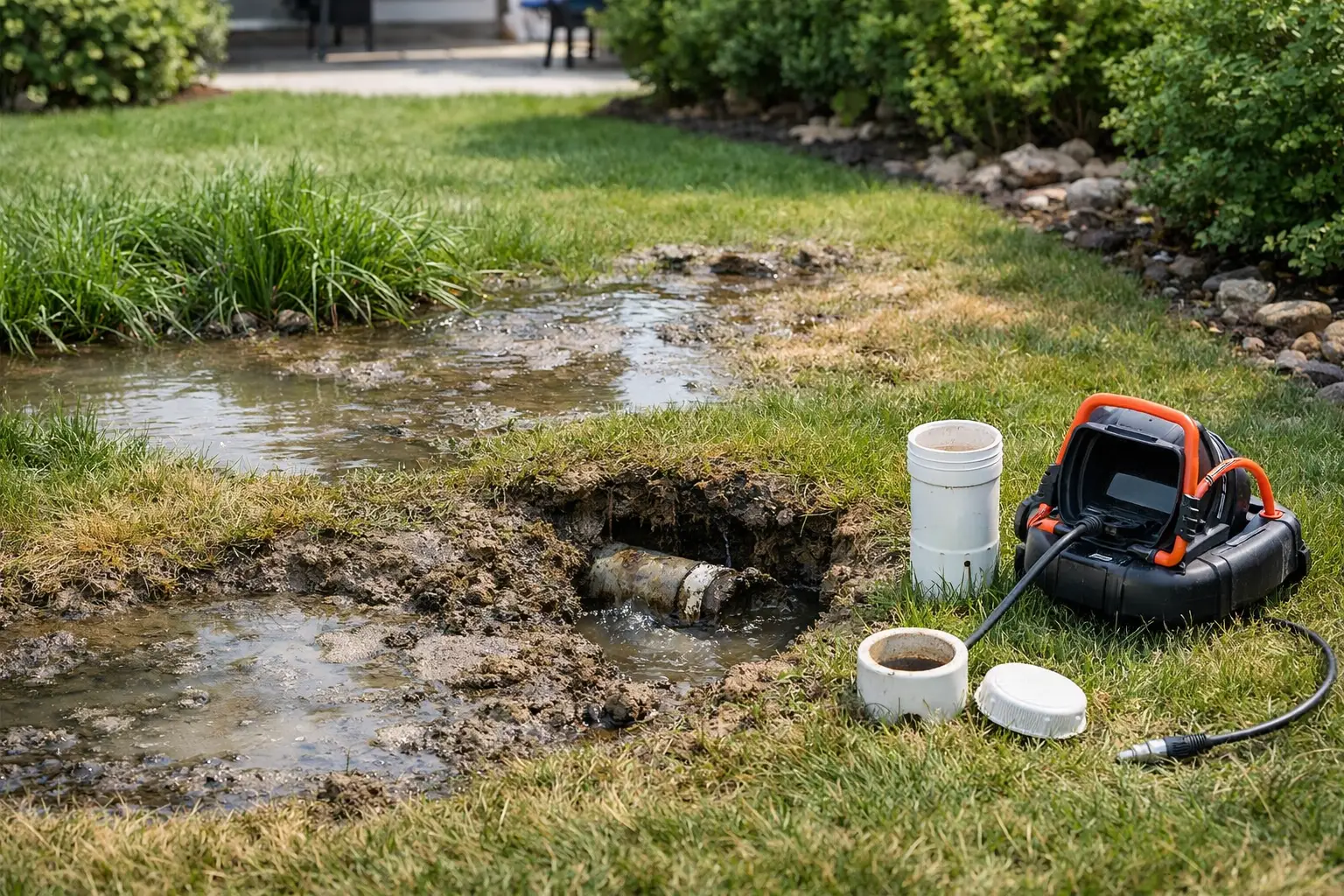
That wet patch in the yard that never seems to dry out is not always a sprinkler issue. One of the most common early signs of failing sewer line in yard areas is a section of grass that looks greener, softer, or swampier than everything around it. Homeowners often notice the yard first, then the drains inside start acting up. By that point, the problem has usually been building for a while.
A sewer line failure rarely starts with a dramatic collapse. More often, it begins with root intrusion, scale buildup, a crack in the pipe, a separated joint, or an aging line that can no longer carry waste properly. The warning signs are easy to overlook if you do not know what they mean. Catching them early can help you avoid a full backup, repeated drain issues, and a much messier repair.
Why yard symptoms matter
Your main sewer line runs underground, so the yard is often the first place trouble shows itself. Wastewater does not always come back into the house right away. If the line is cracked, offset, blocked, or partially collapsed, some of the evidence may appear above the buried pipe before you see a toilet overflow indoors.
That is why yard conditions matter. A soggy strip, a foul smell near one section of lawn, or sinking ground can point to a sewer problem long before the damage is obvious inside. It does not always mean the line needs replacement, but it does mean the line needs to be checked and diagnosed correctly.
7 signs of failing sewer line in yard
1. Soggy or unusually green patches
If one area of your lawn stays wet even when it has not rained, that is a red flag. Sewer leaks can feed the soil with constant moisture, and that extra nutrient load often makes the grass above the line grow faster and look greener than nearby areas.
There is some nuance here. Poor drainage, downspout discharge, and irrigation leaks can create similar conditions. The difference is location and pattern. When the soggy section follows the path of the sewer line or appears alongside slow drains inside the house, the sewer becomes a much more likely suspect.
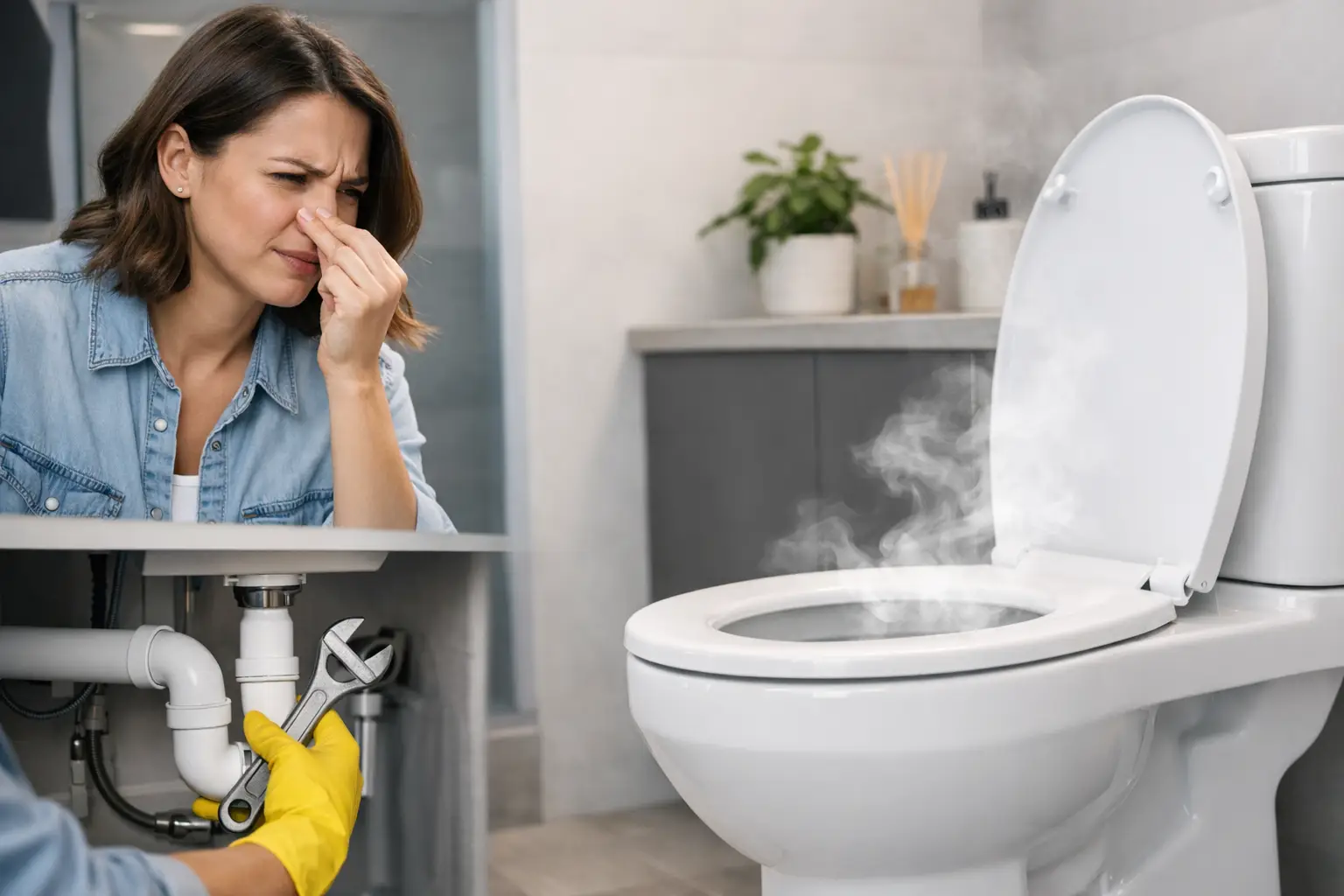
2. Sewer odor in the yard
A healthy sewer system is sealed. You should not smell raw sewage outside near the lawn, driveway edge, or landscaping beds. If you do, that can mean wastewater or sewer gas is escaping from a crack, broken fitting, or separated connection underground.
Sometimes homeowners notice the smell only in the morning or after heavy water use. That does not make it harmless. Intermittent odor still points to a line that is not performing the way it should.
3. Sinkholes, soft spots, or settling ground
One of the more serious signs of failing sewer line in yard spaces is ground movement. If the soil above the line starts to sink, feel spongy, or develop a depression, wastewater may be washing out the surrounding soil or saturating it enough to weaken support.
This is not something to ignore for a few weeks and monitor casually. Ground settling can get worse fast, especially if the pipe has a break or partial collapse. It can also create a safety issue for kids, pets, and anyone walking across the yard.
4. Pests showing up where they normally do not
Rodents and insects are drawn to moisture and waste. If you suddenly notice more flies or unusual pest activity around one section of the yard, that can be connected to a leaking sewer line.
On its own, pest activity is not enough to diagnose a sewer issue. But when it shows up with odor, wet soil, or indoor drain problems, it becomes part of a larger pattern. Sewer issues rarely announce themselves with just one symptom.
5. Multiple drains in the house are slow
Yard symptoms matter, but the house usually helps confirm what is going on. If your tub, shower, and toilets all seem sluggish at the same time, the issue may be in the main sewer line rather than a single branch drain.
This is where homeowners sometimes lose time. A kitchen clog in one sink is one thing. A whole-house drainage problem is different. When slow draining indoors lines up with wet spots or odor outside, the sewer line should move to the top of the list.
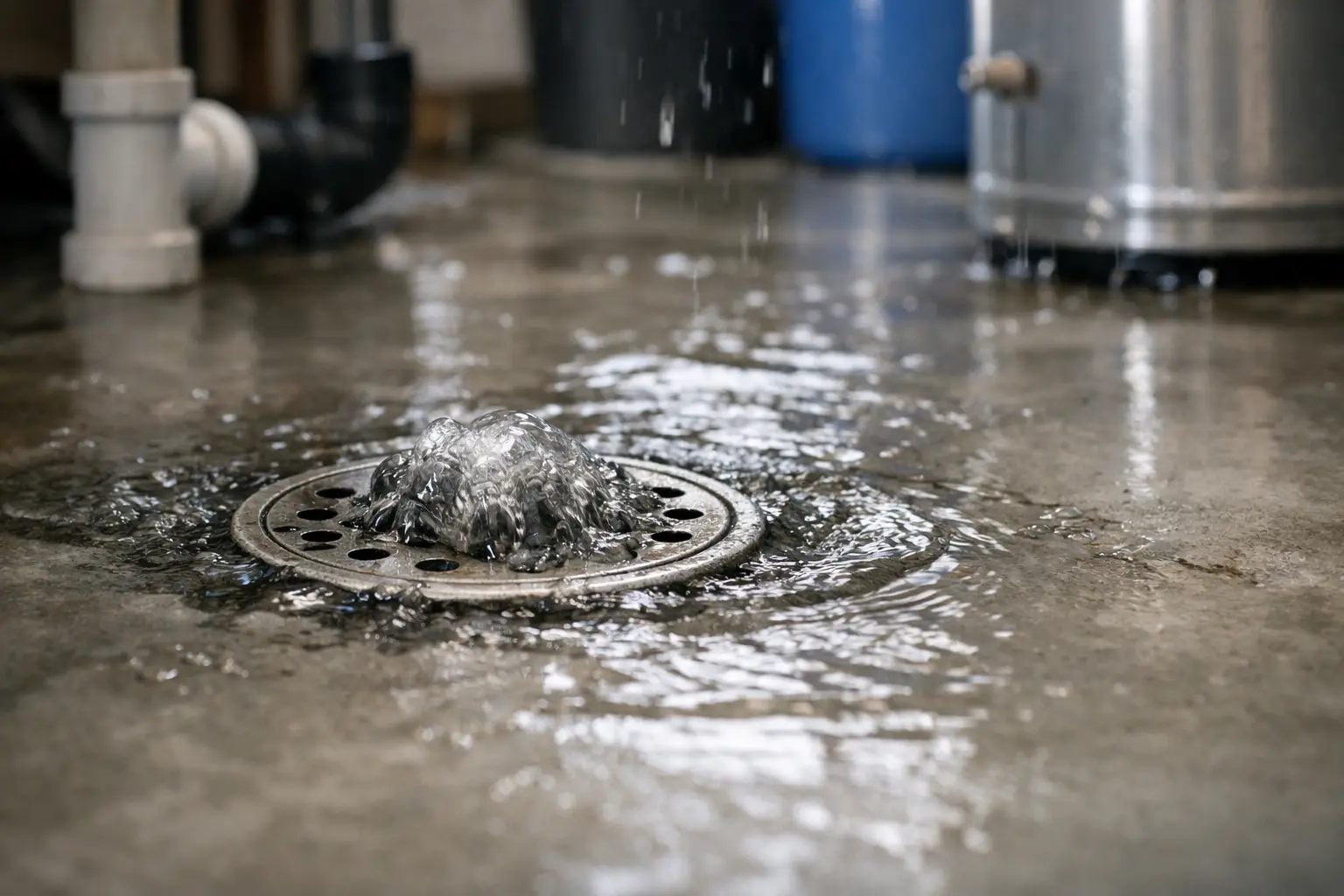
6. Gurgling toilets or drains
Air belongs in the plumbing system only where it is supposed to be vented. If the main line is restricted, water and waste can push air backward through the system. That often shows up as a toilet that bubbles when a sink drains, or a shower drain that gurgles after flushing.
It may seem minor at first, but these sounds are often early warning signs of a developing blockage or damaged line. If you also have signs in the yard, that combination deserves professional attention quickly.
7. Backups after heavy water use
A failing sewer line often struggles most when the home sends a larger volume of water through it. You may notice no issue after washing your hands, then a toilet backs up after laundry, showers, and dishwasher use all happen close together.
That pattern points to a line that may still pass some flow but not enough. In many cases, the line is partially obstructed by roots, grease, scale, or structural damage. It is still working, just not reliably, and that is usually temporary.
What usually causes a sewer line to fail
The cause matters because the right solution depends on what the camera sees inside the line. In older neighborhoods, root intrusion is a common problem. Tree roots find moisture, work their way into joints or cracks, and keep expanding. At first they catch debris. Over time, they can choke the line down or break it apart.
Aging pipe material is another major factor. Cast iron can corrode and scale heavily inside. Clay pipes can shift or crack. Orangeburg and other outdated materials can deform over time. Even newer lines are not immune if the pipe was installed with poor slope or has been stressed by soil movement.
Then there is the issue of buildup versus damage. A line may be clogged with grease, sludge, wipes, or heavy scale and still be structurally intact. In that case, clearing and cleaning the line may restore proper flow. If the pipe is cracked, offset, or collapsed, cleaning alone will not fix the underlying problem. That is why accurate diagnostics matter.
Why a camera inspection changes everything
Guessing at a sewer problem wastes time. The fastest way to know whether you are dealing with buildup, roots, a belly in the line, or a broken section is a sewer camera inspection.
A proper inspection shows the actual condition inside the pipe. It confirms where the problem is, how severe it is, and whether the issue is isolated or part of a larger failure. That lets a drain and sewer specialist recommend the right next step instead of throwing solutions at the problem and hoping one sticks.
For homeowners in Northern Virginia, this can be especially important in areas with mature trees, older sewer infrastructure, and changing soil conditions. The symptoms may look the same from the surface, but the repair path can be very different depending on what the camera finds.
When to stop watching and call for service
If you have one mild symptom and it goes away, the issue may not be urgent. If you have yard changes plus slow drains, odor, gurgling, or repeat backups, waiting usually works against you. Sewer problems tend to get more expensive, more disruptive, and more unpleasant the longer they are left alone.
A specialist can inspect the line, verify the cause, and explain your options clearly. In many cases, that means identifying whether the line needs cleaning, descaling, root removal, or repair. The key is getting a real answer before the line fails completely.
When your yard is trying to tell you something, believe it. A sewer line problem does not stay underground forever, and the earlier you catch it, the more control you usually have over what comes next.