

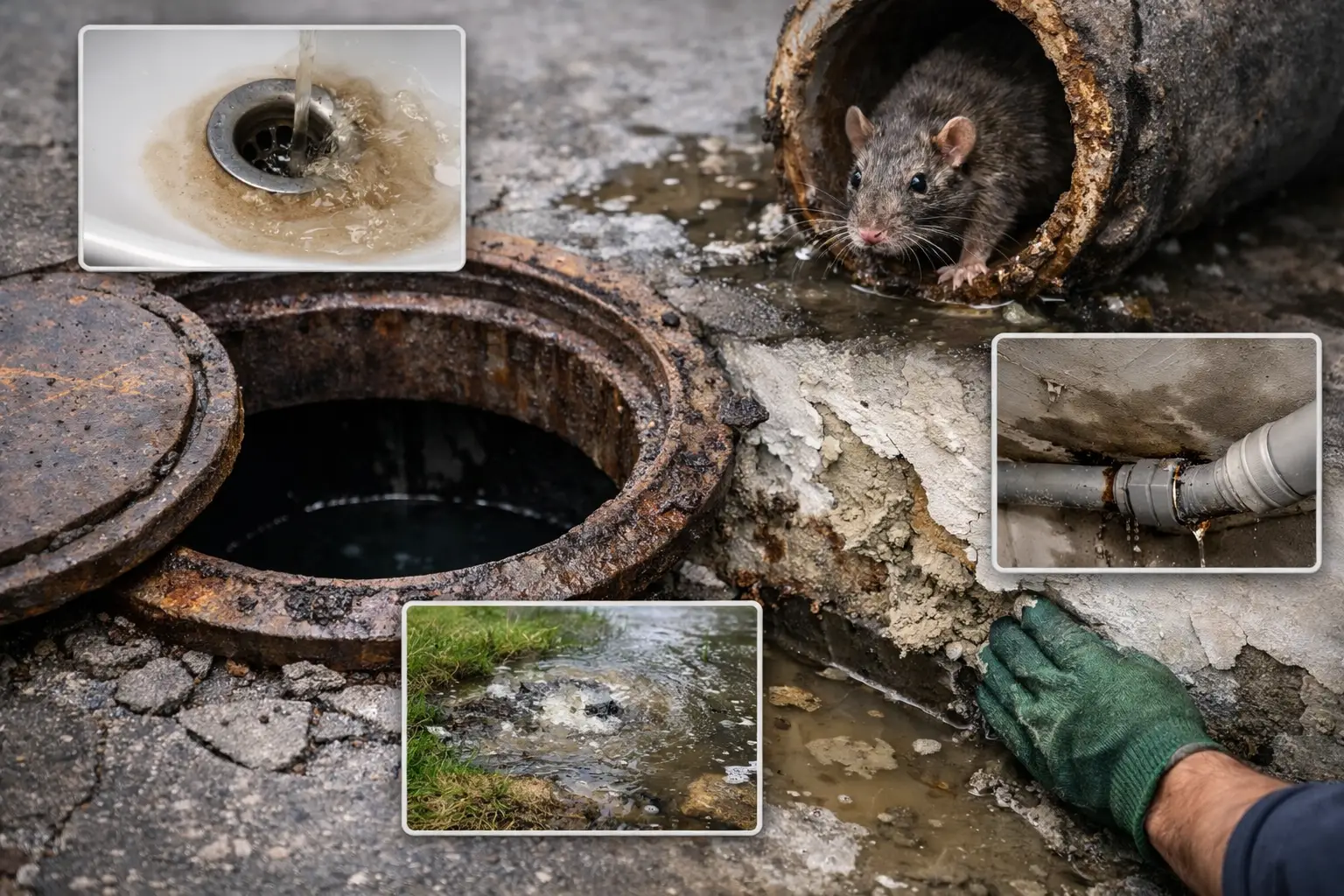
A sewer line rarely fails all at once. More often, it gives you a handful of warnings first – the kind people notice, explain away, and then wish they had taken seriously. The best signs of sewer damage usually show up in everyday places: a toilet that starts bubbling, a drain that keeps slowing down, a patch of lawn that suddenly looks too healthy, or a smell that does not belong anywhere near your home.
If you catch those signals early, you have more options and less mess. If you wait, a manageable sewer issue can turn into repeated backups, property damage, and a much bigger repair. Here is what to watch for and what those symptoms often mean.
The best signs of sewer damage inside the house
Some sewer problems announce themselves indoors long before you see anything outside. That is especially true when the issue is developing under the slab, in the main line, or near the foundation.
Multiple drains are acting up at the same time
One slow sink can be a local clog. A kitchen line can get packed with grease. A shower drain can collect hair. But when more than one fixture starts draining slowly, the problem often goes beyond a single branch line.
If the toilet, tub, and sink are all sluggish, or one fixture affects another, that points toward a sewer line restriction or damage. The key detail is whether the symptoms are isolated or happening across the home. A whole-house pattern usually means the main line needs a closer look.
Toilets bubble or gurgle when water runs
A bubbling toilet is not just strange – it is a pressure signal. When wastewater or air cannot move through the sewer line the way it should, that pressure has to go somewhere. Toilets often show it first.
You might hear gurgling after the washing machine drains or see toilet water move when someone uses a nearby sink. That can happen with a blockage, but it can also happen when the pipe is cracked, partially collapsed, or compromised by roots. The sound itself matters less than the pattern. If it keeps happening, there is usually a real line issue behind it.
Sewage odors keep coming back
A brief odor after cleaning a drain is one thing. A recurring sewer smell inside the home is another. If that smell lingers around lower-level bathrooms, utility rooms, or drain openings, it can mean wastewater is not flowing out properly or sewer gas is escaping from a damaged line.
This is one of the easiest signs to dismiss because people get used to smells over time. But sewer odors are one of the clearest warnings that something is off in the system. Even if there is no backup yet, the smell says the line is not sealed or venting the way it should.
Backups happen in the lowest fixtures first
When the main sewer line has damage or a major obstruction, wastewater tends to show up in the lowest opening in the house. That is often a basement shower, floor drain, or first-floor tub.
This is a serious red flag because it suggests the system is no longer moving waste away reliably. Sometimes homeowners only notice a little dirty water at first, or a drain that suddenly burps up after a laundry cycle. That small event is often the warning shot before a larger backup.
Outdoor sewer damage signs people miss
Not every sewer problem stays hidden. In many cases, your yard tells the story before the plumbing does.
Wet, soft, or sunken spots in the yard
One of the best signs of sewer damage outside is a patch of ground that stays wet when everything else is dry. If the area feels soft underfoot, develops standing water, or begins to sink, there may be a cracked or broken sewer line leaking below the surface.
A sunken area can also suggest the soil around the pipe has shifted or washed away. That does not always mean the line has fully collapsed, but it does mean the ground conditions have changed enough to deserve immediate attention.
Unusually green or fast-growing grass
A sewer leak underground can act like unwanted fertilizer. If one strip of lawn looks greener, thicker, or grows faster than the rest, that may not be a landscaping win. It can mean wastewater is feeding that section of grass.
This sign is easy to miss in spring and summer because healthy lawns grow fast anyway. The clue is contrast. If one narrow area follows the path of the sewer line and consistently stands out from the surrounding grass, it is worth investigating.
Pest activity increases near the line
Rodents and insects are drawn to moisture and waste. If you suddenly notice more pest activity around the yard, crawl space, or foundation, sewer damage can be part of the reason.
This sign should never be viewed alone. On its own, pests can point to a lot of things. But paired with odors, soft soil, or drain issues inside, it can help confirm that wastewater is escaping where it should not.
When sewer damage looks like a clog – but is not
This is where people lose time. Sewer damage does not always look dramatic. In the early stages, it can mimic a routine blockage.
A line with root intrusion may still drain, just badly. A cracked pipe may let some waste pass while catching paper and debris over and over. A section of old cast iron with heavy scale buildup may act fine for weeks, then start backing up whenever flow increases.
That is why repeat problems matter. If the same drain issue keeps returning after it has been cleared, there is a good chance the problem is deeper in the line. At that point, guessing is what costs people time. A proper sewer camera inspection shows what is actually happening inside the pipe, whether that is roots, cracking, offsets, buildup, or a break.
Why older homes need a closer look
In many Northern Virginia neighborhoods, age plays a real role. Older sewer lines are more likely to suffer from corrosion, scaling, root intrusion, shifting joints, and material breakdown. Cast iron lines can narrow over time from internal buildup. Clay and older jointed piping can separate or crack as roots push in.
That does not mean every older home has sewer damage. It does mean the warning signs deserve quicker attention, especially if the property has had recurring drain problems or mature trees near the line. The same goes for commercial properties and rentals, where higher usage can expose a weak line faster.
What changes the urgency
Some sewer symptoms can wait a day or two for evaluation. Others should move to the top of the list.
If wastewater is backing up into the home, if sewage odors are strong and sudden, or if multiple fixtures stop draining at once, that is urgent. If the yard is actively sinking or pooling near the sewer path, that also deserves immediate attention. These are the situations where fast diagnostics make the biggest difference, because the goal is not just clearing flow – it is finding out why the problem happened in the first place.
There is also an it depends factor here. A single slow drain might still be local. A wet area in the yard might involve irrigation. But when signs overlap, the odds shift hard toward a sewer line problem.
What a real diagnosis should tell you
When sewer damage is suspected, the right next step is not trial and error. It is verification. A proper inspection should identify the exact location of the issue, the type of damage, how severe it is, and whether the line can be cleaned and restored or needs repair.
That distinction matters. Some problems respond well to professional hydro jetting or descaling. Others do not. A collapsed section, heavy root intrusion, or broken connection needs a different plan. Good service is not about selling the biggest job. It is about seeing the condition of the line clearly and recommending the fix that matches it.
For homeowners and property managers, that means fewer surprises and better decisions. It also means less chance of repeating the same problem because the underlying cause was never confirmed.
If your plumbing has been giving you these warnings, trust the pattern. Sewer lines usually tell you when they are in trouble. The sooner you listen, the easier it is to protect your home, avoid a mess, and get the line flowing the way it should.
