
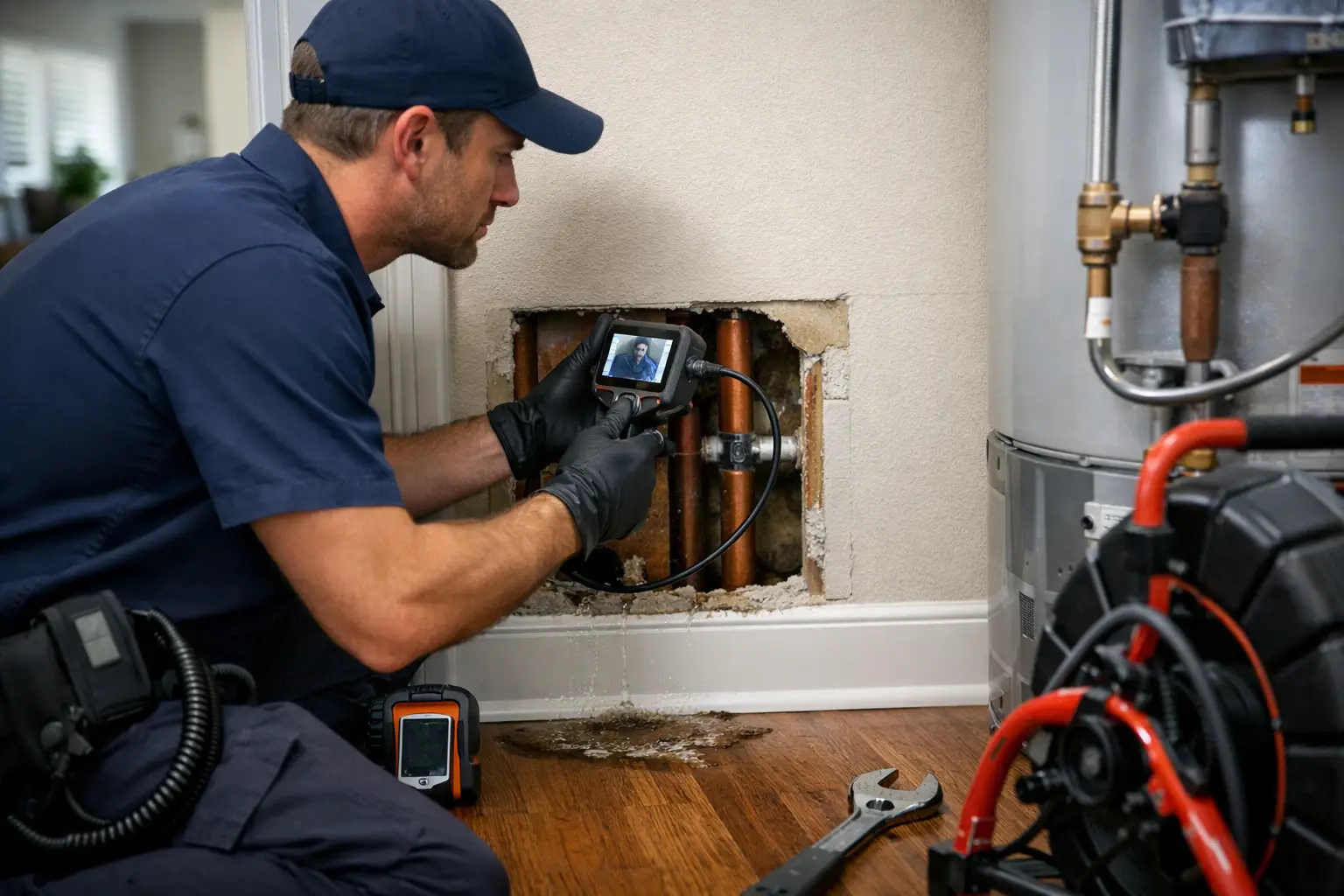
A leak behind a wall or under a slab rarely announces itself with a burst pipe. More often, it starts with a water bill that makes no sense, a warm spot on the floor, or a faint musty smell that will not go away. Knowing how to detect hidden plumbing leaks early can protect your home from damaged drywall, warped flooring, mold growth, and a much larger repair later.
For homeowners in Gainesville, Bristow, Haymarket, and Manassas, the goal is not to tear into walls looking for a drip. It is to recognize the warning signs, narrow down where the water may be going, and bring in a professional before the damage spreads.
Start With the Signs You Can See and Hear
Hidden leaks leave clues, even when the pipe itself is out of sight. One clue by itself may have an innocent explanation. Several clues happening at once deserve quick attention.
A sudden increase in your water bill is often the first sign. Seasonal water use can change, especially when lawns are being watered, but a noticeable rise with no change in your household routine can point to water running where it should not. A toilet that refills on its own can cause this too, so the source still needs to be diagnosed correctly.
Watch for stains that grow or change color on ceilings, walls, or around baseboards. Peeling paint, bubbling drywall, loose flooring, and warped wood are also common signs that moisture has been present for more than a day or two. A leak near a shower, tub, water heater, washing machine, or refrigerator line may show up in an adjoining room rather than directly beside the fixture.
Sound can be another giveaway. If you hear a faint hiss, trickle, or water movement when every faucet and appliance is off, there may be a pressurized water line leaking behind a wall or below the floor. Do not ignore a musty odor either. That smell can develop when concealed moisture reaches insulation, framing, drywall, or flooring materials.
Use Your Water Meter to Check for a Hidden Leak
Your water meter can help confirm whether water is moving through the plumbing when it should not be. This is a simple observation, not a repair method, and it can provide useful information before you schedule service.
First, make sure no one is using water inside or outside the property. Turn off faucets, avoid flushing toilets, pause laundry and dishwashers, and make sure irrigation is not running. Then check the meter. Many meters have a small leak indicator that moves when even a small amount of water is passing through.
If the indicator continues moving while everything is off, or the meter reading changes after a period with no water use, there is likely a leak somewhere on the property. That does not automatically mean the leak is under the slab or behind a wall. It could be a toilet, an outdoor spigot, a water heater connection, or a buried supply line. A professional inspection identifies the actual source so the repair matches the problem.
Check Toilets Before Assuming the Worst
A leaking toilet is one of the most common reasons for unexpected water use. Because the water goes directly into the bowl, it can run quietly for days without leaving a puddle on the floor. If the meter suggests water use but there are no visible signs of a pipe leak, the toilet is a sensible place for a plumbing professional to inspect.
The same goes for water heaters, humidifier lines, ice maker lines, and washing machine connections. Small drips around these fixtures can create water damage slowly, particularly in utility rooms, closets, and finished basements where a leak may be hidden behind stored items or wall finishes.
Know When a Leak May Be Under the Floor or Behind a Wall
Some warning signs are more specific to concealed water lines. A warm area of flooring can indicate a hot-water line leaking beneath a slab. Damp carpet or flooring with no obvious spill may point to a supply line, drain line, or fixture connection issue. Cracks in flooring, persistent moisture near a foundation wall, and unexplained mildew in one area should also be taken seriously.
Water pressure changes can matter too. A small change is not always a leak. Pressure can vary based on household demand, fixtures, and plumbing conditions. But if faucets have noticeably weaker flow, you hear pipes running when no fixture is on, and the meter indicates ongoing use, those symptoms together warrant prompt diagnosis.
Do not confuse a plumbing supply leak with a sewer or drain issue. Supply-line leaks usually involve clean water under pressure and can continue even when no fixture is in use. Drain and sewer problems typically show up when water is sent down a fixture, with slow drains, backups, gurgling, odors, or wastewater appearing in the wrong place. Both can cause major damage, but they require different diagnostic methods and repairs.
Why Fast Professional Diagnosis Matters
Waiting to see whether a suspected leak gets worse is risky. Water can travel along framing, pipes, and flooring before it becomes visible. By the time a ceiling stain appears, the affected area may extend well beyond the stain itself. The longer moisture remains trapped, the more likely it is to damage building materials and create conditions for mold growth.
Professional leak diagnosis is also about avoiding unnecessary demolition. The right approach depends on the symptoms and the type of plumbing involved. A technician may inspect visible connections, evaluate fixture operation, check meter activity, and use appropriate diagnostic tools to locate the problem with less guesswork. When drain or sewer symptoms are involved, a sewer camera inspection can show what is happening inside the line rather than relying on assumptions.
For recurring drainage issues, camera diagnostics can reveal root intrusion, buildup, damaged pipe sections, or other line problems that may be contributing to moisture or backups. Hydro jetting, flex-shaft cleaning, and pipe descaling are used for specific drain and sewer conditions, not as a one-size-fits-all answer. A proper diagnosis comes first.
What to Do When You Suspect a Leak
If you see active water, a spreading ceiling stain, wet flooring, or water near electrical outlets, act quickly. Move belongings away from the affected area if it is safe to do so, and avoid using fixtures that seem connected to the problem. If water is actively flowing or causing immediate damage, shutting off the appropriate water supply can limit the loss while help is on the way.
Then schedule an inspection. Be ready to explain when you first noticed the issue, whether the water meter changed while fixtures were off, which rooms are affected, and whether drains have been slow or backing up. Those details help narrow the diagnosis faster.
Landlords and property managers should treat reports of damp walls, persistent odors, or unexplained water usage as maintenance priorities. A small hidden leak in an occupied unit can affect neighboring spaces, increase restoration costs, and disrupt tenants far more than an early repair would.
Get a Clear Answer Before the Damage Grows
A hidden leak is not a problem to guess at. You need to know whether the source is a fixture connection, a pressurized water line, a drain issue, a sewer line problem, or something unrelated to plumbing altogether. Clear diagnosis prevents paying for the wrong repair and helps protect the parts of your home you cannot easily see.
Titan Jetters provides responsive plumbing, leak repair, drain diagnostics, and sewer camera inspections for Northern Virginia properties. If a water bill has jumped, a wall is showing moisture, or a drain problem keeps returning, contact the team for a straightforward inspection and clear options. Catching the issue now can keep a small warning sign from becoming a disruptive repair.
