
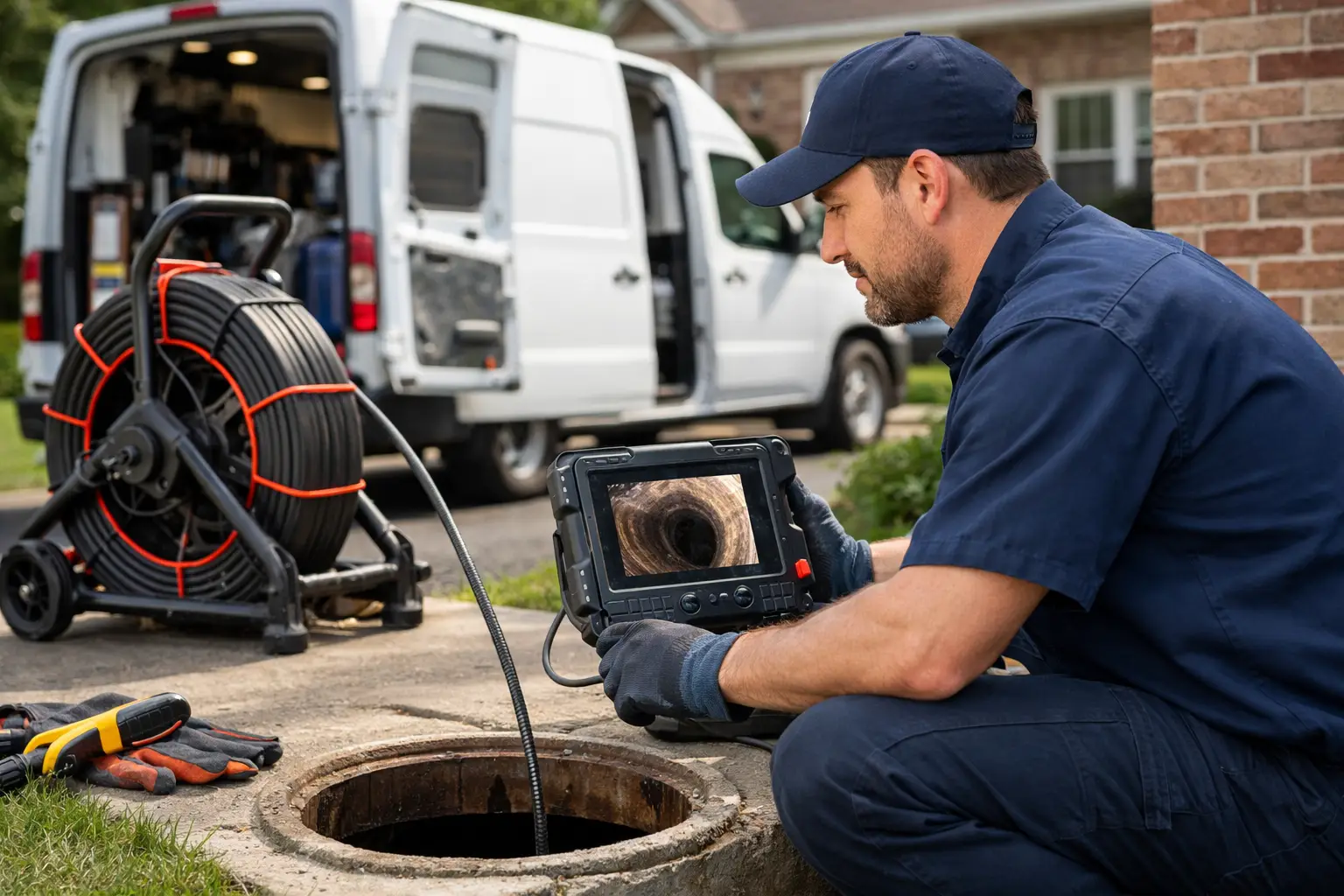
A main sewer line can look fine from the outside while trouble is building underground. If you have repeat clogs, slow drains in more than one room, gurgling toilets, or water backing up into a tub or shower, a sewer camera inspection in Haymarket VA: cost & what we look for is more than a routine service question. It is how you get a clear answer before paying for the wrong repair.
At Titan Jetters, we use a professional sewer camera inspection to see the condition of the line, locate the source of the restriction, and help determine the right next step. That might be drain cleaning, hydro jetting, pipe descaling, a repair recommendation, or simply confirmation that the line is flowing properly.
What Does a Sewer Camera Inspection Cost in Haymarket, VA?
There is no single flat price that applies to every sewer camera inspection. The cost depends on the access point, the length and condition of the line, whether there is an active blockage, and how much diagnostic work is needed to get a useful view.
A camera pushed through a clear, accessible cleanout is usually more straightforward than inspecting a line that is fully backed up, heavily scaled, or blocked by roots or debris. In some cases, the line must be cleaned first so the camera can travel through it and produce a usable image. A camera cannot diagnose what it cannot reach or see through.
The most useful way to think about the cost is in terms of avoided guesswork. Repeatedly clearing a drain without knowing why it keeps clogging can cost more over time than identifying the actual condition of the sewer line. A camera inspection helps separate a simple buildup problem from issues such as root intrusion, a damaged pipe, or a line that has shifted underground.
Before work begins, a professional should explain what the inspection involves and whether cleaning may be needed first. Clear options matter. You should know whether the goal is to verify the line after cleaning, find a recurring blockage, investigate a backup, or evaluate a suspected sewer defect.
When a Sewer Camera Inspection Makes Sense
A camera inspection is especially valuable when a drain issue is recurring or affecting multiple fixtures. One slow bathroom sink may be a local drain problem. But when toilets bubble, showers drain slowly, and the lowest drain in the house starts backing up, the main sewer line needs attention.
Homeowners and property managers in Haymarket often call for a camera inspection after a drain has been snaked more than once with only temporary results. That is a strong sign the line needs a closer look. The same is true after a sewer backup, before purchasing a property with older plumbing, or after major work has been done near a sewer line.
For restaurants and commercial properties, a camera can help identify grease buildup, recurring obstructions, and pipe condition before a busy service period turns into costly downtime. The right diagnostic information allows maintenance decisions to be based on the line’s actual condition, not assumptions.
What We Look for Inside the Sewer Line
The camera does not just confirm that water is moving. It helps identify what is happening from the cleanout toward the municipal connection or septic system, depending on the property. During a sewer camera inspection, the technician watches the live feed for patterns that explain the symptoms you are seeing inside.
Heavy Buildup and Partial Blockages
Grease, soap residue, paper products, sediment, and other debris can narrow the inside of a pipe over time. Water may still get through, but the available opening becomes smaller and smaller. This is why a drain can seem fine one week and back up the next when the line receives a heavier-than-normal load.
The camera helps show whether the line needs basic clearing or a more thorough cleaning method such as hydro jetting. For certain older pipes, mineral scale can also be a major factor. Cast iron lines, in particular, may develop rough internal buildup that catches waste and reduces flow. In the right situation, pipe descaling can restore more usable pipe diameter than a basic cable cleaning alone.
Tree Root Intrusion
Roots seek moisture, and even a small opening at a pipe joint can attract them. Once roots enter the line, they catch toilet paper and debris until a partial obstruction becomes a full backup.
A camera allows us to see whether roots are present, where they are entering, and how extensive the intrusion appears. Cutting roots may restore flow, but the underlying opening in the pipe can still require attention. That distinction matters because a clear line today is not always a permanent fix if the pipe has a damaged joint or crack.
Cracks, Offsets, and Pipe Damage
Not every sewer problem is a clog. Older lines can crack, separate at joints, shift out of alignment, or develop low areas where waste and water collect. A separated or offset joint can repeatedly catch debris even after the line has been cleaned.
The camera helps locate visible damage and determine whether a repair discussion is warranted. It also prevents a common mistake: treating a structural pipe issue as if it were only a recurring blockage. Cleaning is often the right first move, but it is not the complete answer when the pipe itself has failed.
Bellies and Standing Water
A sewer line needs proper slope to carry waste away. When a section settles, it can create a low spot often called a belly. Water may remain in that area after the rest of the line has drained, allowing solids to settle and build up.
A camera can reveal standing water and give useful clues about where the problem sits in the line. The exact repair decision depends on the severity of the sag, the material and age of the pipe, and how often the issue causes backups. Not every low spot requires immediate excavation, but repeated stoppages tied to that area should not be ignored.
Improper Connections and Foreign Objects
Occasionally, the issue is something unexpected: construction debris, a damaged cleanout, an improper connection, or an object lodged in the line. Camera diagnostics are valuable because they replace broad guesses with evidence. When you can see the obstruction or defect, the repair plan becomes more specific.
Why Cleaning and Camera Work Often Go Together
A camera inspection and drain cleaning are different services, but they often support each other. If a line is packed with debris, the first priority may be restoring flow safely. Once the line is open, the camera can verify the result and reveal why the blockage developed.
This approach is particularly helpful for recurring main line clogs. Instead of stopping after water begins to drain, the technician can inspect the line for roots, scale, pipe damage, or lingering buildup. That final verification can make the difference between a temporary clear-out and a solution designed to last.
Hydro jetting may be appropriate when grease, sludge, or heavy buildup is coating the pipe walls. Flex-shaft cleaning or descaling may make more sense for certain scale conditions. The right method depends on the pipe material, what the camera shows, and the nature of the blockage. A good diagnosis should lead the work, not the other way around.
What to Expect During the Visit
The visit typically starts with a conversation about the symptoms. When did the problem start? Which drains are affected? Has the line backed up before? Those details help narrow down whether the issue is likely in a branch drain or the main sewer line.
The technician accesses the line through an available cleanout whenever possible and feeds the camera through the pipe. The live footage shows the interior condition of the line as the camera travels. If the line is blocked before the camera can pass, cleaning may be recommended first.
Once there is a clear finding, you should receive a plain-language explanation of what was found, what it means for your property, and what options make sense. Some findings call for cleaning and verification. Others may point to a repair need. If the camera shows no significant defect, that is useful information too – it rules out larger sewer line concerns and directs attention to other plumbing areas.
Get a Clear Answer Before the Next Backup
A sewer problem rarely gets more convenient with time. Slow drainage and occasional gurgling may be early warnings, especially when they involve more than one fixture. Waiting until wastewater comes back into a shower or basement can turn a diagnostic visit into an emergency cleanup.
If your Haymarket home, rental property, restaurant, or business has a recurring drain or sewer issue, book a professional camera inspection with Titan Jetters. Seeing inside the line gives you a better basis for the next decision – and a better chance of restoring dependable flow before a small warning turns into a messy interruption.
