
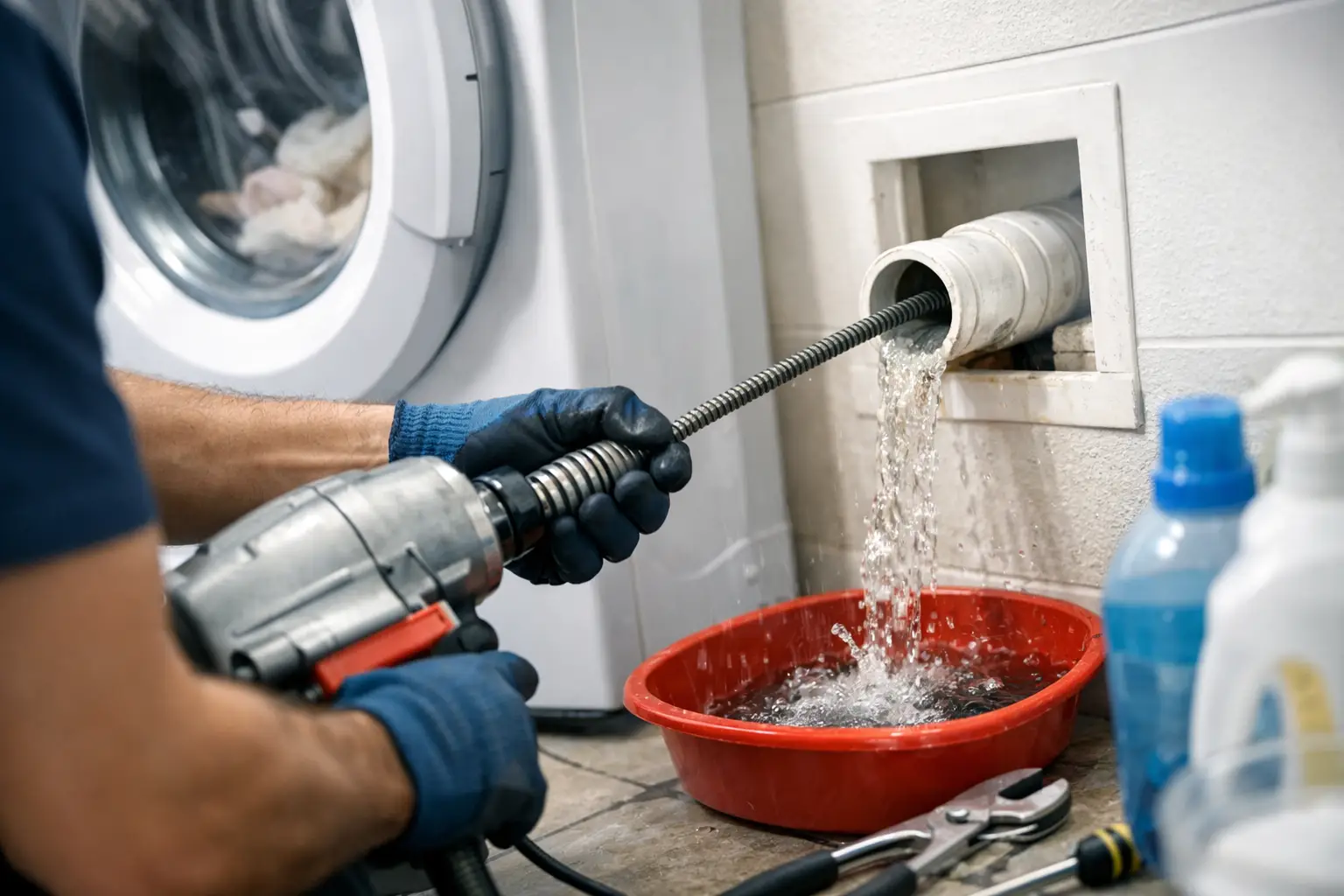
A washing machine that drains slowly is easy to ignore – until the standpipe starts overflowing, the floor gets wet, and a routine load of towels turns into a cleanup job. That is usually the moment people start asking how laundry drains get cleared and why the problem keeps coming back even after it seems to improve for a while.
Laundry drain clogs are rarely random. They build up over time from a mix of lint, detergent residue, dirt, fabric fibers, and sometimes grease or sludge already sitting deeper in the line. If the home has older piping, scale and rough interior pipe walls can make that buildup happen faster. The result is a drain that may still move water, just not fast enough to keep up with a washing machine discharge.
How laundry drains get cleared in the real world
The short answer is that it depends on what is actually inside the line and how far the blockage goes. A true fix is not about forcing water past the clog for a few days. It is about removing the material that is restricting flow and confirming the line can handle the volume coming from the washer.
In many homes, a laundry drain ties into a branch line that also serves another fixture or eventually feeds into the main sewer line. That matters because the problem may not be sitting right behind the washing machine. A laundry backup can be caused by a partial blockage farther down the drain system, where years of buildup have narrowed the pipe and reduced flow.
Professional drain clearing usually starts with identifying whether the line is partially blocked, fully blocked, or suffering from a pipe condition issue such as heavy scale, root intrusion, or a break. From there, the clearing method is chosen based on the pipe material, the type of obstruction, and how aggressive the cleaning needs to be.
Why laundry drains clog so often
Laundry lines deal with a surprising amount of material. Even homes that are careful about maintenance can end up with buildup over time. Lint is a major factor, but it is not the only one. Modern detergents, softeners, and dirty wash water can leave behind a sticky residue that traps fibers and debris as it moves through the line.
If the household washes pet bedding, work clothes, rugs, or heavily soiled items, the drain sees even more material. That can create a thick sludge inside the pipe. In older homes, especially those with cast iron, the interior of the pipe may already be rough from corrosion and scaling. Once that happens, debris has more places to catch and cling.
There is also a volume issue. Washing machines discharge water fast. A drain line that can still handle a sink may fail when a washer empties a full load all at once. That is why some laundry drain problems show up only during the drain cycle, even when nothing appears wrong the rest of the day.
The difference between opening a line and actually clearing it
This is where a lot of confusion starts. A drain can be opened without being truly cleaned. If a tool punches a narrow hole through a blockage, the water may go down again for the moment. But if thick residue remains on the pipe walls, the clog often returns.
For a laundry drain, that distinction matters. Washer discharge is strong and frequent, so any leftover buildup can catch fresh lint and soap quickly. A line that was only partially opened may start backing up again sooner than expected.
That is why experienced drain specialists focus on the condition of the full line, not just whether the water disappears today. The goal is restored flow and a result that holds up.
Common professional methods used to clear laundry drains
The right method depends on the blockage. Mechanical cabling can be effective when the issue is a localized obstruction or a soft clog that can be broken apart and pulled through. It is often a good first step when access is limited or when the drain needs an immediate opening.
But cabling has limits. It can get through a blockage without fully cleaning the pipe walls. In laundry lines with heavy sludge, scale, or years of residue, that may not be enough for a lasting result.
Hydro jetting is often the better choice when the goal is to clean the inside of the pipe more completely. A professional jetting system uses high-pressure water to cut through buildup and wash debris out of the line. For laundry drains, this can be especially effective because it removes the material lining the pipe walls, not just the center of the clog.
In some cases, flex-shaft equipment is used to clean and descale pipe interiors. This method can be useful in lines with stubborn scale or corrosion where a more targeted mechanical cleaning approach is needed. The right setup depends on pipe size, pipe material, and how severe the buildup is.
Why camera inspections matter
When a laundry drain backs up more than once, guessing is expensive. A sewer camera inspection shows what is actually happening inside the line. That can reveal whether the problem is lint and soap buildup, heavy scale, roots, a belly in the line, or a break that will keep causing trouble until it is repaired.
A camera also helps verify the result after cleaning. That matters to homeowners and property managers who do not want to hear that the drain is fixed without proof. If the line has been thoroughly cleared, the inspection can confirm open flow and show whether there are structural issues that need attention next.
This is one reason specialized drain companies tend to solve these problems faster. They are not relying on trial and error. They are looking at the line, choosing the right cleaning method, and confirming the outcome.
When a laundry drain problem is more than a simple clog
Not every backup is just a blockage near the washer. If the standpipe overflows while other fixtures gurgle, or if nearby drains are slow too, the restriction may be farther down the branch or in the main sewer line. If there is a sewage smell, recurring backups, or signs of water coming up in a floor drain, the issue may be larger than the laundry area.
Pipe age matters too. In parts of Northern Virginia, older homes can have cast iron lines with years of interior scaling. Those lines may still be intact structurally, but the inside diameter can be reduced enough to create chronic drainage problems. In that situation, clearing the line properly and understanding the pipe condition are both important.
There is also the possibility of improper venting or installation issues, though that is less common than plain buildup. The point is simple: if the problem repeats, there is usually a reason, and the best path forward starts with the right diagnosis.
What homeowners should expect from a proper service call
A good drain service call should feel straightforward. The technician should assess the symptoms, explain what they believe is happening, and choose the method that matches the problem. If the situation calls for advanced cleaning or a camera inspection, that should be explained clearly in plain language.
Clean work matters too. Laundry room backups are messy enough without adding more disruption. Professional drain work should protect the home, minimize downtime, and leave the area clean when the job is done.
Most of all, the result should be verified. If a line has been jetted or mechanically cleaned, there should be a clear reason for that approach and confidence that the drain is now flowing as it should. That kind of accountability is what separates a quick visit from a real solution.
How to tell when it is time to call a drain specialist
If the washer standpipe is overflowing, the drain is backing up repeatedly, or the fix never lasts, it is time for a professional evaluation. The same goes for slow drainage paired with gurgling sounds, odors, or backups affecting more than one fixture. These are signs that the problem may be deeper in the system than it looks.
For busy homeowners and landlords, speed matters, but so does accuracy. A fast response is helpful only if the line is diagnosed correctly and cleared the right way. That is where specialized drain cleaning equipment makes a real difference. Companies like Titan Jetters use jetting, flex-shaft cleaning, and camera diagnostics to take the guesswork out of recurring drain problems and verify that the line is truly clear.
Laundry drain issues tend to start small and get expensive only when they are ignored. If your washer drain is showing signs of trouble, the smartest move is to deal with it before the next load ends up on the floor.
