

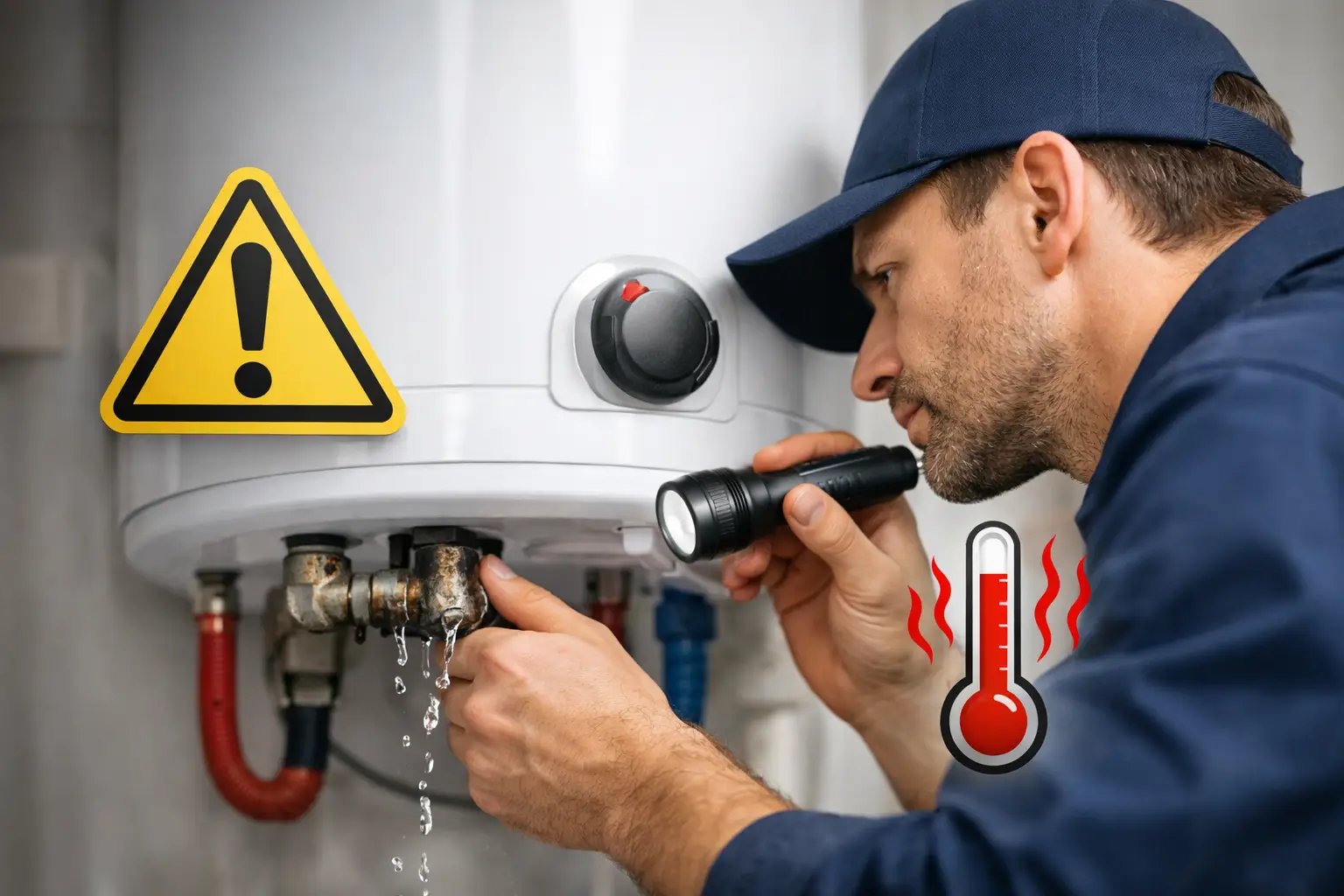
Hot water problems rarely show up all at once. More often, your water heater starts sending signals – a strange popping sound, a longer wait for hot water, a small leak that seems harmless until it isn’t. Knowing the best water heater repair warning signs can help you act before you lose hot water completely or end up dealing with water damage, higher utility bills, or a bigger plumbing repair than expected.
For homeowners, landlords, and business owners, the real issue is not just comfort. It is downtime, disruption, and the risk of a small problem turning into an urgent one. A water heater usually gives you a window to respond. The key is knowing what to pay attention to.
Best water heater repair warning signs to watch for
Some warning signs point to a repairable issue. Others suggest the unit may be nearing the end of its service life. That is why proper diagnosis matters. The symptom you notice at the faucet or around the tank does not always tell the full story.
Inconsistent or no hot water
If your shower turns cold faster than it used to, or your hot water runs out well before the usual demand, your water heater is telling you something. In gas and electric systems, this can be tied to heating components, thermostat issues, sediment buildup, or internal wear.
Sometimes the change is gradual, which makes it easy to ignore. Families often adjust their routine without realizing the heater is underperforming. If the recovery time gets longer or the temperature becomes unpredictable, it is time to have it checked.
Rumbling, popping, or banging sounds
A noisy water heater is one of the most common red flags. Those sounds often happen when sediment collects at the bottom of the tank and hardens. As water heats beneath that layer, it creates popping or rumbling noises.
This does not just make the unit louder. It forces the heater to work harder, adds stress to the tank, and can shorten its lifespan. In areas with mineral-heavy water, this tends to show up sooner. If the noise is getting worse, it is not something to put off.
Discolored hot water
When hot water starts coming out rusty, brown, or cloudy, there is a problem worth investigating. In some cases, the issue may be internal corrosion in the water heater tank. In others, it could involve connected plumbing lines. The pattern matters.
If only the hot water is discolored and the cold water runs clear, the water heater becomes the likely suspect. Rust inside the system is not a cosmetic issue. It can be a sign the tank is breaking down from the inside.
Water around the base of the unit
Moisture, drips, or pooling water near the heater should never be brushed off. A small leak can come from fittings, valves, or connections that may be repairable. But it can also mean the tank itself is compromised.
That distinction matters. A loose connection is very different from a cracked tank. Either way, water where it should not be is a warning sign that needs a prompt inspection. Waiting can lead to flooring damage, wall damage, and mold concerns on top of the plumbing issue itself.
When a warning sign becomes urgent
Not every water heater issue is a full emergency, but some symptoms move into that category quickly. If you notice active leaking, a sudden drop in hot water performance, unusual sounds paired with visible corrosion, or signs of pressure problems, you should not wait days to address it.
Fluctuating temperature or water that gets too hot
Water that swings from lukewarm to scalding is more than a comfort problem. It points to trouble with temperature control, heating elements, or thermostat performance. For homes with children, older adults, or tenants, that can become a safety issue fast.
This is also one of those problems that tends to worsen rather than stabilize. If the unit cannot maintain a safe, consistent output, it needs professional attention.
A sulfur smell or unpleasant odor in hot water
If the hot water smells like rotten eggs, the issue may involve bacteria inside the tank reacting with system components. It does not always mean the heater has failed, but it does mean the system is not operating as it should.
Odor issues can be especially frustrating in rental properties and commercial settings because they affect every sink and shower tied to the unit. The longer it goes on, the more likely occupants are to assume the entire water system has a serious contamination problem.
Visible corrosion on the tank or fittings
Rust on fittings, valves, or around the tank body is one of the clearest visual clues that a water heater needs attention. Surface corrosion does not always mean immediate replacement, but it should never be ignored.
There is a difference between minor oxidation on an external connection and active tank deterioration. A professional inspection helps determine whether the issue is isolated and repairable or a sign of broader failure.
The age of the unit changes the answer
A newer water heater with one isolated symptom often makes a strong repair candidate. An older unit with several warning signs is a different conversation. Age does not automatically mean replacement, but it does affect how much sense a repair makes.
If your water heater is well into its service life and now showing leaks, corrosion, noise, and performance loss, the problem may be bigger than a single part. On the other hand, if the system is relatively young and the issue is caught early, repair is often the smarter move.
That is why a straight answer matters. You want a technician who can diagnose the actual condition of the unit, explain what is happening clearly, and tell you whether repair is a solid fix or just a short-term patch.
Why these signs are easy to miss
Water heater problems often hide in plain sight. Unlike a burst pipe or a backed-up drain, they can start quietly. The water still gets warm, just not as warm. The leak is only a few drops. The sound only happens at night when the house is quiet.
Busy property owners tend to put these issues on the back burner because the system is still working enough to get by. That is exactly why water heater damage often gets worse before anyone calls. The problem feels manageable until it suddenly is not.
In Northern Virginia homes, that delay can be costly, especially during colder months when hot water demand increases and plumbing systems are already under more stress. Catching the issue early usually means more options and less disruption.
What a proper inspection should tell you
The value of a service visit is not just hearing that something is wrong. It is getting a clear explanation of what failed, what else was checked, and whether the solution is expected to hold.
A thorough water heater inspection should account for visible leaks, corrosion, performance issues, system age, and signs of internal buildup or component failure. It should also separate repairable problems from signs that the tank itself is giving out. Guesswork helps no one.
That straightforward approach is what property owners want most when hot water becomes unreliable. If a repair will solve the issue, you should be told that clearly. If the warning signs point to a failing unit, you should know that too.
Best water heater repair warning signs are worth acting on early
The best water heater repair warning signs are not always dramatic. Sometimes it is a noise, a smell, a stain, or a slow drop in performance that tells the real story. What matters is taking those signs seriously before the unit stops working on your schedule instead of its own.
If your water heater is acting different, sounding rough, or showing any sign of leaking or corrosion, do not wait for a complete loss of hot water to make it urgent. A fast, accurate diagnosis can protect your home, reduce downtime, and give you a clear path forward. If you need responsive service in Northern Virginia, Titan Jetters is built to show up, diagnose the issue correctly, and help you make the next move with confidence.
