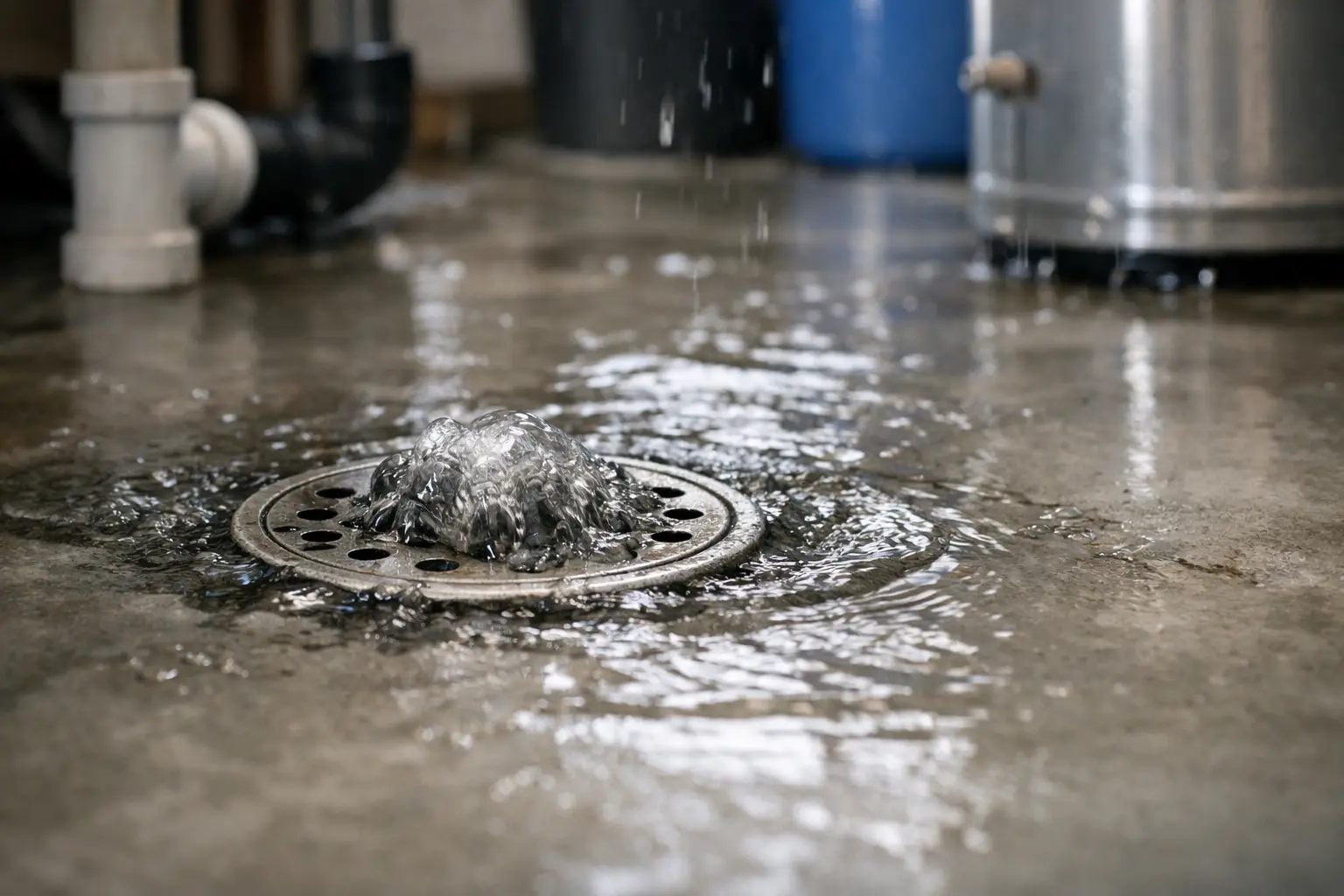
You notice the pattern first: the downstairs toilet gurgles when the washer drains. The tub starts holding water even though you just “cleared” it last month. Then one day, it backs up when guests are over.
In Northern Virginia, that repeat-clog story is often tree roots in the sewer line. Roots are persistent, they don’t care about store-bought chemicals, and they usually don’t announce themselves until the pipe is already partially blocked. If you’re looking up how to clear roots in sewer line problems, the real goal isn’t just getting water moving today – it’s getting the line cleared, verified, and kept clear.
Why roots get into sewer lines in the first place
Roots don’t “hunt” for sewage. They hunt for moisture, and a sewer line is a steady source. The most common entry point is a small defect: a cracked clay tile, a separated joint, a corroded section of cast iron, or a belly in the line that holds water. Once a hairline opening exists, fine feeder roots work in and start catching toilet paper and waste. Over time that turns into a dense mat.
Some homes are more prone than others. Older neighborhoods with mature trees, older pipe materials, and long runs from the home to the street see it more. But even newer properties can get root intrusion if there’s a joint separation or settlement.
The telltale signs you’re dealing with roots (not a normal clog)
A basic clog tends to be a one-time event. Root intrusions act different because the pipe is never truly open.
You’ll often see slow drains across multiple fixtures, especially the lowest ones. Toilets may bubble, floor drains may burp, and backups may show up after heavy water use like laundry or a long shower. Another clue is timing: everything seems “fine” right after a clearing, then the issue gradually returns over weeks or months.
If you’ve had to clear the main line more than once, roots should be on the shortlist.
How to clear roots in sewer line clogs the right way
Clearing roots has two parts: removing the mass and confirming what’s happening inside the pipe. If you skip either one, you’re guessing – and that’s when the same problem keeps coming back.
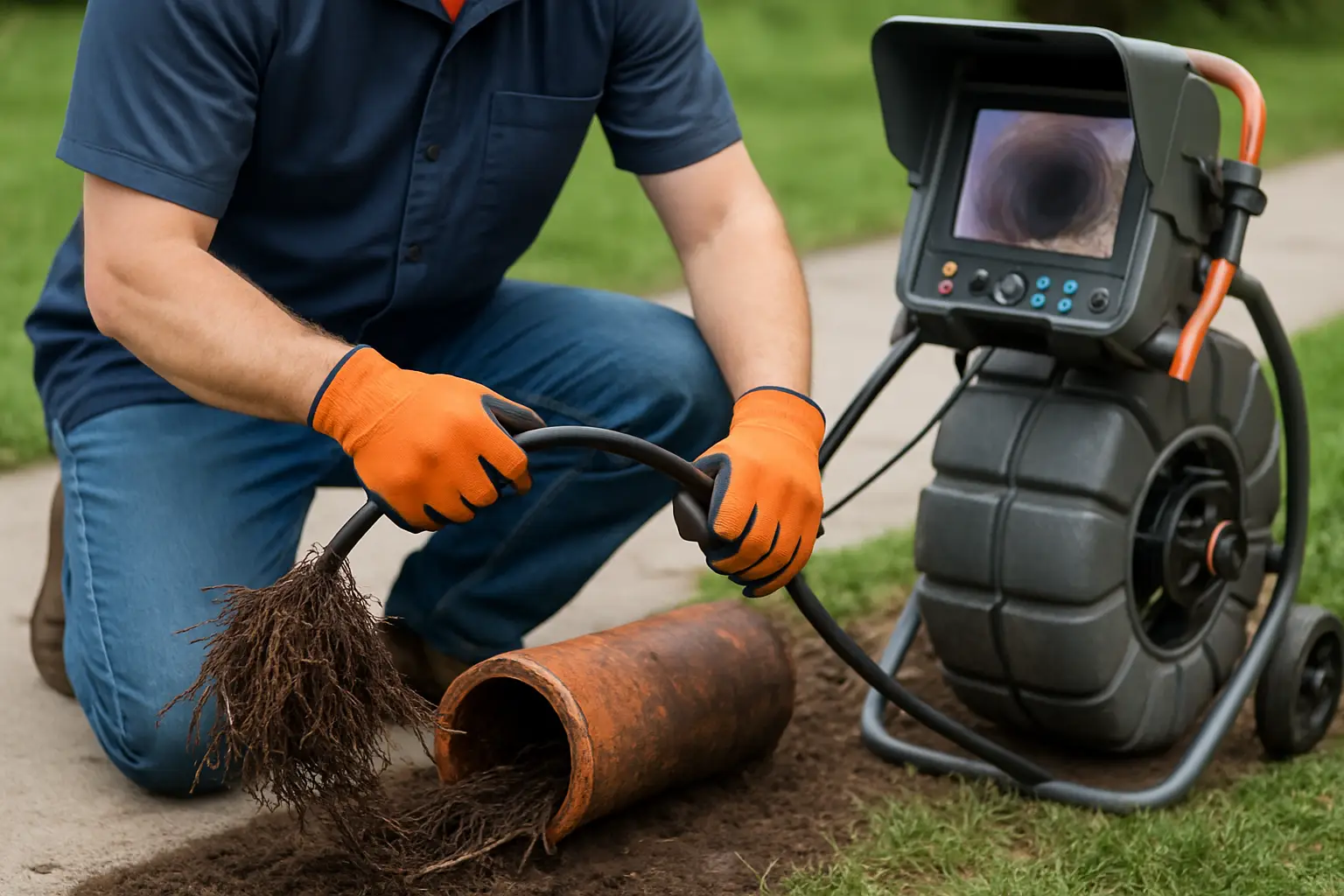
Step one: Confirm the obstruction with a sewer camera
A sewer camera inspection shows whether you’re dealing with roots, grease buildup, a broken pipe, a belly holding water, or a combination. That matters because each one calls for a different approach.
With roots, the camera also tells you how aggressive the intrusion is. Light root hairs at a joint are a very different job than a line that’s packed from wall to wall. You also want to know where the problem is located so you’re not clearing blindly.
Just as important: a camera lets you verify the final result. “We got it flowing” is not the same as “the line is clean.”
Step two: Mechanically cut roots to reopen the line
Most root removal starts with cutting. Professional root cutting uses specialized cutters sized for the pipe and the type of intrusion. The goal is to reopen the full inside diameter of the line without damaging the pipe.
This is where technique matters. An aggressive cutter in a compromised clay line can chip edges and create more openings for roots later. On the flip side, an undersized cutter can leave a thick ring of roots that catches debris right away.
In many cases, a flex-shaft system is used to provide controlled cleaning through bends while maintaining steady contact with the pipe walls. It’s especially useful when you need thorough removal without the “hammering” feel that some older methods can cause.
Step three: Hydro jetting to remove what cutting leaves behind
Cutting breaks roots up, but it doesn’t always flush them out. It also doesn’t remove the sludge, paper, and buildup that the roots were trapping. That’s why hydro jetting is often the step that turns a temporary improvement into a long-lasting fix.
Hydro jetting uses high-pressure water to scour the inside of the pipe and carry debris downstream. Done correctly, it cleans the pipe walls instead of just punching a hole through the blockage. It’s also one of the best ways to reduce the “starter material” that roots use to rebuild a clog.
Jetting isn’t a fit for every line. If the camera shows a collapsed pipe, severe offsets, or sections that are already failing, the right move may be repair instead of blasting water through a compromised area. That’s why camera-first is the professional standard.
Step four: Final camera verification
After cleaning, a second camera pass confirms the pipe is actually open and shows what condition it’s in. If there’s a cracked section or separated joint, that’s your roadmap for a permanent solution. Without that verification, you’re relying on symptoms, and symptoms can be misleading.
What doesn’t work well (and why it keeps coming back)
When roots are the cause, a few common approaches tend to disappoint.
Chemical root killers may slow growth in limited situations, but they don’t remove the physical mass that’s already in the line. They also don’t fix the opening where roots entered. If the pipe has a separation, the roots will return because the moisture source is still there.
Drain snakes can restore flow, but if the tool only punches a small channel through the roots, you’re back to slow drains quickly. That “it worked for a week” outcome is classic root intrusion.
And if anyone clears a line without confirming with a camera, you’re left guessing whether the obstruction was roots, grease, a belly, or a break. Guessing is expensive over time, even if the initial visit feels cheaper.
Long-term options: stop the roots, not just the backup
Once roots have gotten in, you’re dealing with a pipe defect plus the root growth. The best long-term plan depends on what the camera shows and how often the problem has happened.
If the pipe is structurally sound with minor intrusion at joints, periodic maintenance cleaning can be a practical approach. Many property owners choose this because it’s predictable and avoids emergency backups.
If the camera shows a clear failure point – a separated joint, a cracked section, or a root-packed offset – repair is the path to a real “done once” solution. That might mean spot repair or replacing a section of line, depending on access and pipe condition.
If you’re a landlord or manage a commercial property, the decision often comes down to downtime risk. A proactive fix is usually cheaper than an after-hours backup that shuts down bathrooms, kitchens, or tenant spaces.
When to call a pro right away
Roots are not a wait-and-see problem once you have symptoms.
If sewage is backing up into a tub, shower, or floor drain, treat it as urgent. If multiple fixtures are affected, it’s likely a main line issue. And if you’ve had the line “cleared” before but the slow drain returned, you’re past quick fixes.
A drain and sewer specialist can clear the line, confirm the pipe condition with a camera, and explain your options in plain language. If you’re in the Bristow-Gainesville-Manassas area and want a clean, verified result, Titan Jetters can help with camera diagnostics, root removal, and high-performance hydro jetting – details at https://www.titanjetters.com.
What to expect during a professional root-clearing visit
A well-run service call should feel straightforward and respectful of your home. The technician should ask about symptoms, identify the best access point, and protect the work area. From there, the process is usually camera inspection, clearing, and post-cleaning verification.
You should also expect clear communication. If the pipe is damaged, you should be shown what’s wrong and where it is, not pressured into a decision on the spot. Sometimes the right call is cleaning and monitoring. Other times it’s planning a repair before the next backup. The point is having facts.
The reality about roots: it depends on the pipe
Roots aren’t all the same, and neither are sewer lines. A newer PVC line with a single compromised joint may respond extremely well to proper cleaning and stay clear with minimal maintenance. An older clay line with multiple offsets may keep inviting roots until sections are repaired.
That’s why the best answer to “how to clear roots in sewer line” isn’t a single tool or a one-time visit. It’s a process: locate it, remove it completely, verify it, then decide whether maintenance or repair makes the most sense for your property.
A backed-up sewer line is stressful, no question. The good news is that with the right equipment and camera-confirmed results, you can get your drains back to normal – and keep them that way – without turning your house upside down.