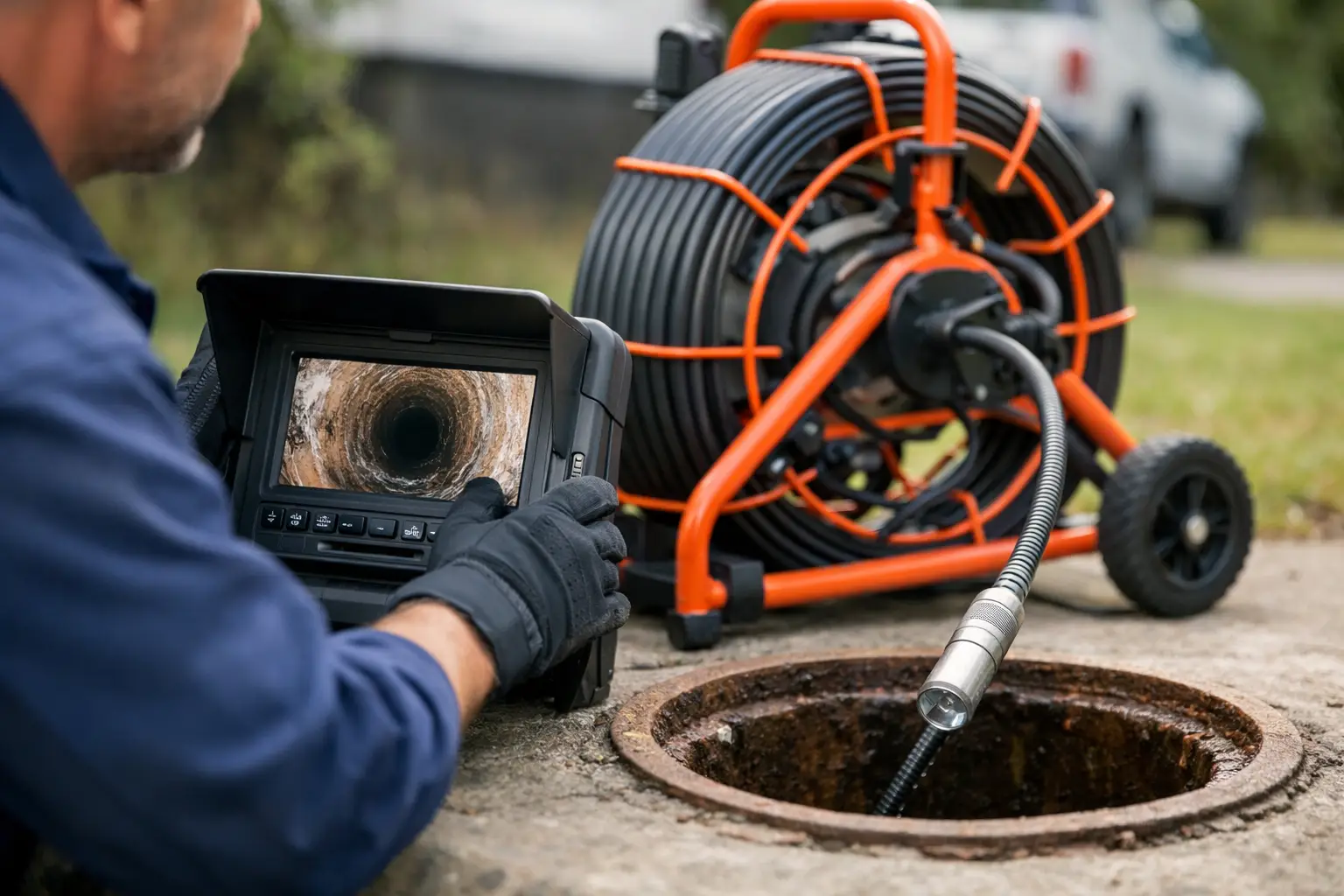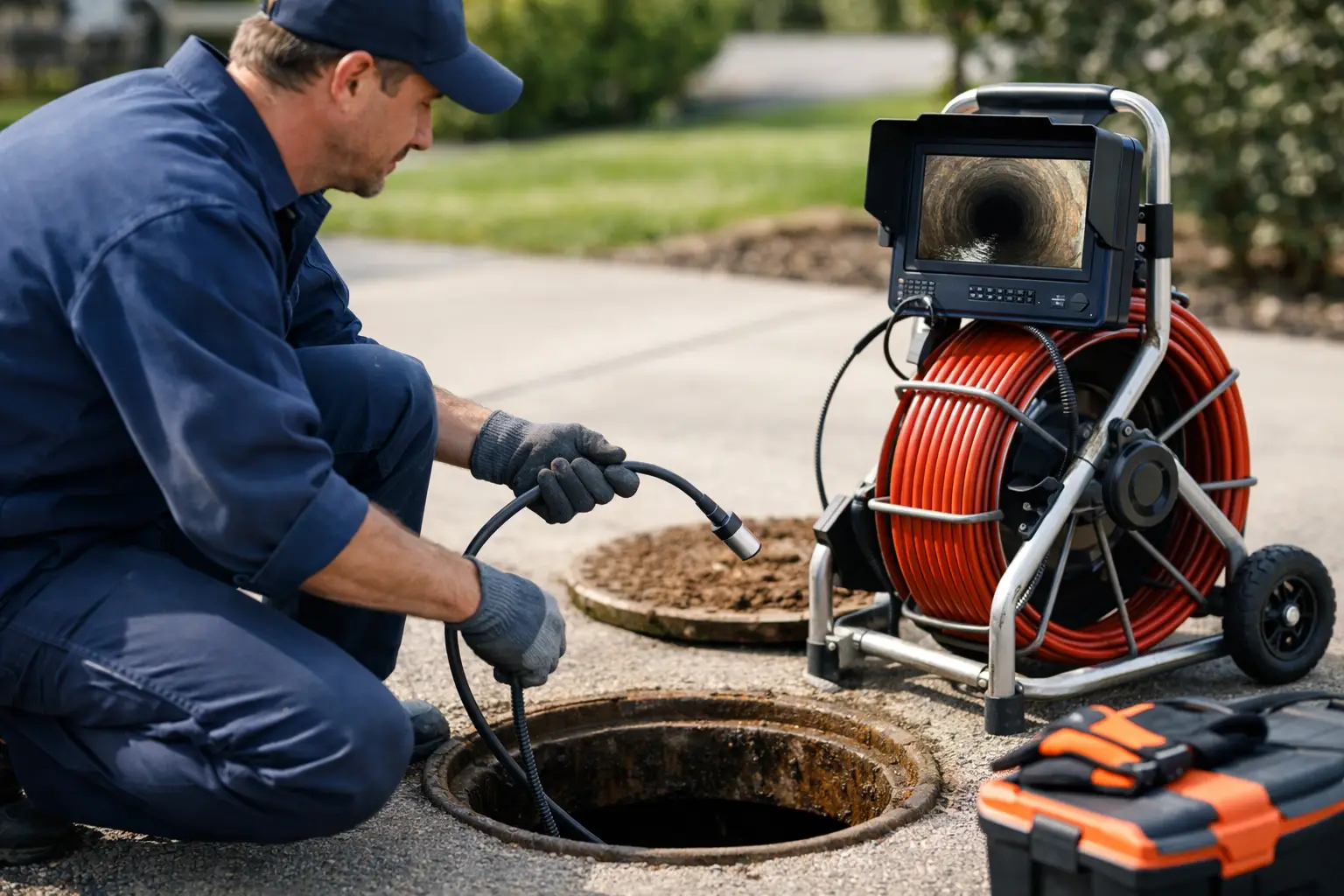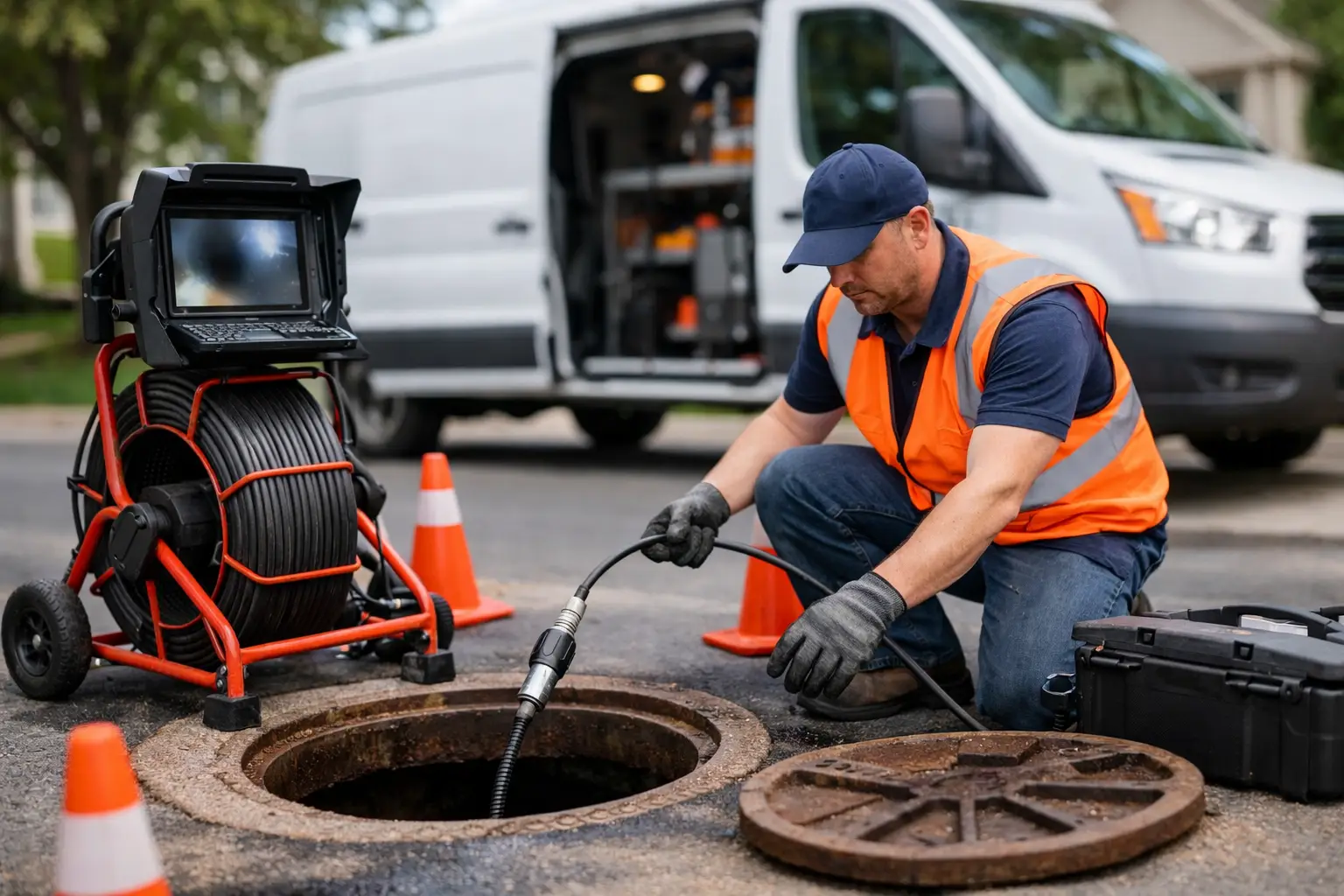
You know the moment: the downstairs toilet gurgles, the tub drains like it is thinking about it, and suddenly you are doing the mental math of how bad this could get.
A sewer camera inspection is one of the quickest ways to turn that stress into facts. But most people ask the same thing right away: what is the sewer camera inspection cost, and why does it swing so much from one call to the next?
This is the straight answer: you are not just paying for someone to “look around.” You are paying for fast diagnosis, the right equipment, and the ability to make the next step the correct step – whether that is cleaning, repair, or confirming you do not need either.
Sewer camera inspection cost: the real-world range
In many homes, a basic camera inspection lands in a few-hundred-dollar range, and more complex scenarios can climb higher. The spread exists because the job is not always the same job.
If your main line has an accessible cleanout, the tech can get a camera in quickly, document what is happening, and give you a clear plan. If there is no cleanout, if the line is difficult to access, if the pipe run is long, or if the issue is beyond a simple “locate the clog,” it takes more time and more setup.
The best way to think about cost is this: the camera is a diagnostic tool that prevents guesswork. A solid inspection should produce usable information – what the pipe is made of, where the problem is, what caused it, and what solution actually matches what is on-screen.
What you are paying for (and what you should get)
A professional sewer camera inspection is not just a video. It is a decision tool.
You are paying for a technician who knows how to interpret what the camera shows. Roots, grease buildup, scaling, bellies in the line, offset joints, cracks, collapsed sections – they can look similar to an untrained eye, but they do not get fixed the same way.
You are also paying for equipment that can handle real drain conditions. Residential sewer lines are wet, dirty, and often partially blocked. The camera has to push through standing water, navigate turns, and still deliver a readable picture.
A good inspection also includes clear communication. The tech should walk you through what they saw in plain language and explain your options without pressuring you into a one-size-fits-all answer.
The biggest factors that change sewer camera inspection cost
Access to the line (cleanout vs. no cleanout)
If there is a proper cleanout, inspections are typically faster and cleaner. When there is no cleanout available, the tech may need to access the line through a vent, pull a toilet, or work from a different entry point depending on the layout. That increases labor and time, which increases cost.
If you are not sure whether you have a cleanout, that is common – many are hidden behind landscaping, near the foundation, or in utility areas.
The purpose of the inspection
Not all inspections are created equal. A “why is it backing up right now?” inspection is different from a “confirm the line is healthy before we buy this house” inspection.
Emergency troubleshooting often involves finding an active blockage quickly and determining the best way to clear it. Preventative or real estate inspections may involve documenting the condition of the full run, identifying material transitions, and noting early warning signs that are not yet causing a backup.
Line length and layout
Longer runs take longer to inspect. So do lines with multiple bends, branch connections, or odd layouts common in older properties.
If the tech needs to locate a problem area precisely, that can also add time. Accurate locating is what helps avoid unnecessary digging or opening walls.
Pipe material and condition
Cast iron, clay, Orangeburg, and older PVC all behave differently. Some materials are more prone to root intrusion, offsets, or internal corrosion. If the pipe is heavily scaled or partially collapsed, the camera may move slowly and require careful handling to avoid getting stuck.
Whether the inspection is bundled with clearing or repair
Some situations require cleaning first to get a usable view. For example, if grease, sludge, or heavy root mass blocks the lens, you may not get a clear answer until the line is cleared.
This is where homeowners sometimes get frustrated: “Why can’t you just camera it and tell me what’s wrong?”
The honest answer is that the camera can only show what it can see. If the line is packed, the inspection may identify “blockage present” but not what the pipe looks like beyond it until after clearing.
Bundling can be cost-effective because you are already on-site and already set up, but it depends on what is found and how severe it is.
When a camera inspection saves you money
The camera cost feels a lot better when you compare it to the price of guessing wrong.
If a drain backs up repeatedly, many people pay for the same type of drain cleaning again and again. A camera inspection can show whether the real issue is roots in the main, a belly holding water, a separated joint catching debris, or heavy scale that needs descaling rather than another basic cable.
It also protects you from unnecessary work. Sometimes the problem is not a broken line at all – it is a localized blockage, a partial obstruction, or a specific section that needs targeted cleaning. Seeing it on camera keeps the repair plan honest.
For landlords and business owners, this matters even more because downtime is expensive. A camera inspection helps you make a confident call fast, and it documents what was happening if you need records for a property file.
When the cost is higher – and why that can be reasonable
If a tech has to spend extra time establishing access, locating the line precisely, or navigating a compromised pipe, the price may rise. That is not a red flag by itself.
What you want to avoid is paying more without getting more clarity.
A higher-cost inspection should usually come with stronger deliverables: clear findings, an explanation of the cause, and practical options. If the inspection involves locating a defect for repair planning, you should come away knowing where the problem is and what the next step will actually accomplish.
Red flags to watch for when comparing inspection offers
Some pricing looks great until you realize what is missing.
If an “inspection” is really just a quick look a few feet into a line, it might not answer the question you called for. If the company cannot explain what they saw in a way that makes sense, the video is not doing you much good.
Another red flag is pressure. A camera inspection should reduce uncertainty, not be used as a scare tactic. Problems can be serious, but a professional should be able to show you the evidence and explain the trade-offs: clean it now and monitor, clean and descale, spot repair, or replace, depending on what is actually going on.
What to ask so you get value from the inspection
You do not need to know plumbing jargon to ask smart questions.
Ask where they plan to enter the line and whether you have an accessible cleanout. Ask what they expect the camera to tell you and what it cannot tell you if the line is fully blocked. Ask whether they will be able to locate the problem area if damage is found, and whether you will get documentation you can keep for your records.
Most importantly, ask what the camera results mean for your next step. The inspection is only valuable if it leads to a plan that fits the condition of your pipe.
Why camera verification matters after cleaning
There is a big difference between “the drain is flowing again” and “the problem is actually resolved.”
After hydro jetting or descaling, a quick camera verification can confirm that buildup is gone and that there is not a structural issue waiting to cause the next backup. That is how you avoid paying twice – once to clear, and again when the same underlying restriction catches debris a month later.
Verification is also how reputable drain specialists keep the job accountable. It is hard to argue with a clear view of the pipe.
A Northern Virginia reality: older lines and fast-growing roots
In parts of Northern Virginia, a lot of properties have mature trees and older sewer components. Roots love tiny gaps at joints, and once they get in, they can turn a “slow drain” into a full backup.
A camera inspection is often the fastest way to confirm whether roots are the culprit or whether you are dealing with scale, grease, or a sagging section of pipe that holds water and collects debris.
If you are in a hurry – tenants calling, customers on-site, family coming over – fast diagnosis matters as much as the repair itself.
Getting an inspection that feels worth it
The goal is not just to pay a fair price. The goal is to spend money once and get a clear answer.
A proper sewer camera inspection should feel clean and organized, not chaotic. The technician should respect your property, explain what is happening without talking down to you, and give you options that match what the camera actually shows.
If you need a team that specializes in drains and uses camera diagnostics to back up the recommendation, Titan Jetters is one option in the area. You can learn more or book service at https://www.titanjetters.com.
The best closing advice is simple: if you are already worried about what is happening underground, spend your money on certainty. A clear picture beats a guess every time, especially when the next wrong move can turn a small problem into an expensive mess.