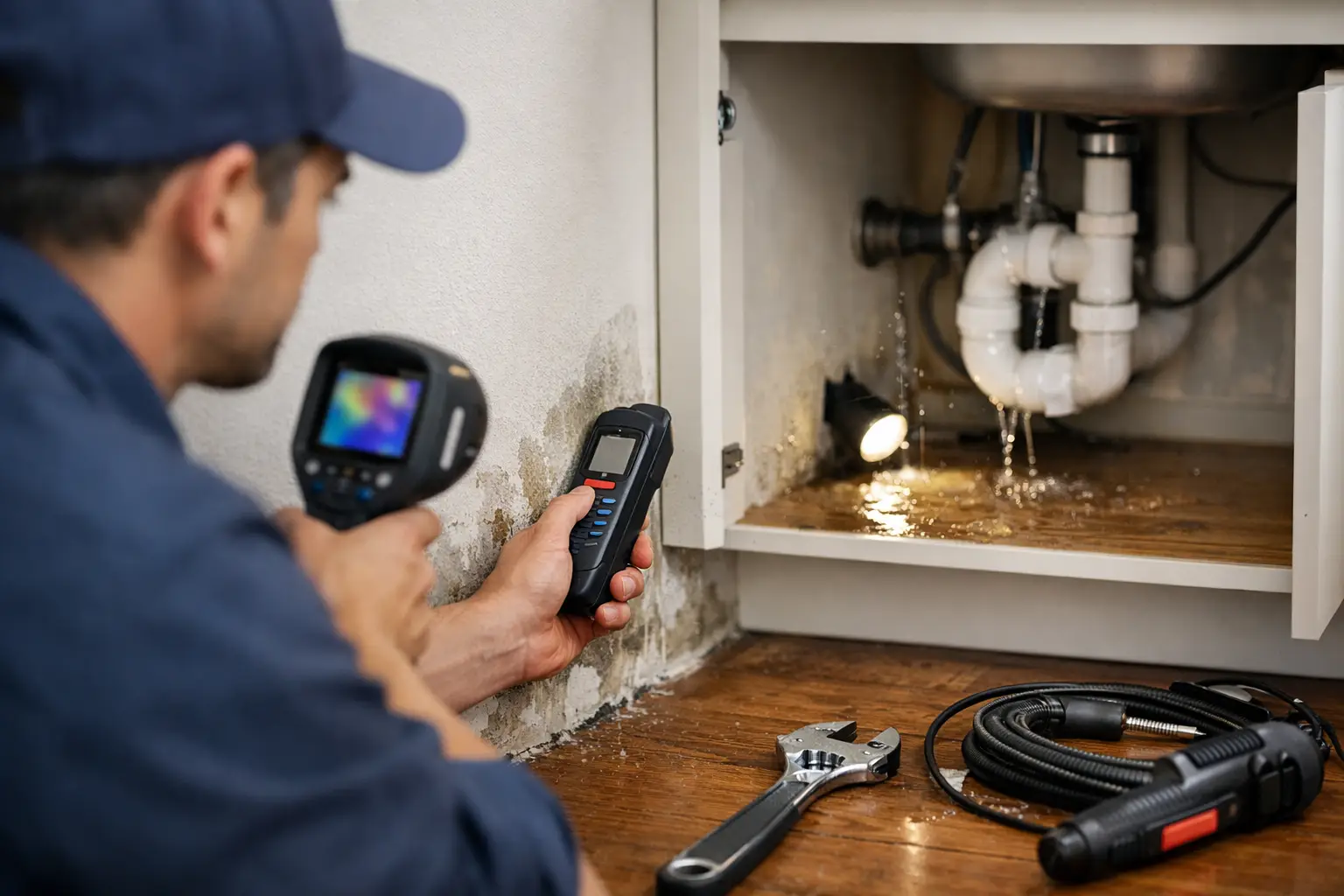
A hidden leak usually does not start with a dramatic pipe burst. It starts with a higher water bill, a musty smell near a wall, or a patch of floor that feels a little off under your feet. If you are trying to figure out how to find hidden plumbing leak quickly, speed matters – not just to stop water loss, but to prevent drywall damage, flooring issues, mold growth, and bigger repairs later.
The hard part is that hidden leaks rarely show up right where the pipe problem actually is. Water travels. It can run along framing, collect under flooring, or stain a ceiling far from the source. That is why the fastest path is not guesswork. It is knowing which signs matter, which ones can mislead you, and when proper diagnostics can confirm the exact problem without tearing into the wrong area.
How to find hidden plumbing leak quickly without chasing the wrong clue
The first thing to understand is that not every water-related symptom points to a supply line leak. Some problems come from drain lines, appliance connections, shower pans, or condensation. If you go straight to opening walls without narrowing that down, you can waste time and make a mess without solving anything.
A true hidden plumbing leak often leaves a pattern. You may notice water stains that keep returning, paint bubbling in one room, warped baseboards, soft drywall, or a persistent damp smell. In some cases, the clearest sign is sound – a faint hiss behind a wall or the noise of water movement when no fixture is running.
Another strong clue is unexplained water use. If your household habits have not changed but your bill has, that points to water going somewhere it should not. The same applies if your water meter shows movement when all fixtures and appliances are off. That does not tell you exactly where the leak is, but it does confirm you are not imagining the problem.
The signs that usually show up first
Homeowners often expect a hidden leak to leave a puddle. Sometimes it does, but more often the early signs are subtle. A ceiling stain under an upstairs bathroom is common, but so is a warm or cold spot on the floor over a slab leak. In older homes, you might smell dampness before you see anything at all.
Watch for discoloration on ceilings and walls, especially yellow, brown, or copper-toned stains. Pay attention to flooring that starts to cup, buckle, or separate. If one section of drywall feels softer than the surrounding area, that is not something to ignore.
There are also less obvious operational clues. A drop in water pressure can point to a supply line issue. A toilet that seems to refill more often than usual may signal a fixture leak rather than a hidden pipe leak. A wet cabinet under a sink may be simple to spot, but moisture behind the cabinet wall can keep spreading long after the visible area dries.
It depends on the type of plumbing involved. Pressurized supply leaks usually show up faster because they keep leaking even when no one is using water. Drain leaks can be trickier because they may only appear when a sink, shower, or washing machine is running.
Start with the water meter, not the wall
If you want a quick answer, the water meter is one of the most useful reality checks. When every faucet, appliance, and fixture is off, the meter should stop moving. If it does not, there is a good chance water is escaping somewhere in the system.
That still leaves the question of where. The meter can confirm a leak, but it cannot tell you whether the problem is behind a shower wall, under a slab, in a crawl space, or along an irrigation branch line. That is where people lose time. They know there is a leak, but they start chasing symptoms instead of narrowing the system down.
In a two-story home, the location of the damage can help separate supply from drain issues. A ceiling stain under a bathroom that gets worse after showers may point to a drain or shower pan problem. Damage that worsens regardless of fixture use may point more toward a supply line. Again, water can travel, so this is not a guarantee, but it is a useful direction.
Where hidden leaks are most often found
Some areas fail more often than others. Behind shower and tub walls is a big one, especially where valves, fittings, and drain connections sit inside enclosed spaces. Under kitchen sinks and around dishwashers are also common trouble spots because small connection leaks can stay unnoticed for a long time.
Laundry areas deserve attention too. Washing machine supply hoses, drain standpipes, and shutoff valves can leak slowly and damage surrounding materials before anyone spots it. Water heaters can also create confusing symptoms because moisture may show up nearby even when the source is a valve, fitting, or discharge line.
In older Northern Virginia homes, aging pipes and scale buildup can complicate the picture. Corrosion, worn joints, and long-term wear inside drain and sewer lines can produce symptoms that overlap with hidden leaks. What looks like a wall leak may also involve backup pressure, poor drainage, or a line condition that needs a closer look.
How professional leak detection speeds things up
When time matters, the fastest route is usually verified diagnostics. A professional does not need to start by opening large sections of your home. The goal is to inspect, isolate, and confirm before any repair decision gets made.
This is where experience matters. A trained plumber looks at fixture use patterns, pipe routing, pressure behavior, visible moisture, and line conditions together. That gives you a much clearer answer than reacting to the first stain you see.
In many cases, camera inspection can help rule in or rule out drain line problems without guesswork. If there is concern that a hidden issue is tied to a damaged or backed-up line, seeing inside the pipe changes the conversation fast. Instead of assumptions, you have proof of what is happening and where.
For a drain and sewer specialist like Titan Jetters, that verification piece matters. It is not just about finding moisture. It is about identifying the real cause, protecting the home from unnecessary demolition, and showing the customer what is happening inside the system.
Why hidden leaks get misdiagnosed
One reason hidden leaks drag on is that the visible damage is often secondary. The wet drywall is not the plumbing problem. It is the result. The actual issue may be several feet away, above the damage, or inside a completely different section of pipe.
Condensation is another reason people get thrown off. Cold water lines can sweat in humid conditions, and HVAC issues can mimic plumbing leaks around ceilings or utility spaces. Roof leaks can also stain drywall in ways that look plumbing-related at first glance. That is why a fast diagnosis has to be careful, not rushed.
There is also the question of frequency. Some hidden leaks are constant. Others only appear when a shower runs, a toilet flushes, or a dishwasher drains. If the problem seems random, it may actually be tied to one specific fixture or cycle. Matching the symptom to when it appears can cut down the search dramatically.
When to stop watching and call for help
If you see active staining, bubbling paint, warped flooring, or recurring moisture, waiting rarely helps. The same goes for unexplained meter movement or musty odors that do not go away. Hidden leaks tend to spread damage quietly, especially inside walls, under flooring, and around framing.
The best time to bring in a professional is before the leak forces your hand. Once water starts compromising drywall, cabinets, or finished floors, the scope of the problem gets bigger fast. Quick action can mean the difference between a targeted repair and a much broader cleanup.
For homeowners and property managers, the real goal is not just learning how to find hidden plumbing leak quickly. It is finding it accurately, with as little disruption as possible, and fixing the right problem the first time. When the signs are there, trust them. Water always leaves a trail eventually – and the sooner that trail is read correctly, the better the outcome for your home.