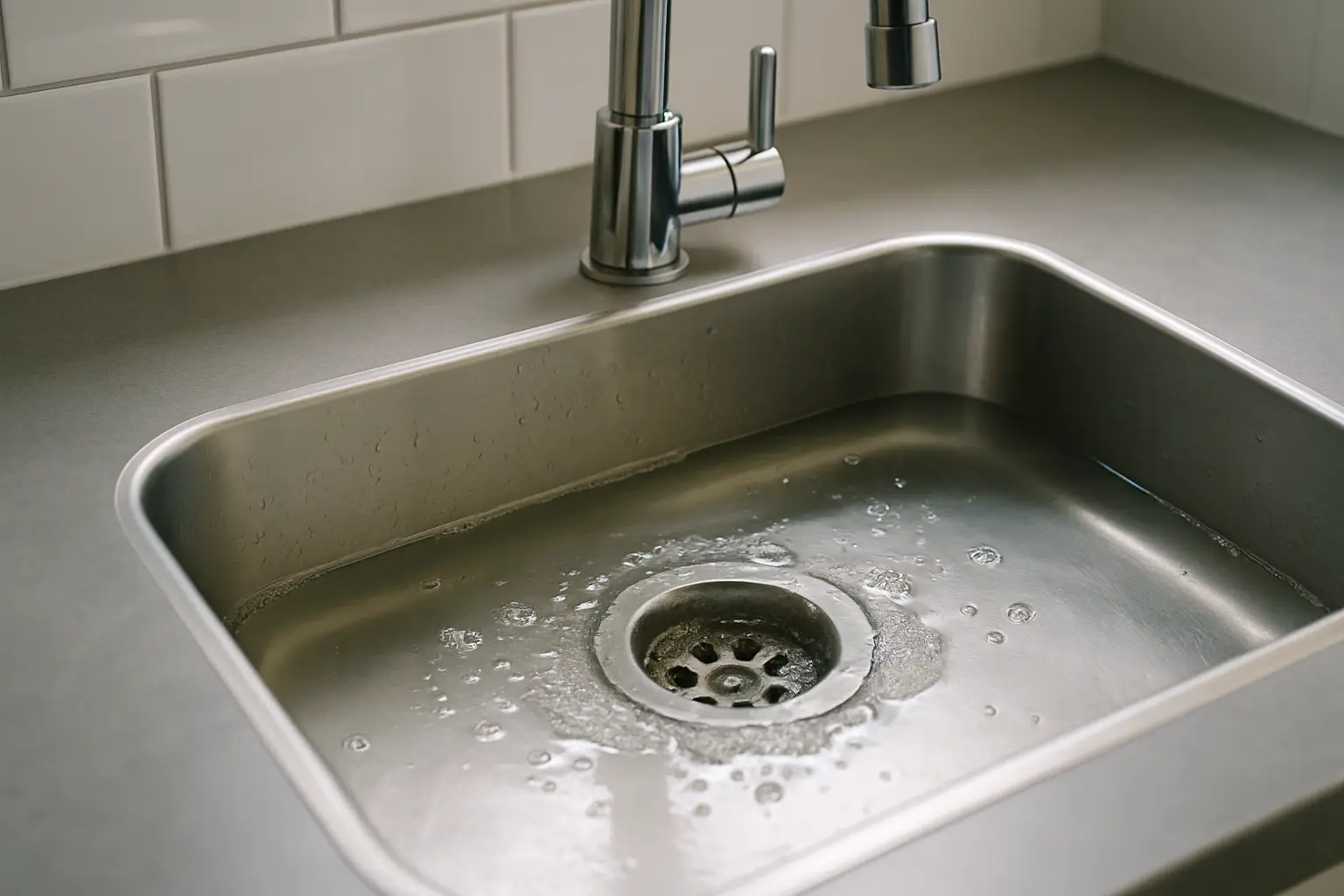
You clear the kitchen sink, it drains great for a day or two, and then it slows down again like it never learned its lesson. That repeat clog pattern is your biggest clue. A one-time blockage is usually about one bad moment (too much food waste at once). A kitchen sink that keeps clogging is usually about buildup, layout, or a bigger drain system problem that never got fully removed.
Kitchen sink keeps clogging – why it’s rarely “just a clog”
When people say, “kitchen sink keeps clogging why,” they’re usually dealing with a soft blockage that reforms. Kitchen lines are uniquely good at creating that problem because what goes down the drain is not just water. It’s fats, oils, grease, starches, coffee grounds, egg residue, soap, and detergent – a perfect recipe for sticky sludge.
If the drain was opened only enough to restore temporary flow, the remaining film inside the pipe acts like Velcro. The next few meals add another layer, and the drain narrows again. That’s why a sink can “clog” weekly even though nothing dramatic changed in your routine.
The most common causes of repeat kitchen sink clogs
Grease and emulsified fats that re-solidify
Grease is the classic culprit, but it’s not always obvious. A lot of fats go down the drain in a “liquid” state – warm pan drippings, oily soup, butter from rinsed dishes. Once it hits cooler pipe walls, it starts to congeal.
Detergent can temporarily emulsify grease, which tricks homeowners into thinking it washed away. But emulsified grease often just travels farther down the line and sticks in a new spot. Over time it builds a waxy coating that can grab everything else.
Food fines and starches that turn into paste
Garbage disposals don’t make food disappear – they make it smaller. Those small particles combine with grease and soap to form a thick, heavy paste.
Starches are especially notorious. Rice, pasta, potatoes, flour, and even oatmeal can swell and bind together. You may not see a “chunk” clog, but you’ll get a slow drain that keeps coming back because the paste keeps collecting on the pipe walls.
Soap scum and detergent residue
Kitchen sink drains don’t just deal with food. They also take on soap, detergents, and sometimes hard water minerals. In many Northern Virginia homes, mineral content can contribute to that stubborn film that coats the inside of pipes.
This matters because a drain can be partially blocked even when it looks clean at the strainer. The restriction is often several feet down, where you can’t see it, and it steadily worsens.
A partially blocked branch line, not the trap
A quick clearing at the trap might restore flow, but a lot of repeat clogs are forming deeper – in the horizontal kitchen branch line in the wall or under the slab. That section tends to be where grease settles, especially if the line has minimal slope or an old rough interior.
When the pipe isn’t thoroughly cleaned, the drain may seem “fixed” until the next time you run a dishwasher load or drain a sink full of water.
The hidden system issues that make clogs return
Poor venting or a vent blockage
Your kitchen sink needs proper venting so air can enter the system and water can flow smoothly. If venting is inadequate, you can see slow drainage, gurgling, or a sink that backs up when other fixtures run.
A vent problem doesn’t create grease, but it can turn a borderline buildup into a recurring clog because the line never gets a clean, fast-moving flush.
Older pipes with rough interiors
If your home has older cast iron, galvanized, or heavily worn piping, the inside can be rough and scaly. That roughness gives grease and sludge more surface area to cling to.
In these cases, the right solution may be cleaning plus verification that the interior is actually restored, not just punched through. In some lines, descaling is the difference between “it drains today” and “it stays open.”
Bellies, back-pitch, or a sagging section of pipe
A belly is a low spot where water sits instead of draining fully. Kitchen waste loves bellies. Grease cools and sticks. Food fines settle. Soap scum accumulates. The line might drain when you run a small amount of water, then back up when you empty a sink or the dishwasher dumps.
This is where repeat clogs can become a warning sign. If the pipe holds standing water, you’re not just dealing with a clog – you’re dealing with a structural drainage problem that encourages constant buildup.
Root intrusion or main line issues (especially if other drains act up)
Kitchen sink backups can also be downstream from the kitchen line itself. If the main sewer line is restricted by roots, offsets, or heavy scaling, the kitchen line may be one of the first places you notice symptoms.
A good rule of thumb: if multiple fixtures are slow or you see backups on a lower level, it’s time to stop assuming it’s “just the kitchen.”
Clues that tell you what’s really happening
A recurring kitchen clog usually leaves a pattern. If the sink slows gradually over days, buildup is likely reforming. If it goes from fine to fully blocked in one meal, you may have a catch point – a rough section, partial collapse, or heavy grease shelf that snags debris.
Pay attention to timing. If the sink backs up when the dishwasher drains, that’s a volume and velocity issue – the line can’t handle a surge. If it gurgles or smells even when it drains, that often points to lingering sludge in the line.
And if plunging works for an hour but the problem returns quickly, that’s another sign the blockage was never removed, only shifted.
Why “quick clears” don’t stay fixed
Most recurring kitchen clogs are soft obstructions. They can be opened temporarily without actually being cleaned out.
Think of it like clearing a path through a snowbank. You can poke a hole and squeeze through, but the walls are still there. Water may pass for now, but the remaining buildup is ready to trap the next round of grease and food fines.
That’s why long-lasting results usually require restoring full pipe diameter – not just creating a small channel.
When a camera inspection changes everything
If a kitchen sink keeps clogging, why guess? A sewer camera inspection can confirm what you’re dealing with instead of treating symptoms.
A camera can show whether the problem is:
- Grease lining and sludge buildup in the kitchen branch
- A belly holding water and debris
- Root intrusion or a downstream restriction
- A broken, offset, or deteriorated section of pipe
The value here is accountability. When you can see the inside of the line, the plan becomes straightforward, and the results can be verified after cleaning.
What professional drain cleaning looks like for repeat kitchen clogs
Not every clog needs the same tool. Kitchens are notorious for greasy, sticky buildup, so the goal is to remove the coating from the pipe walls.
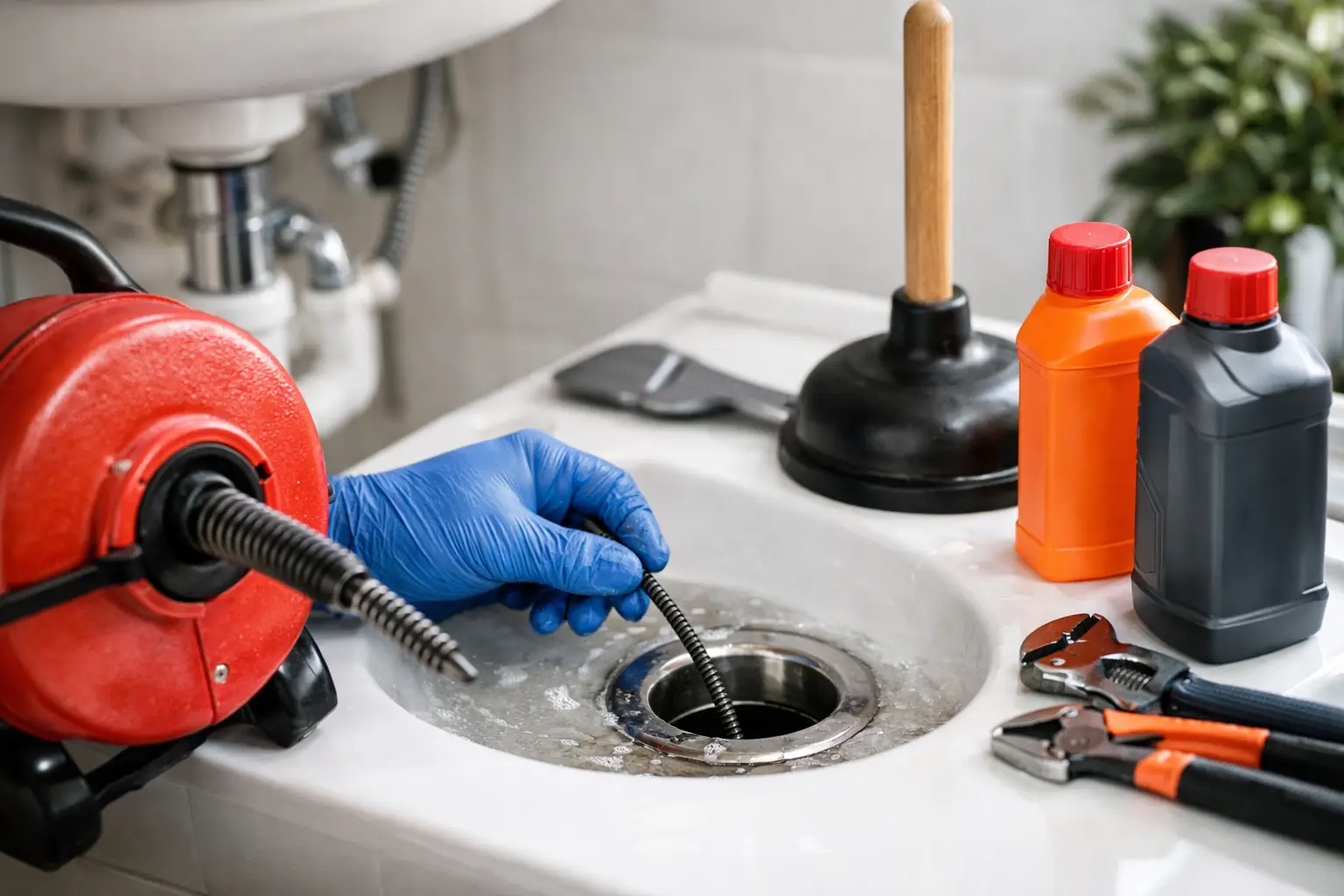
Hydro jetting uses high-pressure water to scour the pipe interior and wash debris downstream. For many kitchen lines, that’s the most effective way to eliminate grease and sludge rather than simply punching through it.
Flex-shaft drain cleaning is another professional option that can mechanically scrub the inside of the pipe, especially when there’s heavy buildup or scaling. The best approach depends on pipe material, line condition, and what a camera shows.
If you’re in Northern Virginia and your kitchen sink keeps clogging, a drain specialist like Titan Jetters typically combines the right cleaning method with camera verification so you’re not left hoping it holds.
When repeat clogs are an emergency
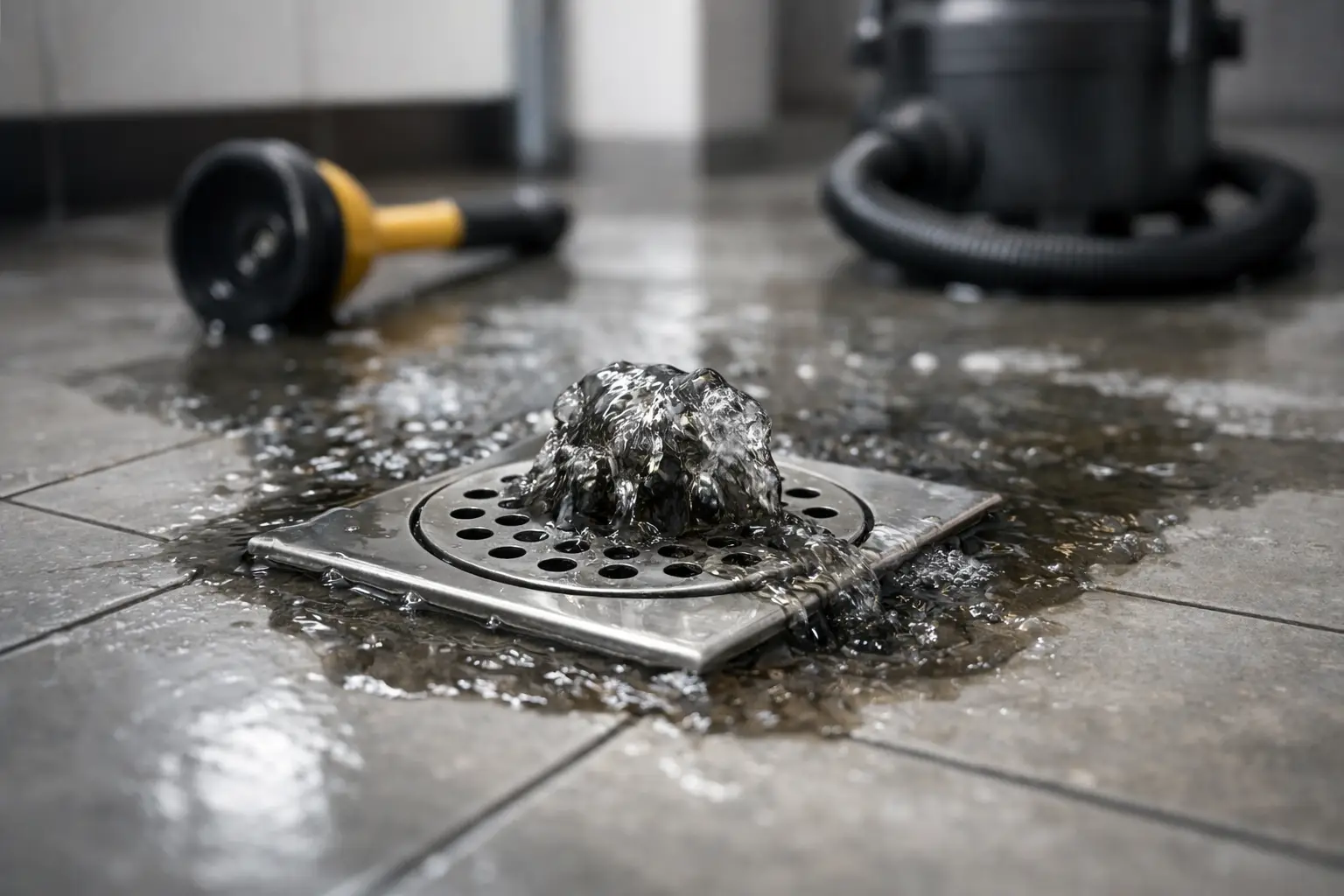
A slow drain is annoying. A backup can damage cabinets, floors, and drywall fast.
Treat it as urgent if you see water rising into the sink when the dishwasher runs, you have standing water that won’t drain, or you notice wastewater coming up in another fixture. Those scenarios can indicate a significant restriction or a main line issue, and continued use can force water out where it doesn’t belong.
If the clog is accompanied by sewage odor, bubbling, or repeated overflows, it’s time to get it checked promptly. The longer the line stays restricted, the more likely you are to end up with a messy cleanup and a larger repair.
The “it depends” factors that change the solution
Two houses can have the same symptom and need different fixes.
If your home has newer PVC with good pitch, recurring clogs are often pure grease and sludge, and a thorough cleaning restores reliable drainage. If your home has older cast iron, you might be dealing with internal scaling that needs descaling or more frequent maintenance. If a camera shows a belly or damage, cleaning may improve things temporarily, but it won’t change the physics of a pipe that can’t drain properly.
That’s why the best answer to “kitchen sink keeps clogging why” is usually a combination of cause and condition: what’s building up, and what the pipe is doing to encourage it.
A clear diagnosis saves time and prevents that cycle of repeated clogs, repeated disruption, and repeated frustration.
If your sink is sending you the same warning every week, take it seriously. Your drain is telling you it needs more than a reset – it needs a real fix that restores flow and keeps your kitchen running on your schedule.